






















for the political leadership to take initiative in Kashmir, thanks to the Army
Sixty-two years on, four wars, several skirmishes and over 30,000 martyrs later, our security forces still man unsettled borders with China and Pakistan – a harsh fact which has kept a rising India stuck in the South Asian subcontinental groove rather than emerging as an Asian power. This collective failure provides substantial evidence of inadequacacies in governance, defence and diplomacy, and woolly strategic and security thinking. The Himalayan debacle of 1962 had its roots in India’s acquiescence to China’s 1950 invasion of Tibet.
Let’s stick to Kashmir which is Pakistan’s grand obsession and an albatross around India’s neck. The war in Kashmir began even before the Maharaja signed the instrument of accession in October 1947. The Indian Army fought its longest military campaign for which it was ill prepared and against heavy odds but still secured substantial territorial gains. Taking Kashmir prematurely to the UN and seeking a ceasefire was not the wisest thing to do but the British, who oversaw the war on both sides, forced the decision for their own long-term interests. Had we captured the Northern Areas, the history and geography of the region would be different. Alas, our leaders had little experience in statecraft and higher direction of war.
The Kashmir war is still being waged by Pakistan through overt and covert means. In 1965, Pakistan attempted a second wave of infiltration which escalated into war with India holding the balance of advantage. Militarily, it was sub-optimally planned and executed though it took the heat off Kashmir. The Indian Air Force, which played a key role in stemming the tide, was kept in the dark.
Significant tactical gains in Kashmir like the Haji Pir Pass in Poonch and Point 13620 in Kargil were bartered away in Tashkent, ignoring the strategic implications of both these high ground launch pads for infiltration and insurgency. Point 13620, which was captured and returned to Pakistan twice in 1965, was finally seized for good in 1971.
India missed a grand opportunity to convert the 1971 military victory in East Pakistan into politico-diplomatic success by forcing a settlement of Kashmir along the readjusted Line of Control as the international border. Returning territory and 93,000 prisoners of war to Pakistan without reciprocal gains was a startling diplomatic blunder.
Between 1971 and 1990, when the proxy war picked up following the rigged elections in Kashmir, cross-LoC skirmishes continued intermittently. Much water has flowed down the Chenab with nearly 45,000 people killed in the proxy war to instigate a popular uprising against the Indian state in Kashmir that included the failed Kargil invasion of 1999. The Indian Army-led security forces have thwarted Pakistan’s direct and indirect means of wresting the Kashmir Valley which was aided by misgovernance and exacerbated by a nexus between militants, elements of the state and foreign non-state actors. Such anti-national connections are not peculiar to Kashmir but are prevalent in insurgency- and Naxal-affected states in the country.
Two of the most vicious and spectacular cross-LoC jihadi strikes were the Lashkar-Jaish attack on Parliament in 2001 and the Lashkar assault on Mumbai last year. The first led to the 10-month India-Pakistan confrontation codenamed Operation Parakram which came pretty close to war. The Mumbai attack came across water, making it the most high-profile and deadly terrorist operation anywhere. Pakistan-sponsored jihad is invoked in the name of Kashmir and its people allegedly subjected to 62 years of Indian occupation and attendant atrocities by the security forces.
Terrorist attacks continue across India despite the Pakistani leadership’s affirmation at least four times at the highest level that it will not permit use of its soil for terrorist attacks against India. The Kashmir jihadis operate with the full knowledge and assistance of the state, certainly the ISI which regards them as a strategic asset. Both are opposed to the India-Pakistan peace process and act as spoilers to derail it. But Pakistan’s finessing of jihad is more complicated than just that.
The Indian state has not succeeded in deterring jihadis or elements sponsoring them from launching terrorist attacks against prime political and commercial targets in India’s heartland. Kashmir is no longer attractive for operations, especially after the Army has sanitized the LoC and the hinterland through fencing and a tight counterinsurgency grid.
The theatre of terrorist action has been forced out of Kashmir by sustained counter infiltration and counterinsurgency operations. For the first time in 20 years, infiltration has been reduced to a trickle and violence to its lowest levels both in scale and intensity.
Containment of militancy has not been easy, constrained by use of minimum force – heavy weapons or aircraft as in Pakistan, Afghanistan or Sri Lanka are taboo – but exemplifying good faith and the Army Chief’s Ten Commandments that have guided observance of human rights. After the incredible achievement of fencing the LoC and realignment of the counterinsurgency grid, infiltration has been brought down to a trickle and 95 per cent of infiltrators are neutralized near the LoC and fencing.
In April and May this year, about 100 to 150 militants attempted crossings in Keran-Kupwara-Gurez on the Shamshabari Range, at places with 50 feet of snow. They were foiled due to efficient intelligence, early warning devices and employment of smart forces. Last winter, in this heavy-snow belt, 89 avalanches were recorded, all sure death traps. UAVs were able to track down infiltrators who had breached the fencing to safe houses. Another 400 militants poised to follow were thwarted.
Up to June 15, only 44 cases of violent incidents were recorded of which 28 were grenade-throwing. In 2004, there were 980 incidents, progressively brought down from the high of nearly 2000 in 2001. The terrorist population has also been whittled down from 2500 to 3000 in 2001, to 600-800 today. Eliminating 70 per cent of the top leadership of the foreign and indigenous terrorist groups has put militants on the defensive unable to confront troops and forced to outsourcing even grenade-throwing. More militants are therefore arriving from Nepal and Bangladesh than across the LoC. But violence levels could escalate should the Pakistan Army and ISI, engaged in the West, decide to reignite the Kashmiri jihad.
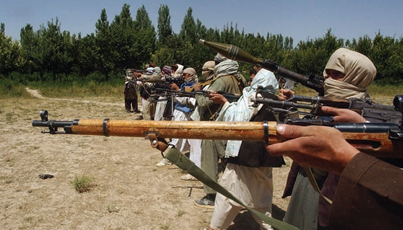
Despite dire warnings, no Taliban footprint has been observed in Kashmir. Kashmiri civil society, nurtured on Kashmiriyat and Sufism, has successfully resisted succumbing to Taliban Islam and is unlikely to support it. The Punjabi Taliban, the more fierce version of the jihadi groups operating out of PoK, made its debut last month in Muzaffarabad by launching the first suicide attack against an Army camp. Further, terrorist groups like LeT, JeM and Harkat, banned by Pakistan, have expanded recruitment and operations in PoK which includes opening of madrassas.
Whether Kashmir is insulated from the Taliban only time will tell. It is the suicide bomber who has to be kept at bay. In the past there have been Fidayeen attacks in Srinagar but none like the classic belt bomber. Muzaffarabad, a mere 30 km from the LoC, is connected to Srinagar with a regular bus service and Indian security forces have to be prepared to counter the Taliban and the human bomber while maintaining a tight leash on armed militancy.
The Army has created the best ground conditions ever for taking internal and external political initiatives. It has presented another opportunity to the political leadership at the Centre and state to resolve the Kashmir dispute. In 2007, back-channel dialogue between India and Pakistan yielded a five-point Kashmir formula which was squandered due to the fragile domestic situation in Pakistan and lack of political will in Delhi.
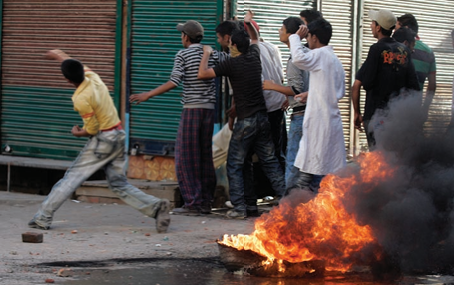
Kashmiri politicians say the Army has done its job, pacifying militancy and containing violence. Governance has not matched up to standards set by security forces. The frustration of the youth and the people is being showcased on the streets of Baramulla and Shopian, people venting anger and rage at the Army whereas the actual culprits are the state police and local administration. Kashmiri politics is in a mess, stoked by calls for azaadi on the streets. This is a good chance to clean up politics and streamline administration in the state and move the azaadi debate from the streets to the legislature as autonomy.
Pakistan’s attempts to wrest Kashmir by war and armed insurgency have failed. It is now encouraging subversion and psywar through street wars – employing stone pelting or at the most hurling a grenade. Civilian leaders must not fritter away the hard-earned gains of the Army and security forces and need to improve governance and accountability.
Kashmir has been a measured success story for the Army in management of the LoC, quelling violence and marginalizing militancy. The challenge for the security forces is to keep the lid on the Valley while the state and Centre cap the discontent and alienation with an acceptable political solution. Sixty-two years after swaraj, governance, politics, security and diplomacy – which for the most part have been below par – must improve and act in sync. This is the last chance to settle Kashmir on favourable terms. The Taliban is not far away.
After the incredible achievement of fencing the LoC and realignment of the counterinsurgency grid, infiltration has been brought down to a trickle and 95 per cent of infiltrators are neutralized near the LoC
Whether Kashmir is insulated from the Taliban only time will tell. It is the suicide bomber who has to be kept at bay. In the past there have been Fidayeen attacks in Srinagar but none like the classic belt bomber
The Army has created the best ground conditions ever for taking internal and external political initiatives. It has presented another opportunity to the political leadership at the Centre and state to resolve the Kashmir dispute