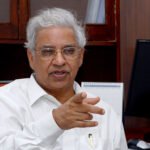








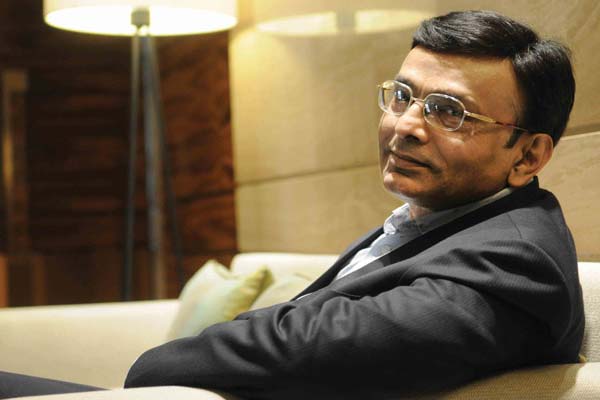

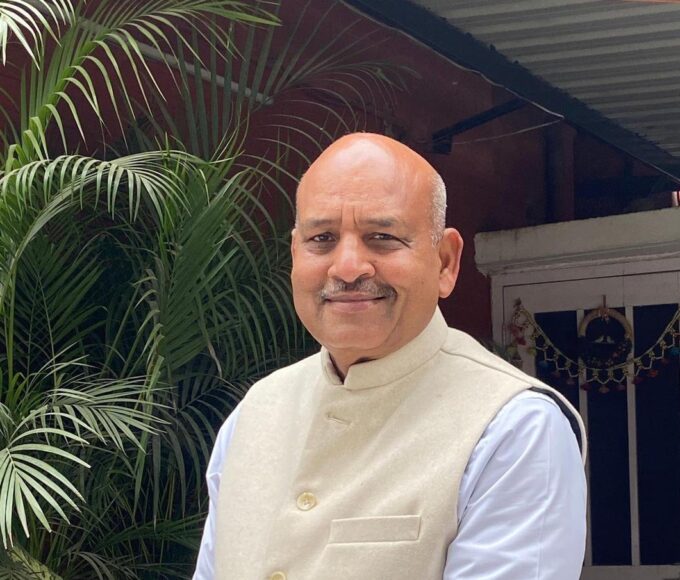







A 1970-batch IAS officer of the Tamil Nadu cadre,Nirmal Singh, now Secretary, Ministry of Overseas Indian Affairs, has also been Secretary-General of the National Human Rights Commission and Director-General of the Bureau of Indian Standards in a career spanning more than three decades.As Development Commissioner in the Ministry of Industry, he was involved in guiding policy and infrastructure in the cement industry Singh was also Joint Secretary (Refineries), Ministry of Petroleum and Natural Gas and chaired an expert technical group on whose recommendation the government dismantled the administered pricing mechanism in the petroleum sector. Small scale industry and urban development are other areas in which he has contributed.
gfiles: What was behind creating an independent ministry for overseas Indians?
Nirmal Singh: Overseas Indians constitute a significant economic, social and cultural force in the world.They are estimated at over 25 million, spread across 120 countries. Their industry, enterprise, economic strength, education and professional skills are widely recognized.The creation of the Ministry of Overseas Indian Affairs (MOIA)
acknowledges the fact that the welfare of overseas Indians needs mainstream attention.
gfiles: Why did the government choose to differentiate between NRIs and PIOs?
NS: NRIs are Indian citizens of India who are abroad for pursuing studies, vocation, etc. PIOs are people of Indian origin,but have acquired nationalities of different countries.
gfiles: How many PIO cards have been issued and what is your
target for the next year?
NS:The PIO card scheme is administered by the Ministry of Home Affairs (MHA) through their offices in India and
Indian missions abroad. During 2006,a total of 5,664 PIO cards were issued.
gfiles: Is there any policy to encourage PIOs to apply for cards?
NS: When PIOs approach the MHA for longer-period visas or extension of visas beyond one year,they are generally advised to apply for PIO cards as it has a validity of 15 years.
gfiles: How does the MOIA propose to tackle the problems of PIOs in their adopted countries? In Fiji, PIOs have land owner ship problems.In other countries,they face problems over cremation.
NS:The Ministry is in touch with the Indian missions who take up problems faced by PIOs with the local govern
ments through diplomatic channels
gfiles: How do you propose to tackle the demand for admission
into higher education for Indians abroad?
NS:The Ministry plans to establish a PIO/NRI university in India. Some proposals have been received, which arebeing examined.Once this comes through,the problem of admission into higher education of Indians abroad will be
sorted out to an extent.

gfiles: Is there any proposal to increase the investment from Indians abroad?
NS: The government values investments by NRIs. It has provided a liberalized policy framework for approval of
NRI investments through both the automatic and the government route.NRIs are permitted to invest up to 100 per
cent equity in real estate and civil aviation. Automatic approval is given by the Reserve Bank of India (RBI) to all
NRI proposals with their investment up to 100 per cent for all items or activities except a few.The government has a lib
eral, transparent and investorfriendly Foreign Direct Investment policy (FDI),wherein FDI up to 100 per cent isallowed under the automatic route for most sectors or activities,where the investor does not require any prior approval.
In recognition of the potential of overseas Indians to invest in the emerging opportunities in their home coun
try, the MOIA has established a not-for-profit trust in partnership with the Confederation of Indian Industry and reg
istered under the Indian Trust Act, 1882 as Overseas Indian Facilitation Center.It is a one-stop shop for the Indian dias
pora. The objective will be to promote overseas Indian investment in India and facilitate business-to-business part
nership between Indian business and overseas Indians.
gfiles: What has the Pravasi Bharatiya Divas achieved?
NS: The government has been organizing the Pravasi Bharatiya Divas in recognition and appreciation of the constructive, economic and philanthropic role played by the Indian diaspora. It is the annual flagship event of the MOIA. It aims to connect over 25 million overseas Indians and to bring the expertise and knowledge of the
Indian overseas community to India and integrate it into India’s development
gfiles: China is very proactive in enlisting the support of over seas Chinese.There is an impression that India is not aggressively promoting the interests of PIOs.
NS: The MOIA has taken a number of steps to promote the interests of overseas Indians. To strengthen bonding, the government has decided to broaden the coverage of PIOs under the Overseas Citizenship of India scheme launched at Hyderabad in 2006.The government has issued 1,61,176 OCI cards. The government plans to enter into social security agree ments with the Netherlands, France, Norway and Sweden on the lines of the social security agreement signed with Belgium.Those working on contracts of up to 16 months are exempted from paying the social security contribution in the host country, provided they continue to make social security payments in their home country.Those who live and work for longer than 16 months in Belgium and make social security contributions in the host country will be enti tled to export their social security benefits to the home country on completion of the contract or on retirement. The government plans to enter into agreements with the governments of Gulf Cooperation Council states to ensure job security and legal protection for the Indians working there.The government signed such an MoU with the UAE in December 2006 and later with Kuwait in 2007. To enhance job opportunities for the Indian workforce in global markets, the MOIA has launched the National Skills Development Programme for Emigrant Workers in partnership with the Ministry of Small Scale Industries, state governments and apex business chambers.The existing industrial and vocational training centres in the country will be employed to equip emigrant workers with suitable skills in areas like machining, tools and dye-making, hospitality,etc.The government aims to train 50,000 workers in diverse fields in 2007. The MOIA is proposing a PIO/NIR University in India, to be set up by overseas Indian trusts or societies with cred ibility and experience in education.It will have the status of “Deemed University”under Section 3 of the UGC Act.
‘NRIs are permitted to invest up to 100 per cent equity in real estate
and civil aviation. Automatic approval is given by the Reserve Bank
of India (RBI) to all NRI proposals with their investment up
to 100 per cent for all items or activities except a few’
gfiles: Your website says you extend educational facilities to NRIs, PIOs and foreign nationals. Is including foreign nationals not against the purpose of your Ministry?
NS: One of the mandates of the Ministry is dissemination of information concerning admission of NRI/PIO students to various educational,technical and cultural institutions in India wherever discretionary quota for NRI/PIO students exists.The information on the website relates to the 15 per cent supernumerary quota created by the government whereby 15 per cent seats in all the institutions/university departments approved by AICTE and offering technical courses shall be allowed on supernu merary basis from amongst foreign nationals/persons of Indian origin/children of Indian workers in the Gulf countries, over and above the approved intake, provided that one-third of the 15 per cent shall be reserved across differ ent disciplines in the educational institution, for the chil dren of Indian workers in the Gulf countries.Similar facilities exist in the educational institutions under UGC.
gfiles: Some years ago, a meeting of PIO parliamentarians was convened and was highly acclaimed. Do you have any plans to reconvene it?
NS:The Ministry had planned to convene PIO parliamen tarians during Pravasi Bharatiya Divas 2007 but due to certain reasons it did not happen.