

















Pondicherry was just a small fishing village when the French occupied it in 1673. But it soon grew into a flourishing port town as the French were keen to make the most of a busi ness opportunity. It was not easy as there were constant clashes with the Dutch and the English. In 1699, the Dutch captured the town and got down to fortifying it. Six years later, the French once again regained it. In the years to follow, they occupied Yanam, about 840 km from Pondicherry, Mahe on the Malabar Coast, and Karaikal that is around 150 km from Pondicherry.
It was only in 1954 that these four enclaves were transferred to India, resulting in the formation of the Union Territory of Pondicherry. As the transfer had to be ratified by the French parliament, it was only in 1962 that India and France exchanged instruments that France had ceded the four enclaves to India. From July 1, 1963, these enclaves became the Union Territory of Pondicherry. Keeping local aspirations in mind, the Union Territory has now been renamed Puducherry, but the capital city retains its old name, Pondicherry.
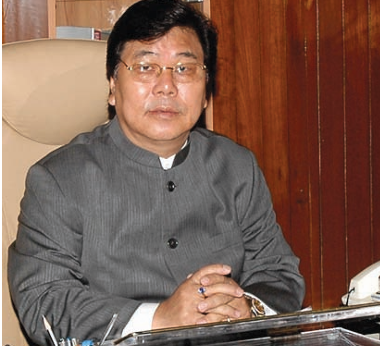
It has been quite a change for Mukut Mithi, who is the Lt Governor of Puducherry after a tumultuous tenure in Arunachal Pradesh as Chief Minister. But he is enjoying his new role and talks of how his job is quite challenging in an interview with Ramesh Menon at the Raj Bhavan in Pondicherry. Excerpts
gfiles: What is the mood in a comparative ly new state?
Mukut Mithi: Expectations are high in Puducherry as this is a Union Territory with a difference as we have elected rep resentatives with a Council of Ministers. The other exception is, of course, Delhi. There has been a raging debate and demand that the government now allow complete power to the elected representatives. But we do not have a problem here. The Ministers and bureaucrats work well with me.
gfiles: Does a small state like Puducherry get overshadowed by an industrial giant like Tamil Nadu that is on a resurgent path?
MM: A lot of people think that it is a problem for a small state with an area of 479 sq km and a population of around 10 lakh to bloom under the shadow of a huge state like Tamil Nadu which is powerful culturally, politically and industrially. It is actually the opposite as we stand to gain. As our taxes are much lower here, most Tamil Nadu companies want to set up units here. So, we have HCL, MRF, L&T, Hindustan Lever, Lenovo and so on. We benefit from any resurgence in Tamil Nadu. Puducherry, in spite of its small size, has over 7,600 industries. Besides, we have a Special Economic Zone dealing with IT, cos metics and others that are almost cleared. When it is up and running, it will create a lot of opportunities. One sea port has started in Karaikal and another one is being planned but it has slowed down as environmentalists are raising objections.
gfiles: There seems to be an increasing focus on tourism here. Is the state planning a tourism strategy?
MM: Puducherry is going to change pretty soon as there is a lot of focus on developing tourism. We want this little place to become a tourist hub as it has tremendous potential. At the moment, we get about 50,000 foreign tourists and six lakh domestic tourists. We want it to be a high-end destination as we do not want too many tourists crowding around such a small place as it will dis turb the locals and the beauty that comes with the peace of the place. The hunt is already on for setting up of good quality resorts and we are in the process of setting up a golf course of interna tional standard. Tamil Nadu has grown rapidly because of Japanese and Southeast Asian industry. The foreign employees love gold and we can exploit that as they can easily fly in a small air craft in minutes.
gfiles: How does the government visualize the state in the years to come?
MM: We want to give a modern look to Puducherry. It is possible to do this while maintaining the heritage. As we are going in for all-round growth, we might as well opt for a modern look. We do not want Puducherry’s growth to be like what we see in other haphazard cities. I, along with other officials, visit ed Australia, New Zealand, Singapore and Malaysia for studying deep sea fish ing and the running of the Mass Road Transport System as we want to do both of these here. The quality of life of fish ermen here is very poor. We want to first increase their earnings to change their future. They have to enjoy the fruits of development. We also have to think of a modern transport system.
gfiles: What about funds? Is it difficult for such a small state to wring funds out of the Centre?
MM: Do we have enough money? Well, not as much as we want, but it is not bad. Our allocation comes from the Planning Commission. They study our capacity before giving us funds. Earlier, Union Territories could not have a separate account but with amendments brought in, we can now have a public account from December 2007. The advantage is that we can borrow from the market, speeding up our resource capability. We can now be more productive.
