


























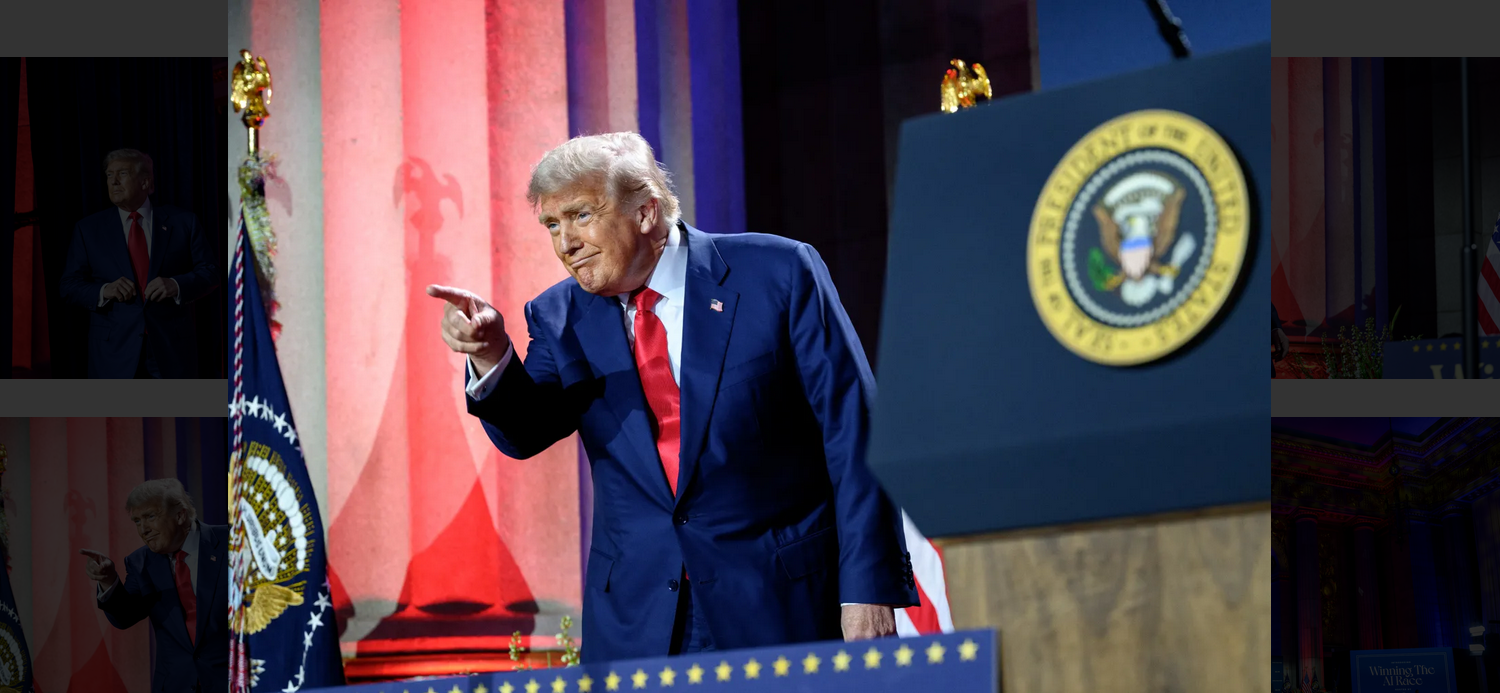
Indian immigrants in the U.S.—from H-1B workers to green card applicants and undocumented families—are facing the brunt of the sweeping Trump legislation, One Big Beautiful Bill, which has no beauty for them but has set off waves of anxiety.
The 900 pages long bill overhauls taxes, boosts defence and infrastructure spending, and injects billions into border security.
While the bill affects virtually all Americans, immigrant communities, particularly Indian nationals, find themselves directly in its crosshairs.
H-1B Visa Holders Face Uncertain Future Indian tech workers—who make up more than 70% of all H-1B visa holders—are already on edge. Though the bill doesn’t explicitly alter the H-1B program, it reinforces the “America First” framework under which immigration policy is being aggressively restructured. Increased funding for immigration enforcement, coupled with heightened scrutiny of work visas, has left many fearing tighter renewal standards, fewer approvals, and a chilling of employer sponsorships. Adding to the anxiety is the decades-long green card backlog. Over one million Indian nationals—most in high-skilled professions—are trapped in the employment-based green card queue due to the 7% per-country cap. With no provisions in the new law to address or expedite this backlog, many Indians in the EB-2 and EB-3 categories face a wait of 20 to 90 years, effectively excluding them from ever becoming permanent residents during their working lives
Green Card Aspirants: Blocked at the Finish Line
Those waiting in line for green cards find themselves further disadvantaged. The bill introduces greater discretion for USCIS officers to deny adjustment of status based on “economic competitiveness” or “labour market priorities,” vague criteria that could lead to arbitrary rejections. The administration has also hinted at revamping the points-based criteria, putting more weight on country of origin, family size, and “loyalty” to American values—potentially discriminatory filters.
Undocumented Indian Immigrants: Targeted by ICE Surge
With $75 billion earmarked for Immigration and Customs Enforcement (ICE)—more than India’s entire annual defence budget—Trump has signalled a dramatic escalation in deportations. India, home to the third-largest undocumented immigrant population in the U.S. (approx. 725,000), is likely to witness stepped-up raids and removals.
Earlier this year, dozens of Indians were deported in shackles, drawing strong diplomatic protest from New Delhi. The expanded ICE budget includes provisions for joint operations with local law enforcement, biometric tracking, and fast-track removals—tools that will disproportionately impact undocumented Indians and visa overstayers.
Legal Immigrants Not Spared: Birthright Citizenship & Denaturalisation Worries
The new legislation subtly introduces clauses enabling retroactive denaturalisation for those found to have committed “material misrepresentation” at any point in their immigration process. Immigration attorneys warn this could be used selectively and punitively, potentially revoking naturalized citizenship for minor, unintentional errors or associations from decades ago.
Moreover, the bill empowers states to review birthright citizenship claims, potentially undermining the 14th Amendment protections. Indian immigrants on temporary visas with U.S.-born children fear bureaucratic challenges and delayed documentation—further complicating family security.
F-1 Students and Dependents Also Vulnerable
Indian students on F-1 visas, once seen as a relatively stable path into the U.S. economy, are increasingly anxious. The bill boosts surveillance on campus activism, ties visa renewal to “institutional compliance,” and leaves dependent visas like H-4 hanging in legal limbo. There’s also talk of restricting Optional Practical Training (OPT)—a vital bridge to employment for international students.
Remittances Tax: A Hidden Financial Blow
Starting next year, the bill imposes a one percent tax on international remittances. For Indian Americans, who send $25–29 billion annually to family back home, this adds a new layer of cost. While an earlier draft proposed a 5% levy, intense lobbying by the remittance industry scaled it back—but the principle of taxing outbound money flows has now been codified.
Cuts to Public Services: A Hit to Vulnerable Immigrants
Despite adding an estimated $3 trillion to the U.S. national debt, the bill slashes key entitlements, including a $1 trillion cut to Medicaid. This will disproportionately affect low-income Indian immigrants, many of whom rely on public health programs, especially in immigrant-heavy states like New Jersey, California, and Texas.
The Broader Implication: America First or Indians Last?
While Trump claims the bill is designed to put America first, many Indian immigrants feel left behind—or worse, targeted. From deportations and delays to legal limbo and financial penalties, the new law represents a tectonic shift in how immigration intersects with domestic policy.
Critics argue that the law bypasses traditional checks and balances, granting the executive branch near-unilateral authority over trade, immigration, and enforcement, thereby weakening Congressional oversight and diluting judicial review.
India’s Diplomatic Dilemma
New Delhi has so far responded cautiously, balancing its desire for deeper economic ties with the U.S. against growing domestic outrage over deportations and visa curbs. However, as India negotiates a separate $530 billion trade deal with Washington, concerns about treatment of its diaspora could become a key sticking point—especially with the August 1 trade deadline approaching.
Conclusion: A Bill with Global Repercussions
For Indian immigrants in the U.S.—whether working professionals, students, undocumented workers, or green card hopefuls—the One Big Beautiful Bill may turn out to be anything but beautiful. Its provisions signal a more unforgiving, enforcement-heavy, and transactional approach to immigration and bilateral ties, one where even the most law-abiding residents are left unsure of their future.
As Indian Americans continue to contribute disproportionately to the U.S. economy, tech industry, and healthcare system, many are asking whether the American Dream has been traded in for political theatre—and whether they’re now collateral damage in Trump’s war on the global order. TN Ashok is a veteran journalist with over five decades of experience covering economic, political, and scientific developments around the world. Operating globally from key locations, he writes with authority on contemporary issues—from U.S. domestic and foreign policy to India’s global ambitions and Europe’s evolving challenges. His incisive analysis offers a unique perspective on the forces shaping the U.S., India, and Europe, making his work essential reading for those seeking depth and clarity on global affairs.

Contributor, IANS - Washington DC/New York
Executive Editor, Corporate Tycoons - Pune, India
Executive Editor, The Flag Post - Bengaluru, India
Contributor, The Statesman, Hindu Business Line, Sarkaritel.com, Diplomacyindia.com
Former Economics Editor, PTI - New Delhi, India
Former Communications Advisor,
Alstom Group of Companies, SA - France/Belgium


