














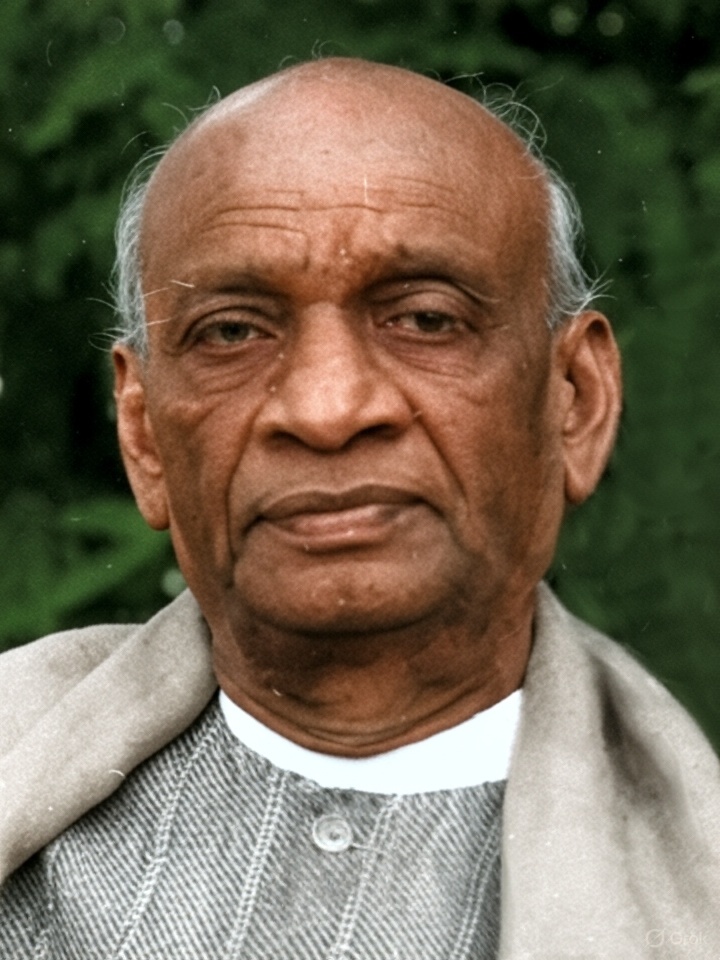
Patel felt that the nation Could survive without a Crown (Kashmir) but not without its Belly (Hyderabad).
The 565 principalities across India had barely been taken into account until then, even though they occupied half the country—today’s Telangana, Rajasthan, J&K, Ladakh, Manipur and Tripura, plus much of Gujarat, Karnataka, Haryana, Orissa, Chhattisgarh, and Kerala, about half of Madhya Pradesh, and parts of Himachal, Punjab, and Uttarakhand.
Mountbatten only turned to the various rajas, maharajas, and nawabs who ruled these pockets across the Empire in late July, just three weeks before the date he had arbitrarily set for the transfer of power to India and Pakistan. He told a special meeting of the Chamber of States that the relationship (and responsibilities) of British paramountcy (the odd concept through which the Empire retained overall control while allowing the various rajas and nawabs the sense that they were sovereign rulers) would end. He told the gathered princes that they should accede to one of the two emergent states with regard to at least defence, communication, and external relations—which had hitherto been Britain’s responsibilities.
It is tough to comprehend how chaotic and complicated the processes of independence and partition were in 1947. The idea that India was to get independence had barely taken root in 1946, and a myriad pulls and pressures operated simultaneously in various directions. More or less the entire leadership of the Congress had been in jail until 1945, as a result of the Quit India Movement. For its part, the Empire only decided to throw in the towel after the Second World War ended, Attlee replaced Churchill as Britain’s prime minister, and the naval mutiny unsettled the instruments of the Raj.
Lord Louis Mountbatten landed in Bombay on 22 February 1947 with instructions from Attlee to hand over power by 30 June 1948 to either one or two countries. Communal violence had been raging since the Muslim League’s Direct Action Day call in August 1946, and it was becoming tough to maintain public order. About three months after he arrived, the new viceroy decided to hand over power sooner than later—so long as Nehru allowed him to retain the pomp and influence of the viceregal palace until the deadline Attlee had fixed for him to leave India.
He declared his independence and partition plan on 3 June, acknowledging in his memoirs that a reporter’s question about the date when it would happen caught him off guard. Not wanting to seem unprepared, he rattled off his favourite date—15 August, the date on which he had received Japan’s surrender when he had been supreme commander of allied forces in southeast Asia two years earlier.
Princely dilemmas
The 565 principalities across India had barely been taken into account until then, even though they occupied half the country—today’s Telangana, Rajasthan, J&K, Ladakh, Manipur and Tripura, plus much of Gujarat, Karnataka, Haryana, Orissa, Chhattisgarh, and Kerala, about half of Madhya Pradesh, and parts of Himachal, Punjab, and Uttarakhand.
Mountbatten only turned to the various rajas, maharajas, and nawabs who ruled these pockets across the Empire in late July, just three weeks before the date he had arbitrarily set for the transfer of power to India and Pakistan. He told a special meeting of the Chamber of States that the relationship (and responsibilities) of British paramountcy (the odd concept through which the Empire retained overall control while allowing the various rajas and nawabs the sense that they were sovereign rulers) would end. He told the gathered princes that they should accede to one of the two emergent states with regard to at least defence, communication, and external relations—which had hitherto been Britain’s responsibilities.
By this time, Sardar Vallabhbhai Patel, the Home Minister in the Interim Government led by Jawaharlal Nehru, had made clear to Mountbatten his concern that India could not have a beehive of independent states dotted across it. He asked Mountbatten to use his authority to ensure that the large majority of these states acceded. If Mountbatten got him `a full basket of apples,’ he would deal with the few that remained. By the date fixed, a large number had indeed fallen in line, even though several had initially hoped to become independent in the wake of Empire.
It became apparent, however, that the mismatch between the religious affiliation of ruler and subjects would severely complicate the path of three princely states. These included the two biggest, Jammu and Kashmir and Hyderabad, and one of the smallest, Junagadh on the southern coast of Patel’s native Gujarat.
Pragmatic acceptance
The conservative Patel was nothing if not pragmatically down-to-earth. He had accepted the partition plan with less sentimental reservations than Gandhi or Nehru. Further, he saw that the logic of the Two-Nation Theory, the basis of the partition, meant that Hyderabad, with a predominantly (about 85 per cent) Hindu population, and Junagadh, with an 80-plus per cent Hindu population, should both come to India, and Jammu and Kashmir, with a predominantly (77.8 per cent) Muslim population, should go to Pakistan.
It appears that, around the time of independence—when the nightmare of dealing with hundreds of often cantankerous and sometimes recalcitrant princes amid the horrors of communal violence were extreme—Patel was willing for a trade-off with Pakistan over the future of J&K and Hyderabad.
Mountbatten put on record that he told Maharaja Hari Singh of J&K when he visited Srinagar in the third week of June (five weeks before he addressed the Chamber of States) that he had Patel’s word that he would accept the maharaja’s decision if the latter decided to join Pakistan. Mountbatten also told him that he must make up his mind to join either Pakistan or India by 15 August.
Patel’s own political secretary, V Shankar, has been quoted thus: “The Sardar was content to leave the decision to the Ruler of Jammu and Kashmir and, if the Ruler felt that his and his State’s interest lay in accession to Pakistan, he would not stand in his way. …if Jinnah allowed the King (Hyderabad) and the pawn (Junagadh) to go to India, Patel might have let the Queen (Kashmir) go to Pakistan, but Jinnah rejected the deal.”
Patel no doubt looked upon Jinnah as an upstanding Attorney who would be willing to negotiate in good faith. In keeping with the spirit of the Two-Nation Theory on the basis of which British India was being divided, he must have felt that Jinnah would accept leaving Hindu-majority Hyderabad to India if Pakistan got Muslim-majority J&K.
The Junagadh imbroglio
However, things came to a head in Junagadh first. On precisely 15 August 1947, its Nawab, Muhammad Mahabat Khanji III, announced his decision to accede to Pakistan. The idea was anathema to India’s leaders. For, Junagadh would be an enclave surrounded by Indian territory, a beachhead on the Arabian Sea for Pakistan. More important, the 80 per cent Hindu population of Junagadh did not want to be Pakistanis, which had been expressly founded as a cultural, political, and geographical homeland for Muslims. Nevertheless, Pakistan accepted that accession on 13 September.
India suggested a referendum, but Pakistan demurred. Jinnah’s Muslim League had represented the interests of Muslim landlords and had explicitly held that the princes could decide the destinies of their peoples. The All-India Congress Committee, on the other hand, had since at least its 1936 session (at which Nehru presided) passed resolutions vouchsafing the rights of the peoples of the principalities to decide their futures.
With Patel in charge, the Junagadh issue was neatly handled. Indian troops moved into adjacent areas surrounding Junagadh. The panicked nawab fled to Pakistan on board his private plane with his dogs and family. On 7 November, his prime minister invited Indian authorities to take over the place. A plebiscite was conducted on 20 February 1948, and the place merged with India in March. Not a shot had been fired.
Pakistan still holds that Junagadh belongs to it, but that is no more than a rhetorical stance.
The crown of India
The other two states—J&K and Hyderabad—were far more vital, and of course far, far larger than Junagadh. Indeed, both were territorially more or less the size of Britain. Nehru was set on including Kashmir in India, partly because his ancestors hailed from there and he loved the place. He also believed that Sheikh Abdullah held the love of his people and was a dedicated friend—and so could help India to win a referendum in the state.
Mahatma Gandhi too evidently leaned towards including J&K in India. Although he was focused on stopping the communal violence elsewhere, he went to Srinagar in early August. Ignoring the goat’s milk and fruit which the maharaja laid out for him, he advised the maharaja to check whether his prime minister was popular.
The sons of that prime minister, RC Kak, were in the Royal Air Force, and his second wife was British. Kak, a Kashmiri Pandit, is said to have advised the maharaja to try and remain independent, and to join Pakistan if independence proved impossible—although one has seen no documentary evidence of this. After replacing Kak with Janak Singh, who had earlier been a minister, on 10 August, Maharaja Hari Singh appointed Mehr Chand Mahajan, who remained J&K’s prime minister from October 15, 1947 to March 5, 1948.
Patel apparently trusted Mahajan, as well as RL Batra, who served as deputy prime minister. It was Batra who carried Hari Singh’s personal letters to Delhi on 24 October 1947. The letter for Nehru, and a separate one for Sardar Patel, both urgently requested military assistance. That was the day the maharaja discovered the advance of the Pakistani tribesmen when the lights went out in his palace in the middle of his splendrous celebration of Dussehra. The tribesmen had damaged the Mohura power plant between Uri and Baramulla, having invaded the state via Domel on the night of 22 October.
Key change of heart
The situation had been as dynamic as a kaleidoscope during that horribly muddied monsoon season, and Patel’s views evidently evolved in response to the changing situation. When Pakistan accepted Junagadh’s accession and refused a referendum there, it must have become apparent to Patel that the haughty Jinnah was not being reasonable, nor acting on principle, and showed no sign of being willing to negotiate. All this must have irked Patel, especially since India had not encouraged the Baluch Shahi Jirga council to join Baluchistan to India, and had accepted the referendum in the North-West Frontier Province, the people of which had opted to join Pakistan by a small margin of votes.
He must also have been influenced by the perfidy of Pakistan invading a few weeks after signing a Stand-still Agreement with Jammu and Kashmir—which India had refused to sign. Even before that, he must have been appalled by Pakistan’s severe economic blockade of Jammu and Kashmir. Since all supplies reached the state through Pakistani territory, even such basics as salt, petrol, cheques, and post had been held back. (Having taken a leaf out of Pakistan’s playbook, India too imposed a similar blockade of Hyderabad in 1948, although Nehru insisted it was only meant to prevent arms and other military supplies from getting there.)
In light of all this, Patel seems to have become inflexible over J&K too sometime between Pakistan’s acceptance of Junagadh’s accession on 13 September and the invasion of Jammu and Kashmir. Most likely, he had made up his mind by the time Hari Singh appointed Mahajan and Batra—appointments behind which Patel may have had a covert role.
Even until mid-October, up to eight weeks after the Partition, Patel might still have been willing if Jinnah had suggested that India take Hyderabad and leave J&K to Pakistan, but there is no doubt that Patel was fully in line with Nehru and Gandhi regarding Jammu and Kashmir’s accession by the time Pakistan invaded the state.
Until Pakistan’s perfidy (on Junagadh, the Hyderabad question, and the blockade of Kashmir) changed his mind, Patel’s position was a crucial factor, of which Jinnah could have taken advantage. For, since the British too seemed happy to have J&K join Pakistan (Mountbatten specifically quoted Patel’s willingness for this to the maharaja), the Patel-Mountbatten duo might have been able to persuade Nehru to accept a trade-off in case Jinnah had taken an initiative during the summer. However, Jinnah was apparently overconfident that Kashmir was `like a ripe fruit, ready to fall into my lap.’ (The phrase is quoted in the mémoire of Mohammed Ali, who was the Secretary-General of Pakistan’s Cabinet at the time.)
The tribesmen’s invasion of Kashmir certainly shut that door, even if it had been open until a few days before. Field Marshal Sam Manekshaw put on record that it was Patel who instructed him (when Manekshaw was sent to the cabinet from the directorate of military operations) on the evening of 26 October that `you have your orders’—cutting off Nehru’s winding peroration to say that. As a result of that order, troops from the Sikh Regiment were marshalled from Gurgaon that evening, and took off from Palam airport for Srinagar at dawn the next morning to thwart the Pakistani tribesmen’s attempt to take over Kashmir.
Patel’s reasons
Let us examine some of the reasons that may have influenced Patel’s early willingness for a trade-off. No doubt he was only willing for a compromise because he prioritised the overwhelming importance of bringing Hyderabad state into the Indian Union. So, it would have been about prioritising Hyderabad state over Jammu and Kashmir rather than specifically about the northern state.
The most obvious reason for this eagerness is that Hyderabad would have been a huge gaping hole (as some had then observed in those words) in the middle of southern India. Indeed, it was even called `a cancer in the belly of India,’ which would have cut off the south from the north of the country.
Geographically, there can be no doubt about the far greater importance of Hyderabad to India than of J&K. Hyderabad state not only included what is today’s Telangana, but also substantial parts of today’s Karnataka and Maharashtra. One might say that Patel realised that the body politic could manage without its crown but not without its belly.
Allowing it to become Pakistan could have hugely weakened India militarily. Defending the south of the peninsula would have presented almost as much of a challenge as `the chicken’s neck’ at the north of West Bengal sometimes seems, and that other `chicken’s neck’ at the base of Jammu and Kashmir state seemed during the 1965 war.
Conversely, the practical Patel must have been keenly aware of the challenges that geography posed with regard to Jammu and Kashmir’s putative accession to India. At the time, the roads to Jammu and Kashmir went from either Sialkot or Rawalpindi (the railway track, and electricity and telegraph lines too). Only in late August did the maharaja start the urgent construction of a kucha road to connect Kathua with Lakhanpur, the hamlet at the edge of his territory touching the sliver of the plains that Cyril Radcliffe, the British lawyer who partitioned Punjab, had left at the northern tip of the part of Punjab he gave to India.
Since the runway at Srinagar was in pieces by the afternoon of 27 October under the weight of the Dakotas that had kept landing laden with troops since the morning, that initially kucha road was vital for the defence of Jammu and Kashmir in 1947-48. (The airfield had hitherto been used mainly for the maharaja’s private plane.)
Razakar and Communist threats
A second vital reason would of course have been demography: the large majority of Hyderabad state’s population was Hindu. Patel was probably more willing to accept the logic of the Two-Nation principle than Nehru or Gandhi. He was not communal, but would have been loathe to allow such a large Hindu population to be taken over by Pakistan, especially in light of the genocidal killings that had been underway since August 1946.
The violence of Muslim `Razakar’ cadres in parts of Hyderabad state would have tied into this. At least one incident of a man’s hands being cut off and of one being beheaded was reported. Razakars were the street cadres of the Majlis Ittehad-ul Muslimeen, which had remained largely defunct for the first decade after it had had been established in 1927, but became active after Nawab Bahadur Yar Jung became its president in 1938. When Jung died young in 1944, the far more obstreperous Kasim Razvi of Latur took over the organisation.
Razvi gave fiery speeches, telling his followers that one of them was enough to defeat ten of their enemy, and rallying them to fight for the independence of Hyderabad state. The state’s own troops were ill-disciplined and even worse equipped, which may have been a reason why Nizam Mir Osman Ali Khan gave the Razakars free rein, especially under his last prime minister Mir Laiq Ali, who was dedicated to the idea that Hyderabad state must join Pakistan.
On the other hand, a Communist movement too had gained great momentum among the poor in the forested and rural hinterland of Hyderabad. It is likely that the conservative Patel would have worried about the spread of Communist insurgency from Hyderabad to surrounding parts of emergent India. Certainly, the administration which took over Hyderabad state after it became part of India on 17 September 1948 treated the suppression of Communism as an urgent priority. Great violence was used against them, as also against young Muslims suspected of having been Razakars.
Congress’s network
No doubt a third reason in Patel’s mind was the presence of many Congress cadres in Hyderabad state. Dressed in khaki and Gandhi caps, they were at the forefront of the few demonstrations that took place in parts of the state during 1947-48 to press for the state to accede to India.
Patel may have played a key role in appointing conservative Congress leader KM Munshi as India’s Agent General (official representative for trade and other relations) to Hyderabad state in 1947-48, when Munshi was also a member of the drafting committee of India’s Constitution. Munshi, who founded the Bharatiya Vidya Bhawan, was one of the main proponents of the reconstruction of the Somnath temple. He was later associated with the Akhand Hindustan movement, the Swatantra Party, and chaired a meeting in 1964 at which the Vishwa Hindu Parishad was formed.
Patel’s intelligence network for the state was obviously outstanding—a contrast to Jammu and Kashmir. His ministry had had 13 months after independence to spread their net to gather information on Hyderabad. The presence of Congress cadres and of KM Munshi no doubt helped the Indian state to know what was what, and where and how, across the sprawl of Hyderabad state. Plus, much information on what was going on in Hyderabad was obtained through telephone, wireless, and other intercepts.
So, when Major General JN Chaudhuri’s troops entered Hyderabad in mid-September, the tanks and infantry were able to cut through like several knives through butter to reach the outskirts of Hyderabad city from various directions in three days. When Chaudhuri took charge on 17 September, CID officers also swept in. They knew who to arrest and interrogate. Many were charged with treason.
It turned out that India even knew about the covert smuggling of arms into Hyderabad by the Jewish-Australian aviator-photographer-fixer, Sidney Cotton. But, like a scene from an action film, his plane took off minutes before Indian Army troops captured the airfield—with Razvi reportedly running behind the small plane on the Hakimpet airfield’s tarmac to try and get to Karachi. (Ironically, Cotton also flew the last Western flight out of Berlin when the Second World War broke out in 1939—and flew many reconnaissance spy flights during that war.)
Another contributing factor could well have been the Nizam’s divergence from Congress’s policy regarding the Second World War. The Congress had taken the principled stand that, while it stood against fascism, independence must precede Indian support for the war. On the other hand, the Nizam had done all he could to help Britain’s war effort. Claude Auchinleck, commander-in-chief of the Indian Army, stated that his Army would have found it tough to manage without the troops from Hyderabad state. Churchill further stated that the Nizam `had been with the Allies throughout …with generous help in men, money and material.’ The Nizam was given outstanding rewards and titles after both the first and second world wars, including the exclusive title: `his exalted highness.’
Historical context
During the war of independence of 1857 too, the then Nizam helped the British, and put down the freedom fighters in his territories, including the legendary (Rohilla) Turabaz Khan, who attacked the Residency in Hyderabad on 17 July 1857 at the head of 5,000 agitators. He was shot and killed by the British and Nizam’s forces in Toopran on January 24, 1859, after he had escaped from prison. His body was hung publicly in Hyderabad as a deterrent to others—just like the myriad Indians who were hung from trees along the Grand Trunk Road that year.
That Nizam might have played a crucial role to change history if he had backed the uprising. For, while it was underway, the Governor of Bombay Presidency telegraphed the Resident in Hyderabad that, `if the Nizam goes, everything goes.’
Even if Patel had not been familiar with this history, Munshi—who had been a stalwart of the adjacent Bombay Presidency—must have read up on Hyderabad, and could have made Patel aware. Especially in the context of that historical background, it must have irked staunch patriots such as Patel that Nizam Osman Ali Khan Asaf Jah VII, grabbed the initiative to declare Hyderabad’s independence just over a week after Mountbatten announced the partition plan. In a farman issued on 11 June, more than six weeks before Mountbatten addressed the Chamber of States, he stated that: `The result in law of the departure of the paramount power in the near future will be that I shall become entitled to resume the status of an independent sovereign.’
Apart from his putative claim to sovereignty, the use of the term `resume’ must have galled a sharply meticulous lawyer such as Patel. For, the Nizam had not been independent, but rather recognised and confirmed in his position by the British Raj. Indeed, although he sought to project himself as a sovereign ruler, he called on the British Resident at times.
The first four Asaf Jah rulers had farmans from the Mughal Emperor, appointing them. They paid peshkash tributes to Delhi, and the khutba (sermon) preceding Friday prayers was given in the Mughal emperor’s name. Although there was an interregnum of 14 years (1748-`62), when two sons and a grandson of the founder ruled without orders from Delhi, the irony is that those three rulers were not included in some histories of the Asaf Jahi dynasty, that period being glossed over.
According to some chronologies, the fourth Nizam even received a farman from Bahadur Shah Zafar II (in 1838)—even though that last Mughal later lamented that his control extended no farther than Mehrauli on the outskirts of Delhi. However, the fact is that, already from the third Nizam’s period in the early 19th century, the dynasty had been under the influence of the East India Company. It stationed troops in Hyderabad’s territory, for the maintenance of which the Nizams paid hefty sums.
The strong Mughal connection may have been specially distasteful for a man like K M Munshi. And the lawyer in Patel must have seen that the Asaf Jah dynasty had not been independent, but rather subservient (at least on paper) to the Mughal court as well as the British Raj—and had been strongly influenced by French commanders in the late 18th century, when Asaf Jah II was in power.
Lala Mansaram was the Mir Munshi (chief secretary) and chronicler of Nizam-ul Mulk, the founder of the Asaf Jah dynasty. He records that, whenever a farman arrived from Delhi, Nizam-ul Mulk would go to his `Farman bedi’ to raise it over his head in plain sight of the public as soon as it was handed to him.
When Emperor Mohammad Shah ordered Nizam-ul Mulk to come to Delhi in 1837, the Nizam was unwilling since he considered the security of the Deccan as his priority. Yet, he went, obeyed the order to face down the Maratha expedition into Malwa, and then negotiated with Nadir Shah when the Afghan conquered Delhi in 1738. Granting him unprecedented respect, Muhammad Shah gave the redoubtable Nizam-ul Mulk the titles Amir ul Umara (chief nobleman) and Bakshi-ul-Mumalik (paymaster-general).
In light of Mir Osman Ali Khan’s attempt in June 1947 to present himself as sovereign, as well as the brutal suppression of Congress workers and often Hindus at large by the Razakar volunteers from 1946, Patel must have decided early on that the nascent Government of India could not accept the Nizam’s assertions of independence.
It must have irked him that the Nizam posted an Agent-general in London (Nawab Mir Nawaz Jung) as well as in Delhi (Nawab Zain Yar Jung) and in Karachi (Nawab Mushtaq Ahmed) after independence. He seemed to be thus setting up an embryonic network of diplomats despite the fact that Mountbatten had indicated in the Governor-general’s speech on 15 August that Hyderabad’s defence, foreign affairs, and communication were likely to be the responsibility of New Delhi.
Jammu’s history
The state of Jammu and Kashmir, on the other hand, had been established by the East India Company after the Battle of Subraon in 1846. Dogra troops stayed away from that battlefield, at which the British defeated the Sikhs, even though the Sikh court had recently appointed the Dogra Raja Gulab Singh as their prime minister. After besting the Sikhs, the Company recognised Gulab Singh as Maharaja of the hill territories it had conquered from the Sikhs. For his part, Gulab Singh paid the indemnity they had imposed on the bankrupt Sikh court. (They retained Kangra when he could only raise three-quarters of the one crore rupee indemnity.)
Gulab Singh and his son, Ranbir Singh (who reigned from 1856 to 1885), were not governors for the Mughals. Indeed, Ranbir Singh rode to the defence of the British during the war of independence in 1857. The British nevertheless tightened their hold when the British Officer on Special Duty, Oliver St John, came to Pratap Singh, Ranbir Singh’s son, even while the latter’s body was still on the pyre in 1885, and declared himself the Resident for Jammu and Kashmir before giving him a letter from the viceroy recognising Pratap Singh as maharaja.
Given its geography (access being from either Rawalpindi or Sialkot) and demography, Patel was initially willing for a trade-off in which India could cede Jammu and Kashmir to Jinnah if the latter ceded the far more central, and wealthy, Hyderabad state to India. This was during the early maelstrom unleashed by Mountbatten’s sudden announcement, when the princely states were barely in focus.
Countering Pakistan
The pragmatic and conservative Patel must no doubt also have taken into account the vast wealth of Hyderabad’s ruler, who was reputed to be the richest man in the world, and the economic potential of the fertile and heavily wooded state. J&K’s economic potential must have paled in comparison. Indeed, ever since then, J&K has consistently been a drain on the national exchequer—and a source of instability—while Hyderabad has burgeoned into one of India’s most productive cities, a magnet for domestic and international capital.
While all these reasons may have weighed on Patel’s mind, his disappointment with what he may have perceived as Jinnah’s chicanery was probably the key to changing his position. He must have been galled at the fact that, after dividing India on the basis of religious majority areas, the new Pakistani government was less willing to go by that principle than he had been that summer. Jinnah had not only tried to take over Hindu-majority Junagadh, he was also now manoeuvring to take over both Jammu and Kashmir and the Hyderabad state.
In light of these double standards, Patel must have decided during the two months between mid-August and mid-October that Pakistan’s double-faced approach must now be resisted in both the south and the north.

David Devadas
David Devadas is a senior Journalist. He writes on national security issues, politics, and geopolitics. He is the author of The Story of Kashmir and The Generation of Rage in Kashmir (OUP, 2018).