














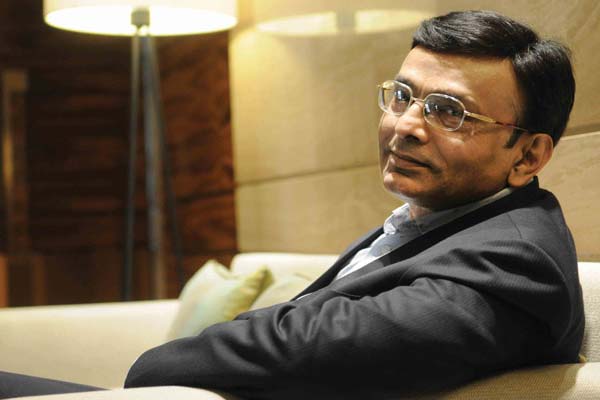



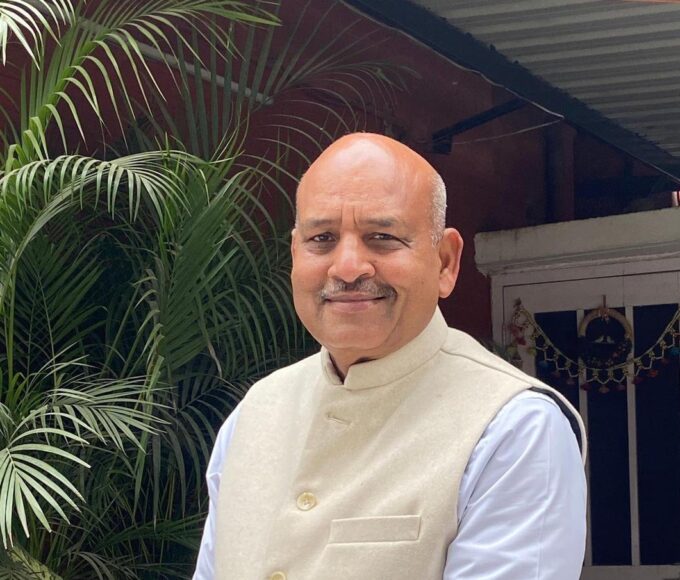











Chief Executive Officer of Lockheed Martin India Pvt Ltd Douglas A Hartwick is a former diplomat who was Assistant US Trade Representative for South Asia in the office of the United States Trade Representative (USTR). During his diplomatic career, he served twice in India (1986-90 and 1994-97). He has kept visiting India on several occasions in his capacity as Assistant USTR over the past two years and thus brings considerable experience and understanding of the country to his new job.
Headquartered in Bethesda, Maryland, Lockheed Martin employs about 140,000 people worldwide and is principally engaged in research, design, development, manufacture, integration and sustainment of advanced technology systems, products and services. The corporation reported sales of $39.6 billion for 2006.
gfiles: How do you approach the Indian market?
Douglas A Hartwick: Lockheed Martin approaches the Indian market with a solid commitment and a dedicated in-country presence with our office in New Delhi. We offer India a broad and balanced variety of platforms, systems and information technology capabilities. In August 2006, we held a Lockheed Martin Industry Team Supplier Conference in Bangalore which hosted representatives from over 50 Indian companies that are interested in forming business agreements with our company.
We have subsequently conducted site visits at more than 30 of the companies and had follow-on discussions about how we could work with them on potential Indian defence programmes – including co-production and offset.
gfiles: What is India’s special appeal as compared to other world markets?
DAH: India, the world’s largest democracy, and the United States have begun a new strategic relationship. It is founded upon the beliefs the two nations share in the importance of freedom and democracy, the rule of law, and the betterment of people through education and economic development. Both nations respect the rights of the individual and private property. Both nations have a history of building an economically healthy entrepreneurial sector.
gfiles: But India lacks infrastructure facilities, as compared to other markets….
DAH: This is not correct. We are in India for the last two years. We have opened an Indian subsidiary, Lockheed Martin India Pvt Ltd. It is a fully-owned subsidiary of Lockheed Martin Global Inc. The Indian subsidiary will represent the interests of all the operating systems of Lockheed Martin in India.
At Lockheed Martin we are developing integrated systems that will deliver inter-operable, seamless military capabilities. With that in mind, we joined the leading Indian information technology company, Wipro Technologies, to build the network-centric operations centre in Gurgaon. This modelling and simulation lab will develop and demonstrate emerging net-centric capabilities that are applied to current, real-world problems. Wipro Technologies and Lockheed Martin opened this unique lab in August 2006 and through it we will explore the art of the possible and prepare for network-centric operations of the future.
‘Complex, real-time, real-world demonstra
tions can take place in our Indian facility—
Ambar Jyoti or “light from the sky” ‘
gfiles: Can you give some details?
DAH: This lab, also known as Ambar Jyoti or “light from the sky”, is the first of its kind in India and we are excited to be a part of this initiative. We are certain that, as a result of this project, the Indian market will receive easier access to advanced network-centric architectures and concepts.
In the coming months, Lockheed Martin will connect Ambar Jyoti to other similar centres across the globe so that an increased number of complex, real-time, real-world demonstrations can take place in this Indian facility.
gfiles: What are some of the other initiatives?
DAH: Another recent initiative we are particularly proud of is the India Innovation Growth Programme. This extraordinary project is designed to accelerate the launch of early-stage Indian technologies into the global marketplace. This is a business incubation programme that advises companies with new technologies, often start-ups, on how to bring their products to the market as quickly as possible.
In the India Innovation Growth Programme, Lockheed Martin is partnered with the Federation of Indian Chambers of Commerce and Industries (FICCI) and the IC2 Institute at the University of Texas in Austin.
As you can see, we have laid the groundwork for a long-term and mutually beneficial relationship with Indian government and industry. And this relationship is vital and strong, in part, because there is much that connects India and the United States as nations and peoples.
gfiles: What business model are you bringing to India?
DAH: For Lockheed Martin, partnerships have meant and continue to mean global products for global markets. In the UK, for example, Lockheed Martin draws on the expertise and talents of partnering companies on the C-130 Hercules programme. The C-130 is aptly named the Hercules – a transport aircraft that, since 1954, has performed thousands of missions in peace and in conflict. It is our priority; we have already got the order to supply six C-130s. It is a $960-million deal.
In the UK, the C-130J Industrial Support Group comprises more than 40 British companies who provide equipment and services to Lockheed Martin for the production and ongoing support of the C-130J Hercules. The C-130J programme sustains more than 2,000 jobs in the UK, and 20 per cent of every C-130J is produced by UK-owned companies. While Lockheed Martin is often known for its leading aeronautics products such as its combat aircraft or the C-130J airlifter, some 70 per cent of the corporation’s turnover comes from products and services outside of its aeronautics business.
gfiles: How is this different?
DAH: This level of involvement and participation is our basic business model in many other programmes such as the T-50 Golden Eagle supersonic trainer in the Republic of Korea, the Medium Extended Air Defence or MEADS in Germany and Italy, as well as the F-16 combat aircraft.
The F-35 is another business model that is proving successful. Countries participating in this consortium are the United Kingdom, Italy, the Netherlands, Turkey, Canada, Australia, Denmark, Norway, Israel and Singapore.
Lockheed Martin is partnering with 14 British companies on the F-35, in vital areas as mission systems, vehicle systems, and airframes. The F-35 will bring in work valued at 27 billion pounds for UK companies. That degree of participation also means 8,400 direct jobs in-country and many thousands more indirectly.
This is the business model we will carry to India.
gfiles: You want to supply Medium Multi-Role Combat Aircraft (MMRCA) to India. How are you going to compete?
DAH: It’s the biggest fighter aircraft deal since the early 1990s. We are going to offer F-16s to India. The RFP (request for proposal) announcement estimated the programme at 126 MMRCA, at a cost of Rs 42,000 crore (about $10.24 billion as of the RFP date, or about $81.3 million per fighter). The 211-page document includes clauses for initial purchase, transfer of technology, licensed production, and life-time maintenance support for the aircraft. Under the terms of purchase, the first 18 aircraft will come in “fly away” condition, while the remaining 108 will be manufactured under Transfer of Technology. We are ready for it. We have world-class products.
gfiles: But India does not seem to be interested in F-16s as Pakistan already has them.
DAH: Through our F-16 Mid-Life Upgrade (MLU) programme, our partners have upgraded hundreds of aircraft. Many of the companies that were partners in our F-16 co-production activities are still involved in component production, and some are part of the team building the F-35 Lightning II.
While an F-16 E/F Block 60+ would have a number of important advantages, F-16 A/Bs and even its new Block 50/52 aircraft, the common underlying aircraft type would probably take some of the edge off of the deal. Lockheed Martin makes global products for global markets. The F-16 multi-role fighter is the choice of 24 nations worldwide. The Indian Air Force will give its specifications, what it is looking for, and we will give it a cutting edge over Pakistan.