








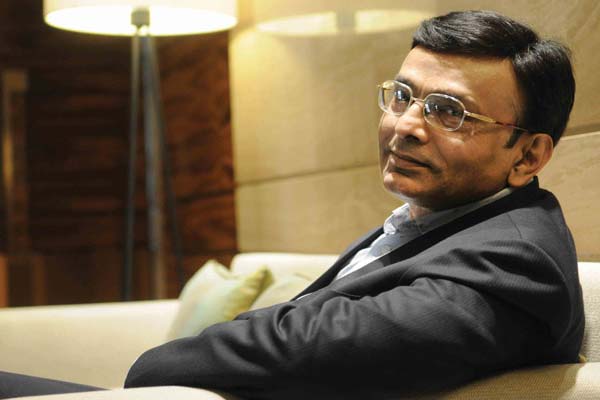


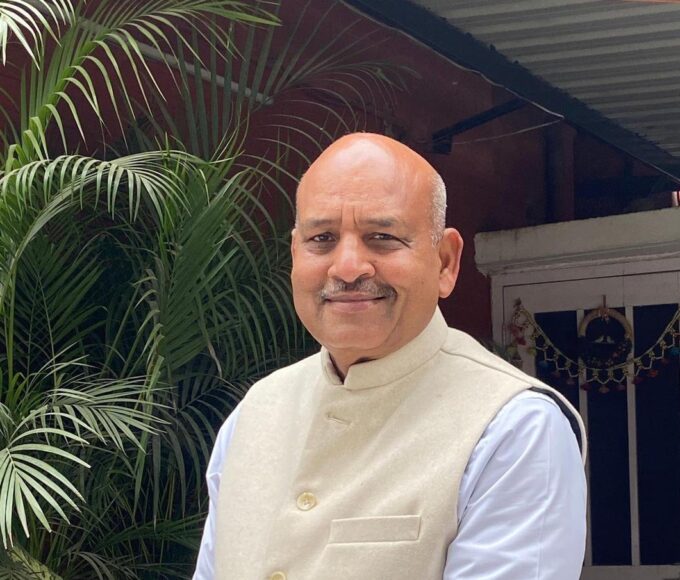









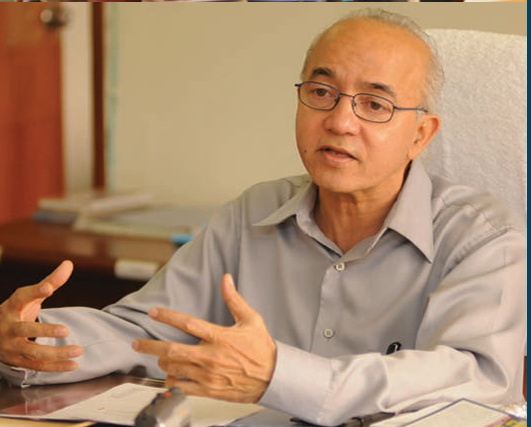
Former Commissioner of the Municipal Corporation of Delhi, RAKESH MEHTA of the IAS’ 1975-batch AGMUT cadre handled six key portfolios before becoming Chief Secretary of Delhi. His academic degrees include MA (History), MSc (Social Policy and Planning) from the London School of Economics, and BA (Honours) from St Stephen’s College, New Delhi. Mehta has been involved in public administration. His recent postings have been as Principal Secretary, Power; Chairman and Managing Director, Transco; and Chairman, Genco, NCT of Delhi. As Principal Secretary, Power he started the Energy Efficiency & Renewable Energy Management Centre in Delhi Transco Ltd. As Commissioner, MCD, he initiated major reforms in municipal governance including Public-Private Partnership in garbage management, sanitary land filling, and parking infrastructure. As CMD of Delhi Transport Corporation, he introduced 2,000 CNG buses in 14 months. He also brought out an Action Plan for Energy Efficiency in collaboration with TERI. Mehta, who comes from Gujarat, is known for punctuality, cordiality and dislike of pending work.
gfiles: How do you see Delhi, in terms of a model of governance?
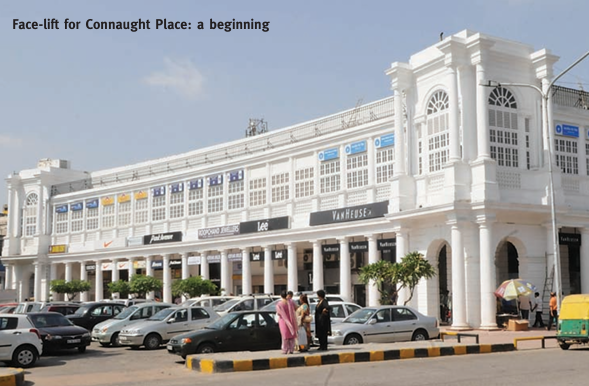
Rakesh Mehta: Delhi has some very distinctive features, like chaos and diversity. Things are changing, it is a globalized world. People would look for uniformity, now they are looking for kaleidoscopic variety and chaos. You can see cultural, ethnic and regional diversity. You can see urban agglomeration in Delhi. You see the walled city, the Lutyens zone, upmarket colonies like Vasant Vihar, and Dilshad Garden. There are authorized, unauthorized, and regularized unauthorized colonies.
As Commissioner, Municipal Corporation, I started the heritage walk and invited a couple of ambassadors. It was 7.30 am. We walked from Jain Mandir to Jama Masjid. They parked their cars at the Red Fort. When the walk finished, I wanted to send them by car to the parking lot. They jumped into a rickshaw instead. People like to see how a city lives. Delhi is lively.
gfiles: What are the Delhi government’s priorities?
RM: It is a city in rapid transition from rural to urban. By 2021, Delhi will be totally urbanized, with 24 million people. My biggest challenge is providing governance structures and systems for best administration to those 24 million people. It will be all urban management issues, of water, education, health, transport and social security. These are the key issues we are going to address. We have the Commonwealth Games in 2010, an opportunity to visualize how Delhi will look in 2021.
If we want people to be employed productively and give their best to the city, the governance model must ensure automatic delivery of citizens’ entitlements without their having to run around. We have taken a baby step in this direction, Mission Convergence. We are tracking people not being provided health, education, ration cards etc, a network of facilities through nine departments. We have evolved a single delivery system through District Magistrates. To track, we have issued smart cards.
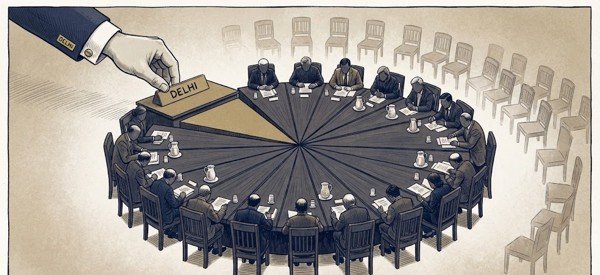
gfiles: Delhi’s perennial problem is said to be the multiplicity of authorities. Coordination among the agencies is an uphill task….
RM: All mega cities have this problem. There are ways of solving it. There are people who say the political structure needs to be changed. There is always a case for improving the system. Not everybody is satisfied with a given system. The debate can go on. But we can’t sit back till the problem is sorted out. That is where the challenge of administration lies. How do we overcome these difficulties and how do we respond in a manner that addresses citizens’ concerns even while these constraints existing. That is a very big challenge.
I don’t think the answer lies in having a unitary authority. For example, the fire service is highly specialized. It’s the same with housing, policing. New York, London, Tokyo are managed like that. We have to learn to create those structures as we go on.
gfiles: Do you think multiple authorities will work in unison in your programme, Mission Convergence?
RM: I personally feel multiple authorities can function. But all should agree to use a common technological system. We went to China during the Olympics and found a common communication system in operation, be it police, water, transport, health, security etc. When we came back, I made a presentation to a committee of Secretaries. Lieutenant-Governor Tejinder Khanna called a meeting of every department and said we need a common communication system. This will be used during the Commonwealth Gamest. It will take a year. Once it is in place, part of the problem can be addressed.
gfiles: Malthus said population grows in the 2,4,8,16 ratio whereas resources grow in the 1,2,3,4 ratio. But in Delhi, the population grows in the 2,4,16, 256 ratio.
RM: Every city has to face this problem. We had a National Capital Region (NCR) plan, it did not take off. Therefore Delhi has this problem. There are more restrictions in the new master plan. There are restrictions on what kind of the industries can be set up.
gfiles: Are restrictions effective? Look at Lawrence Road, Ashok Vihar, Shakarpur, Madipur, Shahdara, Kalkaji, etc. Industries are running under your nose.
RM: That was 40 years ago. The thinking was that people should live near industrial places. Now the policy has changed. Things will automatically change when the policy changes. With the new industrial policy, focus is on manufacturing. India is urbanizing, new urban centres will be coming up so people need not go to the old urban centres. The new ones will have better facilities. Delhi is no longer cheap. People will go where there is employment, and the atmosphere is better.
We have taken the help of the Department of Space. Delhi data is being digitized. We will know who is where and what he is doing. It will be difficult for anybody to operate.
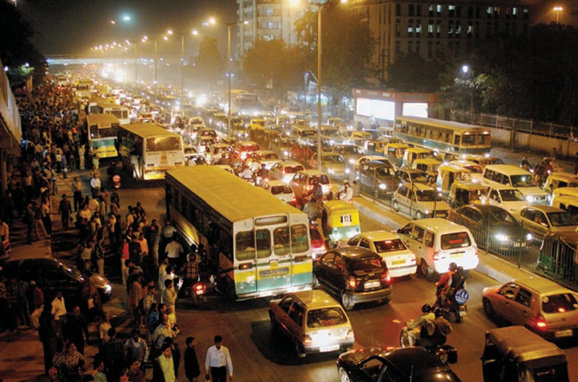
gfiles: Every day we read in the newspapers about traffic jams. You have 40 lakh vehicles in the city. How are you going to solve this problem?
RM: All big cities have managed this problem by two measures. One, restriction on car ownership. Two, promotion of multi-mode transport systems. There is no third solution. The government has decided that all the buses will be low-floor buses, 50 per cent will be air-conditioned and 17 private companies will operate these buses apart from Delhi Transport Corporation. You want safe, comfortable and affordable transport system. In two years, the scenario will change completely.
‘By 2021, Delhi will be totally urbanized, with 24 million people. My biggest challenge is providing governance structures and systems for best administration to those 24 million people’
gfiles: Flood, heavy rain, power failure, bad roads: it appears the Delhi administration wakes up late as it is not aware of the problems.
RM: This time we had 4.5 lakh cusecs of water released. The flood water was going beyond 4.5 to 5.2, the highest in 20 years. Nobody drowned. When we do things quietly, people don’t notice. We are talking to Central Road Research. They say there is a problem with the drainage system in Delhi. It cannot cope with heavy rain. The capacity of the soil to absorb water has gone down. We have not put in rain water absorbing structures in the past. We need to create high capacity for absorbing sudden discharge of rain water.
gfiles: In comparison to other states, Delhi is considered conservative as far as the housing sector is concerned. DDA is proving a non-performing asset.
RM: Housing is a critical issue. Now the master plan has changed and private builders will be allowed to build. The Ministry of Urban Development has to make regulations for this process to start. The environment to move has to be created. If we move too fast, people might say you don’t have water, electricity, why are you allowing construction? Private-public partnership of housing is now going to take off with the new master plan 2020. We have started PPP for police housing and general pool housing. When that succeeds we will take up more projects. We are moving towards PPP in all kinds of projects like orphanages, women’s homes, old age homes, children’s homes, trauma services, hospitals. This will change the whole governance system. You get new skills when you handle private people. You get to know new technology, new contractual arrangements.
gfiles: What is your experience with privatization of electricity?
RM: It was the best decision the Delhi government has taken. Political and administrative delegations are coming to study it. Even countries in Africa, even Pakistan wants to know how we have done this. The point is that it is a regulated system. You have five players – the generating company, distribution company, transmission company, the government and the consumer. All are powerful. After this you have a statutory regulator, empowered to balance the interest of the five players in the field. So the power sector is a very complex sector. It was earlier a monolithic body where decisions were taken politically and there was little professionalism. I think we should have faith in the regulator. The regulator’s capacity to take decisions must be enhanced. Most other states failed to carry out reforms. Delhi is a perfect example of a pure set of reforms as envisaged under the Electricity Act. Results you can see. The Delhi government is in a position to invest Rs 30,000 crore in the generation sector alone in power. We have signed PPS for 6000 MW of power, which will start rolling from the next year. Banks would not have given the loan. It was a loss-making sector.
‘All big cities have managed this problem by two measures. One, restriction on car ownership. Two, promotion of multi-mode transport systems. There is no third solution’
gfiles: The common man’s complaint is that he is not heard and his problems not solved. Electricity companies have become judges, passing judgment. Even the consumer courts are not allowed to hear the cases.
RM: It is not that such an order did not exist in the past but because there was an unhealthy relationship between the inspector and the consumer, orders of the government would not be implemented. In the process, the government was losing heavily. Now the losses have come down from 55 per cent to 25 per cent. In the case of NDPL, it is 18 per cent. Unless the losses come down to 15 per cent, the target fixed by the Prime Minister in the last Power Ministers’ conference, we cannot see self-sustained growth of the power sector. Ultimately, somebody has to pay for the power. Cheats should not be allowed to get away. Everybody has to be governed by the same rules.
We have set up public grievances cells headed by High Court judges to hear the problems. Meter testing is done by Central Power Research Institute, Bangalore. The changes in the power sector should be seen as a paradigm shift in the management of this sector.
gfiles: Every summer, Delhi faces acute water shortage. The water bodies are dry or dirty. At places, people have sold the land of water bodies.
RM: Water availability is limited by the river. Yamuna is the only river where there are no dams. We are going ahead with three dams – Renuka, Kshishau and Lakhwarvyasi. Work on Renuka will start in June 2009, which will give us the water we need. It is subject to a water-sharing agreement.
Regarding water pollution, we are seriously concerned for the first time.
gfiles: Have you ever seen as dirty a river as the Yamuna in any city abroad? What are you are going to do about it?
RM: We have a full-fledged plan. We are going to construct a system of interceptor sewers on both sides of the river. It is costing Rs 3000 crore. Work is on, 50 per cent of it will be completed by 2010. All encroachers have been removed from the river banks.
gfiles: The Chief Secretary plays a vital role in managing law and order. He controls the state. Don’t you think Delhi Police should be under your control?
RM: No doubt the Chief Secretary plays an important role. There is a process in Delhi wherein the Lieutenant-Governor holds the meeting with the Police Commissioner and I attend. I am briefed about what is going on. There is a lot to do regarding policing in the country and in Delhi. It is not possible for the Chief Secretary to be in touch with all this. It is not a question of my control, I feel it is not required.
gfiles: After the bomb blasts, people feel that every citizen should have an identity card. What are you planning?
RM: People are talking about how to keep track of who is who. These are social sector schemes. The voter ID card is fine. There is a problem about identifying people who come from outside Delhi every day. What mechanism should be adopted? It has to be discussed.
gfiles: You have 40 government and 200 private hospitals in Delhi. The condition of the government hospitals is pathetic.
RM: One thing I want to say: 20-25 per cent patients in Delhi hospitals are from outside Delhi. There are issues of service quality which need addressing. One difficulty is that we construct the hospital but don’t get human resources for it. All the posts have to be filled through UPSC. Now we are starting our own Delhi Health Service Cadre. Even paramedical posts will be filled in three months. Then there is the issue of management of the hospital. We have two hospitals ready – a 600-bed hospital in Tahirpur and a 300-bed hospital in in Janakpuri. We have decided on PPP. It will start in six months. We need innovative solutions to problems.
gfiles: Parking is another problem. The administration charges thrice for the same vehicle – for registration, for authorized parking, for unauthorized parking. Mafias are working. Multiplicity of parking charges is a problem. People cannot park their vehicles in their residential colonies.
RM: We have limited space for parking. MCD and local bodies are constructing underground parking, but it is going to be expensive. The construction of a one-car parking space is Rs 2.5 lakh. For a bus, it is Rs 8 lakh. Somebody has to pay. Delhi is growing by 10 per cent a year for the last 10 years.
gfiles: What about adulteration of food and medicine, and the exorbitant prices of eatables?
RM: We monitor prices every day. We have a mechanism for prices. We have kendriya bhandars. Whenever we need vegetables, we buy. We have a drug administrator, we have the food adulteration department. The adulteration law is very strict. I am not saying we are perfect, there is scope for improvement. You will appreciate that no city’s population grows eating adulterated food.