

























The laudable objective of providing specific representation in legislatures to women ran into rough weather because the main proponents of the Constitutional Amendment to provide 33 per cent reservation for women in legislative bodies failed to anticipate the kind of opposition it provoked. The representatives of the politics of Other Backward Classes had no objection to the number of seats to be reserved. Their objection was to the character of such reserved representation. They feared that, without a specific provision for quota for women from other sections, including the Muslim community, all reserved seats would be taken over by the women of upper castes.
That these fears were not misplaced was proved by the composition of the new team of BJP president Nitin Gadkari. He could not find a single woman belonging to the Other Backward Classes or the Dalit community to occupy a seat on the party’s decision-making body. He could not find another Uma Bharati in his party. It clearly reflected the fact that the party had not opened the doors of its leadership structure to Other Classes even though they are numerically dominant in Indian society.
The Congress has been talking of impending changes in its leadership structure for five years but is yet to actually overhaul the party structure at the top because of inherent difficulties in deciding who should be on the panel. Those occupying offices for nearly three decades are unwilling to relinquish them. They have ensured that no new elements are able to reach the party president and impress her with their abilities and capacity to mobilise votes.
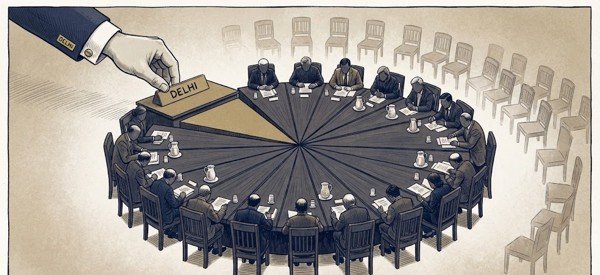
But the Congress president was anxious to see the Bill through in its present form without provisions for reservations within the reservation. Her anxiety was well founded – the Bill had been in limbo for one-and-a- half decades as consensus on its form proved elusive. Parties on one side of the divide felt that division on the basis of caste was undesirable. But the upper castes dominate the parties that have opposed the change in representation of women.
At the other end are parties that have erected their edifice on the basis of support from Other Backward Classes that have woken up in the past two decades to claim their rightful share of the power structure. The expansion of education, means of communication and access to instruments that expose one and all to the world through computers have given OBC youth a feeling that they can participate in deciding their destiny. The Green Revolution was responsible for diverting the flow of economic gains accruing from it to rural areas in the last three decades as it benefitted not only the agriculture sector but also related fields. The change roused new passions and aspirations to mould their own destiny among OBC youths.
When it was proposed to distribute a share of political power to women through reservation of a specific number of seats for them, the OBCs clung to the idea that their women too should be in legislative bodies through a specific provision for them.
When it was proposed to distribute a share of political power to women through reservation of a specific number of seats for them, the OBCs clung to the idea that their women too should be in legislative bodies through a specific provision for them. The demand for representation of Muslim women was justified, judging by past performance. In 15 Lok Sabhas elected since 1952, only 14 Muslim women have made it to the House. Nine came on Congress nominations, two on Bahujan Samaj Party sponsorship, and one each though the National Conference, Samajwadi Party and the People’s Democratic Party. Two Muslim women from Kashmir could make it only because they were related to the top party bosses.
The attempt to rush the Bill through the Rajya Sabha clearly showed the division along class lines. And it changed the mind of Railways Minister Mamata Banerjee who had been an enthusiastic supporter of the Bill when it was approved by the Cabinet. She restrained her party members in the Upper House from voting for the Bill, visualizing the resultant political advantage in the forthcoming West Bengal Assembly polls. As the Congress and Left parties were on the same side on this issue, she chose to be on the other side because a quarter of Bengal’s electorate is Muslim. For her, the issue was no longer of providing reserved seats to women but a purely political game of votes.
But her change of tack as well as the restive feelings within the BJP made the party leadership reconsider the issue to avoid a division in its ranks when the Bill is taken up in the Lok Sabha. The party declared that it would not accept the presence of marshals during the debate or at the time of voting. In other words, it would not vote if the same technique was adopted in the Lok Sabha as in the Upper House.
The Mamata switch and the BJP stance prompted the Congress offer to hold an all-party meeting to arrive at a consensus before the Bill’s introduction in the Lok Sabha. Agriculture Minister Sharad Pawar toyed with the thought of reducing the reservation to 21 per cent. But the objection to the Bill did not pertain to the quantum of reservation, it was related to the fact that it did not assure all women the opportunity to take a seat in the legislature.
They failed to see that such bulldozing would drive a wedge into society, based on class differences. They might have won the battle in the House but could provoke a war outside it due to roused passions over the denial of justice.
The intelligentsia, including media, was disgusted with the violent methods adopted by the Yadav trio not only inside but also outside the Upper House. For the educated class, democracy is a mere numbers game. If the supporters of the Bill have the numbers, they can rush it through – brushing aside the misgivings of a large section of the population. They failed to see that such bulldozing would drive a wedge into society, based on class differences. They might have won the battle in the House but could provoke a war outside it due to roused passions over the denial of justice.
Senior Congress leaders could see the rising tide but did not have the nerve to explain to the party chief the political cost of rushing the Bill through in its present format. They summoned courage only after Mamata’s sudden move to stand aside and let the Congress take the blame. Then, hurried consultations led to adoption of a conciliatory stance of assuaging the feelings of the other classes by seeking a fresh consensus. The confabulations and calculations present an unpleasant reality – the numbers in support of the Bill in case there is an attempt to similarly rush it through in the Lok Sabha, do not add up to even 235.
The Congress’ managers are stuck in an unenviable situation. They cannot change the concept now. And it is not possible to rush it through with the present format. Nor can they adopt a dillydallying attitude now that Congresswomen have already publicly showered accolades and floral bouquets on the party chief. It will take some time to realise that games can be played in the corridors of power on the basis of laudable advice from socialites who hover around with certificates of their work in NGOs. Politics needs much more foresight and ability to anticipate tsunamis before they arrive silently and wreak havoc. The Congress president was told of the tsunami only after it had hit the party’s shores.