





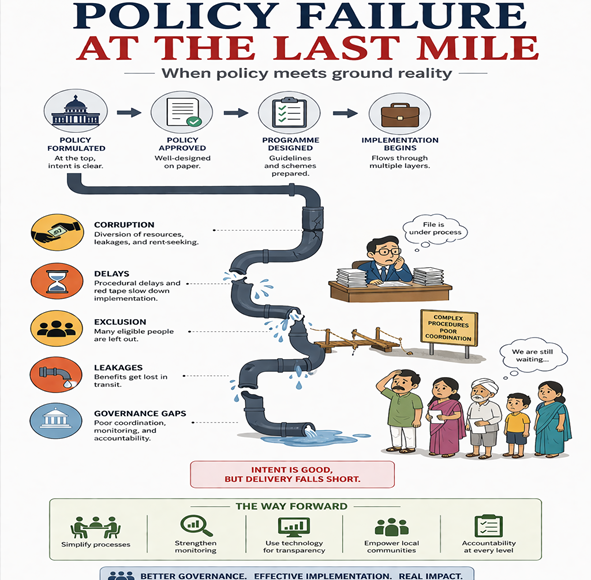


























There is a core belief among some of the most perspicacious analysts of the India Story that notwithstanding recurring positive economic indicators, this nation lags woefully behind the rest of the developed world not because of the bane of terrorism, labour problems, or population growth but because of the failure of the governmental mechanism to deliver. In short: No implementation.
This problem – it keeps India poor, unequal, divided, violent, polluted, unhygienic, malnourished, unjust – has been recognized by successive governments. Many leaders have tried in earnest to look for solutions: Police reforms, administrative reforms, pay commissions, restructuring courses at the IAS Academy. They have failed. The huge bureaucracy that governs this land of over one billion people has continued to bloat without giving any concrete measurable results.
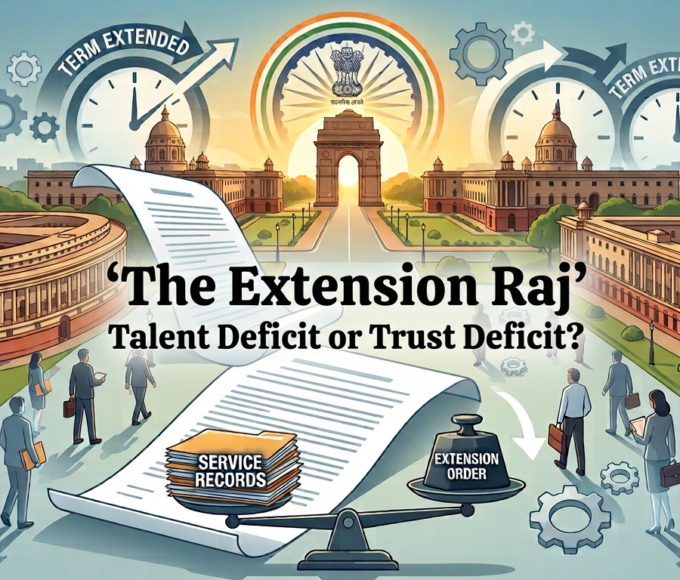
The major predicament has been the mismatch – the seminal disconnect – between the whims of the politician who thinks he’s the personal rather than Constitutional boss of the civil servant, and the bureaucrat who is sworn to serve the public interest. The personal agenda of a politician and the public mandate of the government servant are often at variance. A politician bent upon treating the state as his personal milch cow is hardly expected to “reward” a dissenting IAS or IPS or Customs officer for standing up to him in the interests of the law of the land and his mandated duty.
This has stood the whole system of reward and punishment on its head. And in this scenario, performance and accountability become relative terms. This week’s cover story, unearthed by Editor Anil Tyagi, is by any definition a barn burner. It shows how Prime Minister Manmohan Singh and his A Team on governance have finally grabbed the bull by the horns and may be on the path to accomplishing the most revolutionary change in the Indian administrative system since Independence. Changes that could impact every man, woman, and child in this country by freeing the bureaucracy from the stranglehold of political vested interests.
This is all happening within the system. The politician is here to stay. But under a new performance management system he will have to develop a vested interest in making sure that his Ministry performs in the national interests rather than according to personalized ad hoc instructions. How? Through a unique new arrangement. Henceforth a minister and a government secretary will have to sign a common vision and objectives statement which will set the parameters for judging the success or failure of that ministry, with consequential carrots and sticks for both. This is the advent of a bold new world in which the civil servant and his political boss will be bound to national objectives and performance yardsticks by what is virtually a Memorandum of Understanding.
This being described as a new Bill of Rights for government servants. Let us hope that it is institutionalized, perhaps even given Constitutional sanction. If that happens it could become a new Bill of Rights for the nation.