


























The first Indian woman to ski from the coast of the continent to the South Pole recounts her journey
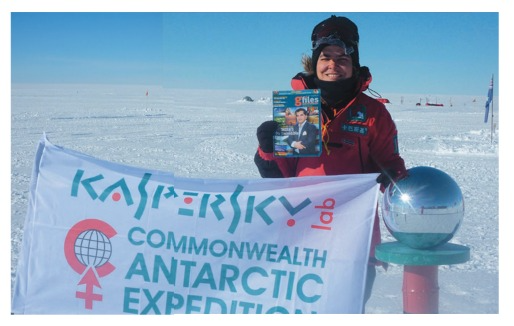
It was 11.09 pm on December 29, 2009. The temperature was – 30 C but the wind was a little more merciful than its 80-knot avatar that we had encountered during our 38-day odyssey across the ice. I had become the first Indian woman to ski from the coast of Antarctica to the geographic South Pole.
The staff at the US research station at the Pole was waiting outside to welcome us and they applauded as we drew near. I am a certified instructor for the National Outdoor Leadership School (NOLS), US and some of my colleagues had been at the research station while I was still en route. We could not meet because they had to fly out before my arrival but they had told the others at the station about me and I got quite a welcome.
The first feeling was of relief as we shed the harnesses used to pull the sleds – or pulks, as they are called in Antarctica. We had dragged those 55-kg pulks over 900 km for 38 days with just one rest day. Travelling on the ice and snow plains was comparatively easy going. But we hated the sastrugis – wave-like formations of hard snow created by the wind. Sastrugis can be as tall as 10 feet. They forced us to make detours around them.
Free – for ever – of our pulks, we assembled around the mirror ball at the ceremonial South Pole. Our team leader and British polar researcher, Felicity Aston, sent out a Podcast, announcing each of our names. The records the expedition had set were stupendous.
The members from Singapore, Sophia Pang, and New Zealand, Kylie Wakelin, were, like me,the first women from their nations to do the ski traverse from coast to Pole. But the members from Cyprus, Stephanie Solomonides, and Brunei Darussalam, Dk Najibah Eradah binti PAM Al-Sufri Pg M-L Kahar (or Era, as we called her), were the first people from their countries to do it. The poignancy of that moment of arrival at the South Pole brought tears to our eyes.
We had all come together the first time in February 2009, at the selection-cum-coaching camp in Norway. Felicity had received hundreds of applications from Ghana, Cyprus, Brunei Darussalam, Jamaica, Singapore, New Zealand and India. She selected two candidates from each country for the camp. An Indian Foreign Service probationer was the other candidate from India. However, after a week in Norway, I was chosen for the final team.
Sadly, the member from Ghana got malaria before the expedition and the one from Jamaica had to return after getting frostbitten on arrival in Antarctica. Still, our little team fulfilled Felicity’s dream of completing the expedition to spread messages about women’s empowerment and protection of the environment (we set another record as the first expedition to bring back all its waste). The venture also celebrated the 60th anniversary of the founding of the Commonwealth on January 1, 1950.
Few experiences can match up to it. And to the memory of that vast, frozen vista with no sign of life. Yet, all the time, we felt a life energy all around
This will probably remain the coldest New Year celebration of my life! Few experiences can match up to it. And to the memory of that vast, frozen vista with no sign of life. Yet, all the time, we felt a life energy all around. That is the magic of Antarctica.
The journey to the goal was hard – physically, mentally and emotionally. Raising money was the biggest hurdle. The expedition would not have taken place but for the last-minute sponsorship by Russian software company Kaspersky Lab. I was rebuffed by Indian firms and women ministers. Only the Indian Mountaineering Foundation, the Bajaj group and gfiles lent a helping hand.
I sent a little “thank you” message fluttering on the wind from the South Pole.
(As told to gfiles)