










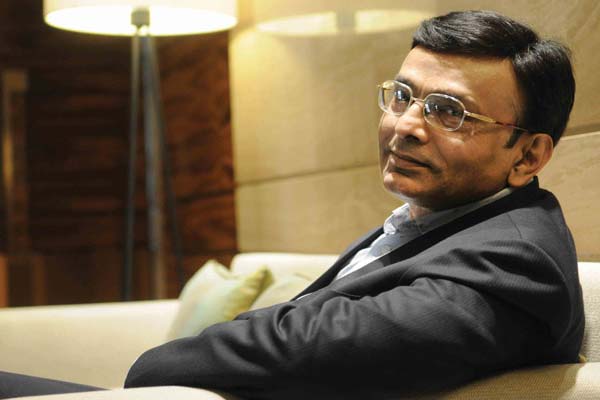

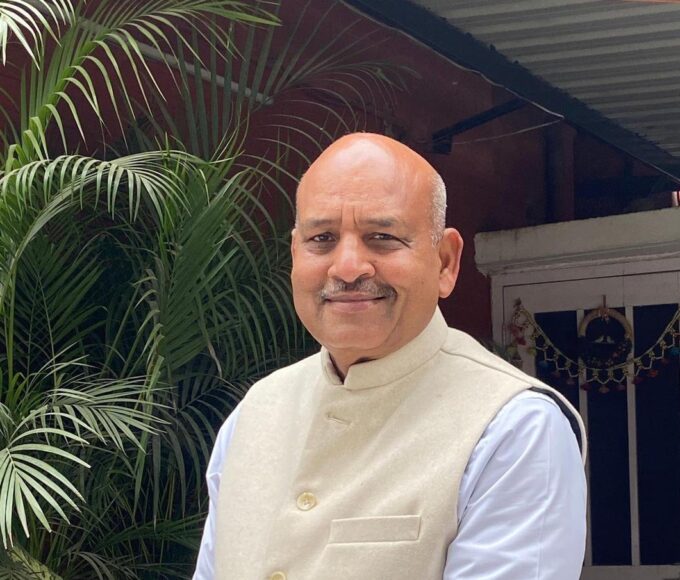









My father’s family came to India from Saudi Arabia in 1840 and my mother’s with the Mughals in the 1520s. We have a 160-year-old house in Daryaganj. My mother, Begum Halim Jung, who is also a poet, came into that house at 16 as a bride and is now 89. My father was a businessman and then went into social work.
My two elder brothers joined the Civil Service and I probably realized I would also while finishing school. I studied at St Columba’s School and did graduation and MA (History) from St Stephen’s College. I later changed to economics and studied at the London School of Economics. Education is about acquiring knowledge of different things. So you gravitate from one subject to another.
I belong to Delhi but my cadre was Madhya Pradesh because we used to have a roster system. I was not senior enough to get Delhi. MP has been lucky to have a series of good Chief Ministers. PC Sethi was CM and, after training, I was posted as District Magistrate in Mhow – in his constituency. We never had any extra-Constitutional pressure from Sethiji. His only demand was that the morning newspaper should reach him by 5 am!
My main years as DM were under Arjun Singh. I have the highest regard for him. There is much criticism of his later years but he had great concern for Adivasis, Scheduled Castes, backwards. Digvijay Singh had the same sensitivity towards the poor.
I worked in Datia, which was infested with dacoits. Those were the days of Phoolan Devi, Malkhan Singh and Paan Singh. Arjun Singh took crucial steps to control dacoity.
Next I was in Raipur, then MP’s largest district. Again, I had freedom to run a good administration. Those days were very different from the present. I worked in Chhindwara, Betul, Datia, Indore, Raipur – and every district has its own challenges. I acquired knowledge of people, of administration. In my 22 years, I spent 14 years in the field. I didn’t spend a day in the Secretariat as Deputy Secretary or Special Secretary or whatever.
MP is a state where integrity and straightforwardness have always been appreciated. If you are clean, you are liked. The Chief Secretary, RP Noronha, was a living legend. Though he retired about six months after my joining, we grew under his shadow.
I was Managing Director, MP State Oilseeds Cooperative Federation for two years. It was based on the milk cooperative, Anand. We were the first to start soya bean production in MP. We taught farmers, bought the produce, crushed the beans, sold and exported soya milk, and sold soya oil in India.
Then Madhavrao Scindia, Railways Minister in the Rajiv Gandhi government, brought me to Delhi as his private secretary. I came on January 7, 1985 and stayed for three years. It was a great period for the railways.
As Director in the Department of Steel for two-and-a-half years, I was in charge of steel import and export. India produced six million tonnes but our demand was 19-20 million tonnes. The pricing of steel was a big issue and I was part of it.
After that I went back to MP as Managing Director, MP State Financial Corporation for two years. This is the arm of the government for financing small, medium and large industries in MP. I returned to Delhi as Joint Secretary in the Ministry of Petroleum & Natural Gas and was in charge of exploration and production sites. The government was just starting privatization and we negotiated contracts with private companies.
In 1995 I went to the Asian Development Bank (ADB) as the Senior Energy Specialist. Again, I was looking after oil and gas, and energy operations of the Bank. I had two phases in the ADB. In 1999, I went to the Oxford Institute for Energy Studies (this is a boutique institute which specializes in oil, gas and power) on a teaching assignment till 2002. It’s one of the finest institutes for research on oil and gas.
I came back to the ADB in 2002 when I was in charge of rebuilding the destroyed oil and gas sector of Afghanistan. I was in charge of building and developing the Turkmenistan-Afghanistan-Pakistan-India Gas Pipeline (TAPI) Project. This was to bring large quantities of gas from Turkmenistan into India via Afghanistan and Pakistan. The Government of India is naturally very concerned about the security issue in bringing a pipeline through Afghanistan and Pakistan. But we can build adequate measures to protect the gas. A pipeline is 30 feet underground, it can’t be destroyed easily. If there is an explosion, it can be repaired in 4-5 or 8-10 hours. We also propose to store natural gas under the earth in salt caverns, so that if the pipeline is damaged, supply will continue. The government is revisiting that project.
In 2000, when I knew I would not come back to the Government of India from ADB, I took early retirement. My children got into the international academic system, two girls in London and one in Columbia. If I had returned to the Service, I would not have been able to pay the fees.
I never encountered lack of freedom in the government. You can do what you wish if you have integrity and sincerity. The government gives you more liberty to do work than the private sectors today. In the private sector, you keep running to your Manager or Managing Director. In government, even as a 23-year-old Sub-Divisional Officer, I did not need to go to anyone because you have clear-cut responsibilities under the Constitution. As a Collector and DM, the freedom you have is unimaginable. No job is really self-limiting, it’s what you make of the job that matters.
I’ve reinvented myself four or five times in the last 35 years. I’ve often been asked about shifting from one field to another. It’s not difficult. It takes 6-7 months of application, reading, meeting people and thinking. The IAS and ADB systems of working are completely different, ADB and Oxford are completely different, even Oxford and Jamia Milia Islamia are different. One learns and grows.
The Oxford Institute for Energy Studies had a legendary Director, Robert Mabro – considered the last word on oil. He asked me to work with him in Oxford and ADB was happy to give me leave for three years. I wrote two books – Gas to Asia and Gas to Europe (followed later by The Economics of L&G Business). Then, ADB (who would not extend my leave) offered me an assignment in Afghanistan. President Hamid Karzai had just been elected and was forming a very dynamic Cabinet with old colleagues from the World Bank, Australia, Germany and a lot of Afghan experts. We were part of an adventure. In the Ministry for Petroleum, we had to recreate everything – recruitment, training, teaching how to make a note sheet, how to move a proposal, how to run the Ministry.
We rebuilt the Afghan gas system. The gas fields in Shibirghan were destroyed. We rebuilt the wells, relaid the pipelines. The power lines from the north of Kabul were rebuilt. We gave advice, provided loans. I must have made 30-35 trips from Manila to Kabul. At the end of the three years, we had succeeded partly in doing what we wanted. I returned to Oxford, quit the ADB in 2005, went to Australia and stayed there till February 2009.
Then I came back to India and became Vice-Chancellor, Jamia Milia Islamia. In Jamia, we distinguish between literacy (10 per cent in importance), education (40 per cent) and knowledge (50 per cent). If we can impart knowledge, we have succeeded. What kind of Indian I’ve created, is he emotionally stable, is he prepared to contribute to this country in a good way, as a human being does he go out with knowledge, does he learn to differentiate, does he learn philosophy, does he learn about Gandhi and Kant. A responsible citizen of this country is what we endeavour to have and that is the biggest challenge. Students of Jamia are outstanding, they have great ambition and great hope from India and India should have hope from them. These are India’s children for the next 50-60 years.
We are doing a lot of new things in Jamia. We have started BA (Philosophy), BA (Sanskrit). We have 200 courses, right from a full-fledged engineering department to architecture, physiotherapy, dentistry, to the School of International Languages, Persian and Urdu, the Institute of Mass Communication (probably the best in India) and the top-of-the-line fine arts department. We have 24 centres of excellence dedicated to research and advanced studies. This year we are starting think tanks to study Pakistan. We also have Bangladesh, Sri Lanka, Iran, Afghanistan programmes.
We are inculcating discipline. If you are caught cheating, you are out. There is zero tolerance for sexual harassment. I have rusticated three students for eve-teasing. There is zero tolerance for ragging also.
People seem to think that we are behind Delhi University, it’s not true. Of course, DU is a college university whereas we are a faculty university so you can’t really compare, they are poles apart. JNU has 6,000 students, only postgraduate. I train my children from Nursery. If you enter Nursery, it’s possible you may do your PhD here without changing campus. Lots of my senior professors whose fathers were professors here did this.
We want to take this university to a completely different level. The only thing that is impeding me is limited infrastructure. We have a campus of about 200 acres, ideal for 9,000 students, but we have 20,000. I have to demolish and rebuild, and create new buildings.
I’ve been a socialist at heart. I would not have become what I am if I had not been part of the Civil Service. I would not have grown and matured in the way I have, I would not have understood India as I understand it today. There is much criticism of the Civil Service but I have utmost respect for the opportunities it gives to grow and learn and contribute to society and country.