











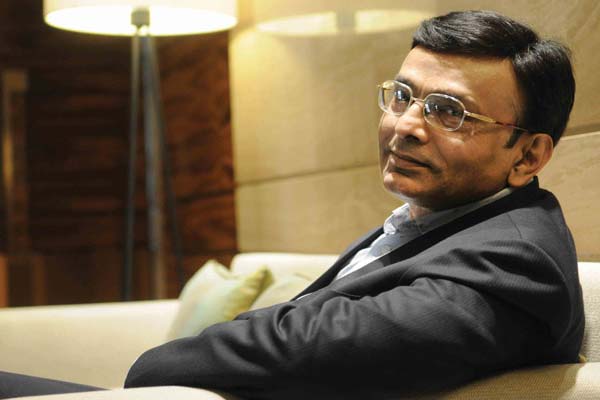

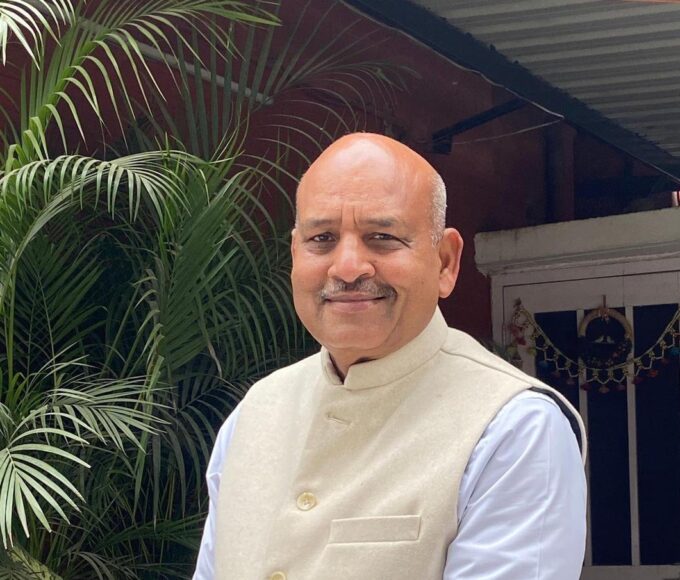










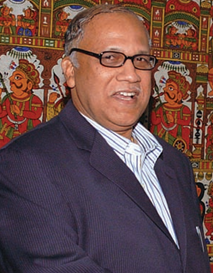
In June 2007, following the Goa Assembly elections, Digambar Kamat got the ultimate nod from the Congress high command for the Chief Minister’s post. His clean image, combined with an uncontroversial past and result-oriented performance, caught the fancy of party leaders in New Delhi. However, his government had to steer through rough weather and the first inkling of political turbulence hit in the maiden session of the Assembly.
Uncertainty loomed for an agonizing 10 days, before the government was saved. Similar incidents were witnessed in 2008 and 2009. And, while the world was according a warm welcome to 2010, Goa watched a bizarre political drama unfold whereby the government’s survival and legitimacy were challenged by a bunch of disgruntled elements. Despite these four coup attempts, Kamat appears firmly in place. Anil Tyagi chats with the politician who has been an MLA for 15 years, a Cabinet Minister for seven and Chief Minister for the past three.
gfiles: What was the first problem you encountered after assuming office?
Digambar Kamat: It came in the form of popular resistance to the proposals of Special Economic Zones. Eighteen SEZs were approved for Goa and three were notified by the Centre. However, Goans did not want them. There was a general fear that earmarking vast tracts of land for industrial purpose in a state of just about 3707 sq km would pose a serious threat to agriculture, orchards and water resources apart from creating environmental hazards. Besides, socio-economic issues due to large-scale migration were also feared.
gfiles: But new industries would have eased the unemployment situation in the State?
DK: Certainly. But there were fears that job opportunities would result in influx of job-seekers from outside the State. For this reason locals began to oppose mega housing projects in their localities. They were worried that a swelling tide of settlers from outside would result in their total sway over local elected bodies, rendering the sons of the soil hapless bystanders. We have to consider the size of our state when such large projects are considered. Goa’s smallness is both a strength as well as a challenge.
gfiles: What was your response to the situation?
DK: I had to settle the SEZ issue first. I met Kamal Nath, the Union Minister for Industry, to give him the right perspective on the issue. He ensured that the SEZ proposals for Goa were stopped. My government also withdrew its SEZ policy.
gfiles: And what did you do in the case of the mega projects?
DK: These projects actually come under the purview of the local bodies and the State government has a very minor role. If projects are initiated after obtaining due permission from panchayats and municipal councils, there is no logic in opposing them thereafter. However, it is for the local bodies to take appropriate decisions. In this regard we have initiated formulation of the Regional Plan 2021 and input of all local bodies has been obtained.
gfiles: What steps did you initiate for decentralization of power?
DK: We are looking into providing more scope to the zilla panchayats through more funds and enhancing their mandate. We are in the process of forming a new taluka to attend to the demands of our brethren living in remote areas. Our party had promised creation of a separate taluka. We have kept the promise, thus taking the administration to the doorstep of the common man.
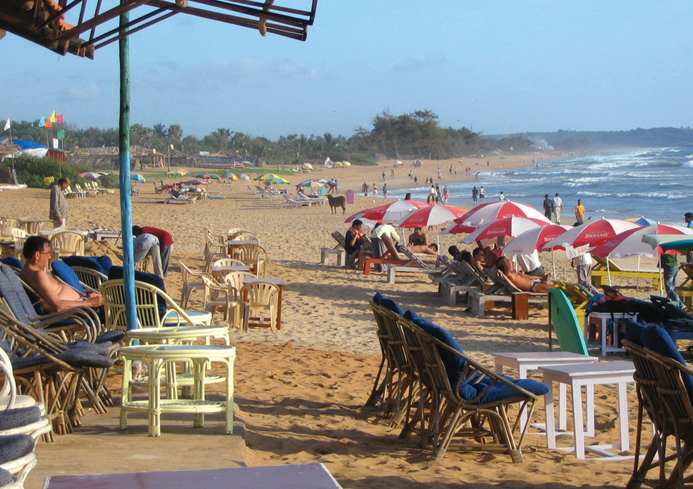
gfiles: Goa is perceived as an advanced state, given its per capita income, infant mortality, literacy rate. Over 25 lakh tourists visit the State annually. However, the famed Goan hospitality seems to have taken a beating following cases of misbehaviour with foreign guests.
DK: I agree. But these were rare and infrequent occurrences. They were blown out of proportion. Goa is a safe tourist destination. You just quoted the figure, 25 lakh, the quantum of visitors to our small state. Though we cannot provide individual security to all our guests, certain effective measures have been initiated. I would like them to have a good time here. Goa is all for clean tourism. We assure total safety and security.
gfiles: Are drugs are available in Goa?
DK: I cannot rule out clandestine trade in spite of our best efforts. We have expressed our resolve to counter the menace. We have not spared even our own police.
gfiles: Goa is about to complete 50 years of liberation. You are lucky to lead the state at this hour of glory. How do you assess the journey of the past 50 years?
DK: We have achieved a lot. But there is still a lot to be achieved. We have directed our energies to reaching our goals. We have excelled in education, public health, industry, law and order. But we should not be self-content. For the past three years in a row, Goa has been getting several awards as a State on the path of prosperity and development. I wish to maintain that. Fortunately, the Central government has been receptive and sympathetic to Goa’s needs. Prime Minister Manmohan Singh, Finance Minister Pranab Mukherjee, Home Minister P Chidambaram, Planning Commission Vice-Chairman Montek Singh Ahluwalia have all been kind to Goa. Our State has a special place in the heart of UPA Chairperson Sonia Gandhi. Goa has always been high on the Congress agenda. Pandit Nehru liberated us from the Portuguese yoke. Indira Gandhi gave us the only opinion poll in Indian history, ensuring that Goans could decide their own future. Rajiv Gandhi gave us Statehood. PV Narasimha Rao gave Konkani its rightful place in the Eighth Schedule.
gfiles: How do you envisage the Goa of the future? And how do you plan to realize it?
DK: Well, 100 per cent literacy ratio, not one individual below the poverty line, a network of good roads, electricity and water supply reaching every nook and corner of the State, zero unemployment, prompt public health services. This is the Goa of my dreams. But mere provision of amenities cannot ensure an ideal state. There has to be sustained refinement in the field of education, arts and other areas of human excellence. In the past, Goan artistes had to go to neighbouring States to earn a living and make a name. Today they get due recognition here. IFFI has sown the seeds of film culture in this tiny state. The proposed international airport will yield further avenues of development and prosperity. A supportive and encouraging Goan populace will help us achieve the dream of a buoyant and prosperous state.

