











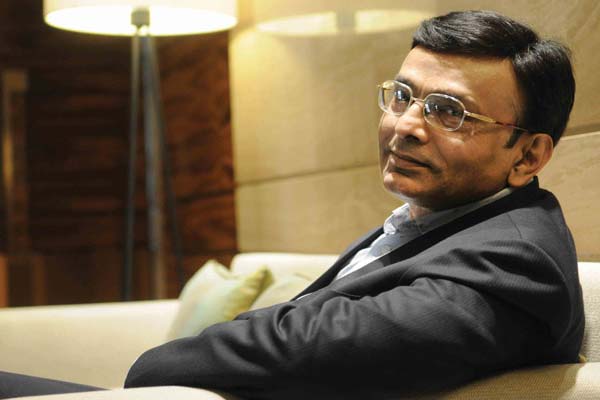











The farmer’s son who rose to the highest echelons of the civil service recalls a career spanning 36 years
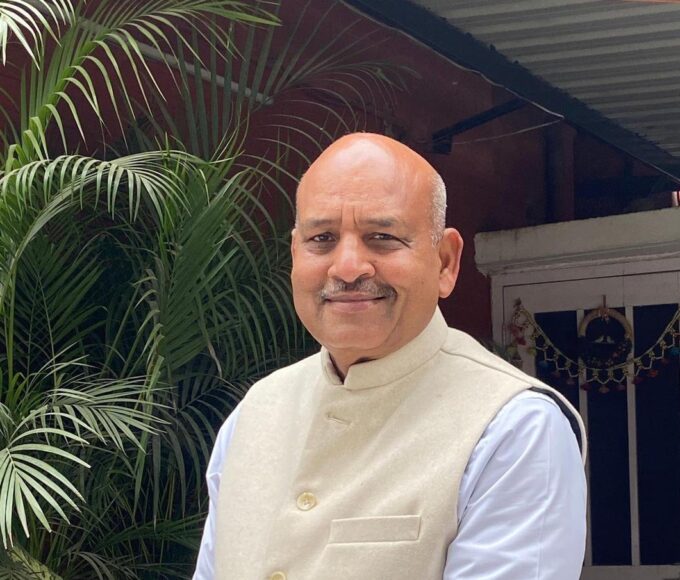
I’m a self-made person from a rural background. I never had any feeling of inferiority during my time in the services. One advantage of my background is that I have the feel of the aam admi. I remained in touch with my area’s people throughout my career. I helped them at every opportunity, whether in the field of education, medical facilities, admissions, employment. In Ghazipur, in any village, people might not have seen me but they know me by name. Also in Ballia, Mhow, Varanasi.
I belong to Ghazipur district in eastern UP, and was born and brought up in a village called Dharani. Both my parents were illiterate. My father, a farmer, is 92 years old. I belong to a family of Bhumihars, the Brahmin community known for ploughing fields. We are land-owning Brahmins. I schooled till Class VIII in my village. I did high school and Intermediate from a nearby village, Malsa. I passed Intermediate with a first division and was only the second first divisioner since the school opened in 1942.
Thereafter I joined Allahabad University and did my PG in ancient history, culture and archaeology in 1964. I became a lecturer in ancient history in Allahabad Degree College. After two years I moved to the university and remained there for two-and-a-half years.
I got married in 1966 when I was a lecturer, and became a father while appearing for the IAS.
Then I was selected for the IPS in 1968 but could not join the same year. In November 1969, I was allocated to the CBI. I had already appeared for the IAS before joining CBI while I was doing my police training in Mount Abu. I joined the IAS in 1970, and was allocated to the UT cadre.
I had never heard of the IAS until I passed Intermediate. When I was in the hostel in Allahabad University, every year four or five candidates appeared for the IAS, and I thought I could also compete, they were not superior to me. In the teaching profession I got a lot of time to prepare for the IAS exam. I had qualified for the provincial civil services also but did not go for the interview. My friends and colleagues said joining the IPS would give me a better chance of selection in the IAS and it was true.
I was quite low in position in the IAS exam but during the two years’ training I improved by 40 positions in both academic and extra-curricular activities. I came first in horse riding and got the Director’s medal. I did my district training in Gorakhpur, UP. During the training period I was appointed City Magistrate, Gorakhpur, with full-fledged charge, for six months. It’s very rare, usually during training they are called Joint Magistrate with some additional charges.
My first posting was as SDM, Punjabi Bagh, Delhi, in July 1972. At the time, Srinivasan was Deputy Commissioner. He was shifted because of riots at Shahdara within two months or so of my joining and Vijai Kapoor was appointed DM, Delhi.
There was no Chief Minister, an Executive Council used to run Delhi. Vijay Kumar Malhotra was the Chief Executive, AN Jha was Lt Governor and TN Chaturvedi was Chief Secretary.
Then I was promoted to the senior scale and moved to Mizoram, served there for four-and-a-half years. Two years as Deputy Commissioner, and the rest as Secretary-cum-Director, Supply & Transport. It was a very difficult posting but very interesting because Mizoram was affected by underground MNF activities. During my tenure IG, DIG and two SPs were killed at the headquarters. The Lt Governor was attacked and he left the post. But I did very good work, and this was the most satisfactory part of my career. This period was very constructive and productive because of my good work, sincerity and service to the people.
Elections were held and Brig Sailo became Chief Minister. The first request the new government made was that Baleshwar Rai, Deputy Commissioner, Lunglei District, should be retained although my transfer order had come. The Lt Governor, NP Mathur, agreed to extend my tenure by a year. In spite of problems regarding my children’s education, I agreed to stay on because of the love and affection of the people and the spirit of the new government.
From Mizoram, I came to Delhi as ADM. When I was about to join,the Police Commissioner system was introduced. So the Chief Secretary and Lt Governor thought my services could be utilized elsewhere. I was appointed as Director of Vigilance, Government of Delhi. After 10 months I became Secretary-cum-Director of Education. I was the youngest Director of Education in Delhi. I joined in January 1979, and continued for two years.
I was then given charge as MD, Delhi State Civil Supply Corporation for a year. It was a new corporation running on paper. I set it up, made it functional, its revenue and turnover increased from Rs 1 crore to Rs 14 crore in less than a year. Then I became Deputy Secretary in the Home Ministry and was in charge of the UT division, UT Services. TN Chaturvedi was Home Secretary. I was there for about five years, during which I went to Cambridge University for a post-graduate diploma in development management for a year. I was recalled to the Delhi government. Vijai Kapoor was Commissioner, MCD and he got me posted as Additional Commissioner, Water Supply Undertaking over 1986-90.
The 40 MGD Wazirabad plant, the 100 MGD Hyderpur Plant, the 100 MGD Bhagirathi plant were all constructed and commissioned during that period. I also conceived the 140 MGD Sonia Vihar plant and the 40 MGD Nangloi plant.
The 40 MGD Wazirabad plant, the 100 MGD Hyderpur Plant, the 100 MGD Bhagirathi plant were all constructed and commissioned during that period. I also conceived the 140 MGD Sonia Vihar plant and the 40 MGD Nangloi plant. Vijai Kapoor used to tell us that anyone who could handle the job of a Deputy Commissioner or Additional Commissioner in the MCD ccould handle any assignment. It was very challenging. Any problem relating to water has to be solved immediately.
During that period there was a cholera outbreak in the trans-Yamuna area, Prime Minister Rajiv Gandhi visited those areas and specified that work must be completed within a week. He did a review after a week. I attended the meeting with the Commissioner, PP Chauhan. There was a lot of questioning by the officers and Lt Governor. The Chief Secretary and Commissioner, MCD were shifted, the VC, DDA was suspended, the Lt Governor’s service was terminated, a Chief Engineer of MCD and two DDA Chief Engineers were also suspended. No heads rolled in the Water Supply Undertaking. I was questioned for 10 minutes by Rajiv Gandhi. Whatever tasks he had ordered were complete, and where it had not been done it was because of the DDA. The DDA had not completed the water line that was commissioned.
After that, Rajiv Gandhi would call me. We did very extensive work. The work which could not be done in three years was completed in three months. I visited every site and spent hours, even at midnight.
The Director, AIR was killed. Chandrashekhar was PM, and he called the Governor, Chief Secretary, and me and said, “I can’t tolerate this…. Whatever you require will be provided but I want Chandigarh terrorist-free.” We did it, within a month.
After this I was moved to Chandigarh as Administrator and stayed there for about three-and-a-half years (1990-93). Those were difficult times because of terrorism. Every other day, there were killings. The Director, AIR was killed. Chandrashekhar was PM, and he called the Governor, Chief Secretary, and me and said, “I can’t tolerate this happening in the capital city. They can dictate that nobody can speak Hindi. This should not be repeated. Whatever you require will be provided but I want Chandigarh terrorist-free.” We did it, within a month.
I also made Chandigarh jhuggi-free. I think it was the first time that a city was made jhuggi-free. Chandigarh Medical College was constructed. Sukna lake was desilted.
Then I joined NDMC in three avatars. First as Administrator, then under a new Act as Special Officer having all the powers until the Council was reconstituted, and then as the first Chairman of the reconstituted NDMC.
I was made CMD, Delhi Financial Corporation, for a very short period. Then I was appointed Commissioner, Sales Tax for a year. Sahib Singh Verma became CM and he shifted me to the newly set up Delhi Jal Board. In the year I spent there, I saw three CMs – Verma, Sushma Swaraj, and Sheila Dikshit (the CM is the Chairman of the Board).
Next I became Joint Secretary, Ministry of Power. Kumar Mangalam was Power Minister. After two-and-a-half years I became Chief Secretary, Goa. One day the Home Secretary called me, saying the Goa CM wanted me there. At the time there was political uncertainty, every six months the government changed and, correspondingly, the Chief Secretary. But I headed there and remained there for two years. Then the NDA government was formed at the Centre and Sahib Singh Verma became Labour Minister. He picked me to be Additional Secretary in his Ministry. I must thank him for his very affectionate treatment of me. He made me Chairman of the Central Provident Fund Commission and of the ISI Committee – a post usually held by the Minister himself.
I was also Special Secretary in the Ministry of Labour. Then I became Secretary, Government of India in the Ministry of Home Affairs and was in charge of the Department of Official Languages. After that I was Secretary, Coordination and Public Grievances, in the Cabinet Secretariat. BK Chaturvedi was the Cabinet Secretary.
Out of 36 years of service, I spent 27 years in Delhi and worked in almost all departments and corporations.
Each state has its own problems and peculiarity. Delhi’s administration is very mature and high-level. All the Central government’s Ministries and departments, the VVIPs and most sensitive assignments are here. As Chairman, NDMC, you are exposed daily to VVIPs. I did a good job. Although people try to malign me, I came out scratch-free.
I find Sheila Dikshit administratively more mature and competent. She knows how to handle the people, politicians and bureaucrats.
I find Sheila Dikshit administratively more mature and competent. She knows how to handle the people, politicians and bureaucrats.
I left my mark wherever I worked. My two years in Goa saw no controversies. When I was Secretary, Power, Goa became power-surplus and started selling power. I must thank the then state Power Minister, Digamber Kamat (now Goa CM) for his cooperation.
After retirement Sheila Dikshit appointed me Chairman, Public Grievances Commission, in the Delhi government for two years. I oversaw the working of all the departments, including the police. The number of complaints has increased three-fold and disposal has increased equally.
I remain in touch and frequently visit the places where I worked, sometimes staying for a month or two. Now I’m doing some social work also. I have opened schools in my village. We have targeted five districts in eastern UP, Ghazipur, Mhow, Gorakhpur, Ballia, and Kushinagar for providing micro finance. We have set up a private bank, Ishara Finance Company, for rural development. The Chairman is JLN Srivastava, my classmate, who is also retired from the IAS. Our recovery is more than 95 per cent and banks are quite willing to give us loans.
I am also Chairman and trustee of the Sant Nagpal Public School, Mehrauli and of the Sahi Foundation and Centre for social responsibility and leadership. My objective is to give back something to society, which has given me so much love.