















delhi minister forgets all
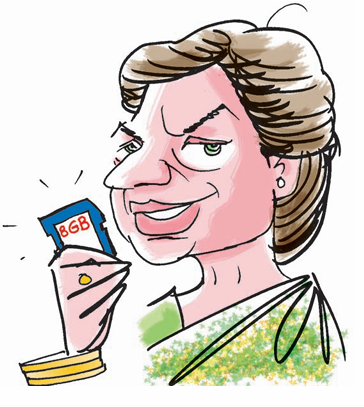
Officials in the Delhi government are agog over the state of health of Health Minister Kiran Walia. She has a peculiar habit of forgetting names and faces, and of arriving late at most functions, whether a “Clean Yamuna” campaign concert by Ravi Shanker or a social occasion.
At a social gathering at Oberoi Hotel, when she was leaving with fellow Minister Mangat Ram Singhal, she met a gentleman who knew her from the days when Prof VP Dutt, former Pro Vice Chancellor of Delhi University, groomed her as a lecturer in political science in Laxmibai College.
Pleasantries were exchanged and then she asked, “How is your family, judge sahib?” Those around lost their eyebrows. Singhal merely smiled as he knows her forgetfulness well. The gentleman is a journalist, not a judge.
Incidentally, this trait of Walia’s is a constant source of amusement for Chief Minister Sheila Dikshit.
And quiet flows the money…
naxals and high connections
It is plain knowledge that it is impossible for the Naxalites to operate in isolation without the help of local, state and national politicians. Most of the top industrial houses are working in the Naxalism-affected areas, MPs and MLAs are being elected, MPLAD and NREGA funds are being diverted.
One-third of India has no tax regime. Instead, a regime of extortion holds sway. This suits the Naxalites, politicians and industrialists well and is the country’s biggest network for generating illegal money. In Chhattisgarh, everyone knows that former Chief Minister Ajit Jogi had well-established links with the Naxalites. Congress General Secretary Digvijay Singh knows better than any leader in Madhya Pradesh which group of Naxalites and which industrial houses are operating in the Naxalite-ridden areas in the state. In Andhra Pradesh, the late YS Reddy had the Naxalite leadership under his thumb.
In Bengal, at one time or another, Mamata Banerjee, Pranab Mukherjee and the top leadership of the CPI(M) have all put the Naxalites to political use. And, of course, everybody knows the fiery and outspoken P Chidambaram once represented a company called Vedanta which works in Naxalite-infested areas. Intelligence sources have a complete dossier about individuals’ and industrial houses’ Naxalite links. But who cares as long as the money flows?
Patel’s tit for tat
crushes ai, indian unions
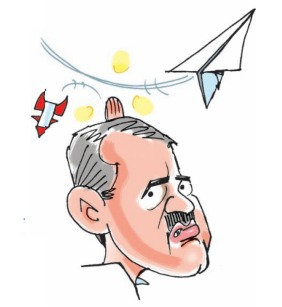
Civil Aviation Minister Praful Patel had long been waiting for the right moment to hammer the Air India unions. When they went on strike, it only strengthened his resolve to crush them. Now, why is Patel angry with them? Because, in the past year, the unions have exposed him.
All the unions of the Civil Aviation Ministry, Air India and Indian have written to the Prime Minister and Cabinet Ministers, about his working pattern and alleged game plan to make Air India and Indian dead wood. These letters, which came as a shock to everybody in the government, served as a huge embarrassment for Patel but he could do little at the time as the unions exercised their right to send the letters. When they went on strike, he lost no opportunity in taking revenge.
Lanka-India bhai bhai
warm response to rajapakse
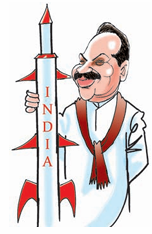
Public attention was focused on the nuts and bolts of the Comprehensive Economic Partnership Agreement (CEPA) between India and Sri Lanka preceding President Mahinda Rajapakse’s visit to India, but the backroom boys in both nations were busy negotiating proposals that could have an even more profound impact on future strategic ties between the two SAARC neighbours.
After routing the LTTE, Rajapakse won a decisive Presidential victory and his party also trounced the opposition during parliamentary elections, leaving India with the belief that he can move rapidly not only on CEPA but also on the 13th Amendment devolving more power to the Tamil majority regions. The Sri Lankan President will move cautiously on both fronts because of domestic compulsions.
But to prove his genuine friendship for India and allay fears of China’s growing influence in his country, Rajapakse has suggested India set up a full-blown space research centre in Sri Lanka secured by Indian security personnel, as well as help form an Indo-Sri Lankan Joint CEO Business Forum along the lines of a similar group created when Prime Minister Manmohan Singh visited the US during the Bush regime. A positive response to Rajapakse’s feelers from the PMO kept the midnight oil burning.