



























In all my years as a journalist, the rare occasion when the Indian public seemed united in applauding the choice of a person for high office was the selection of Manmohan Singh as Prime Minister by the Congress party. I doubt that most people who hailed this pick did so because of any elaborate study, leave alone perusal, of the good doctor’s resume. Even a cursory glance at his curriculum vitae is enough to convince anybody that, as far as credentials go, he is probably the most erudite, educated, high-achieving leader in the world. There is no column in that resume, however, that lists the quality for which Manmohan Singh received the public’s hosannas: honesty.
There is a supreme irony in India’s modern polity: the more the public seems to become inured to rampaging corruption and venality, the greater its reverence and adulation for probity—virtuousness, sincerity, integrity, uprightness, rightness, worth, and morality. This is in sharp contrast to what seems a universally defeatist, fatalistic, chalta hai acceptance of institutions of governance falling like ninepins under the assault of an unstoppable bowling ball of dishonesty, sleaze, bribery, fraud, and vice.
No institution seems to have been spared—Parliament, the judiciary, the bureaucracy, the defence forces, the police, the security establishment, NGOs, corporate houses. So, once again, it comes as that rare surprise when a new appointment or the elevation of a serving official to a higher post draws praise or even a sigh of relief from traditional cynics.
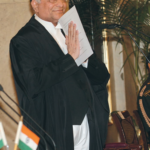
The example at hand is the recent appointment of Sarosh Homi Kapadia as Chief Justice of India. Despite widespread criticism of the Judiciary for its manifest failings and the lapses of individuals sitting on various benches across the country, it remains the penultimate defensive weapon – the peoples’ weapon – against Executive excesses, violation of human rights, ecological and environmental havoc, business malpractices, consumer manipulation, and social and economic inequities. Its chief can set the tone for the entire nation.
And in Kapadia, as Sarita Tanmay writes in her assessment of this remarkable man in the current issue of gfiles, India may well have in the Judiciary what it has in the person of Manmohan Singh in the Executive. The judge, whose term will last a little over two years, is the first Chief Justice of India to have been born after Independence. And, it seems, he means business.
He shot into prominence as a special judge appointed to prosecute the 1999 stock exchange scam. He is a strict constructionist of the Constitution who, colleagues say, “believes in perfection and will tolerate no nonsense”. He comes from a poor family and started his career as a Class IV employee. “The only asset I possess,” he once wrote, “is integrity.”
Welcome to your new position, Your Honour, and for the sake of our country may you be a Daniel come to judgment! yea, a Daniel!