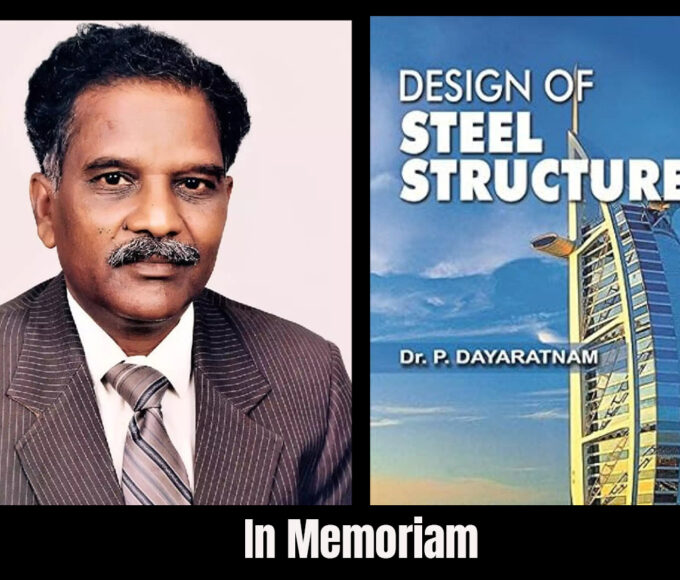



















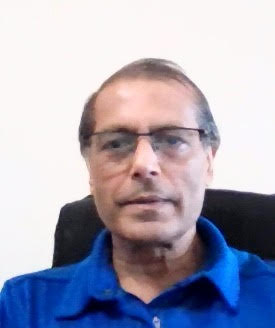

India’s story of development is often narrated through the physical symbols of progress—bridges, dams, towers, industrial plants and educational institutions that transformed a young nation into a modern state. But behind these structures stand the visionaries who imagined them, designed them and trained the people who would go on to build them. Among this quiet but powerful group of nation-builders, Prof. Pasala Dayaratnam occupies a place of genuine distinction.
His passing on November 11, 2025 at the age of 93 has left a deep sense of loss across the Indian engineering community, especially among those whose lives he touched as a professor and dean at IIT Kanpur, vice chancellor of JNTU Hyderabad, and a nation-wide voice for engineering education. To generations of students and colleagues, he represented scholarship, simplicity, and unwavering commitment to excellence.
Prof. Dayaratnam belonged to an era when engineering was not just a career—it was a vibrant intellectual discipline fused with a deep sense of social responsibility. For many of us who had the privilege of sitting in his classroom at IIT Kanpur around 1980, he was the professor who transformed structural engineering from an intimidating subject into something logical, elegant and even joyful. His clarity, precision and ability to explain complex mechanics with simple chalk strokes were simply unmatched.
His approach was deliberate, patient and profoundly insightful. When he walked into a lecture hall, the entire room settled into a sense of calm focus. He was not merely teaching formulas; he was teaching a way of thinking—rooted in discipline, logic and a profound respect for the structural behaviour of materials that hold up the world around us. Those early lessons stayed with us not only in our professional careers but also in the way we approached challenges, decisions and responsibilities.
Early Years and the Courage to Come Home
Even as an undergraduate engineering student at the University of Madras, he displayed qualities that would later define his career: seriousness of purpose, intellectual curiosity and a deep commitment to learning.
His exceptional promise carried him to the United States, where he pursued his Master’s and Ph.D. at the University of Colorado. His work there was outstanding, earning him admiration from faculty and peers alike. In recognition of his distinguished contributions to the field, the University of Colorado awarded him the Distinguished Engineering Alumni Award in 1997, an honour bestowed upon only a small number of global achievers.
Yet the most defining decision of his life came when he chose to return to India at a time when many Indian scholars preferred to remain abroad. He believed that India needed dedicated teachers and researchers—people who would shape its scientific foundation and strengthen its engineering capabilities. His return was not merely personal; it was an act of service to a nation still building its academic institutions.
Building IIT Kanpur with Quiet Strength
When he joined IIT Kanpur in 1965, the institute was in a period of exciting expansion. Over the next three decades, Prof. Dayaratnam became one of its intellectual pillars. He served as Head of the Civil Engineering Department, Dean of Research and Development, Dean of Resource Planning and Generation and even as Acting Director when the institute required steady leadership.
His colleagues recall that he brought a rare combination of clarity, fairness and a calm, unshakeable sense of judgement. He never raised his voice; he never needed to. His ideas carried weight because they were rooted in deep understanding and an unwavering commitment to what was right.
Despite these demanding roles, he remained first and foremost a teacher. His students remember him arriving at dawn each morning at the computer centre, running structural models on the old DEC-10 mainframe with quiet determination. In a time before modern software, such analysis required patience and immense discipline—qualities he embodied effortlessly.
To him, teaching was not just a job. It was a calling. He believed that conceptual clarity was the true foundation of engineering and that no student should leave a classroom confused about fundamentals. His goal was always the same—to make his students think, reason and appreciate the beauty of structural engineering.
A Teacher Who Lit Sparks in Minds
Among the many students shaped by his approach was Prof. Sundar Krishnamurty, now Vice Provost for Innovation, Entrepreneurship and Creativity at the University of Massachusetts–Amherst. Reflecting warmly on those years, he writes: “During my formative undergraduate years, no influence was greater than that of Professor Dayaratnam, whose passion for engineering design and research lit a spark in me that shaped my path. As one of the most respected professors, he demanded rigour—but always with a twinkle in his eye and an unwavering belief in his students’ potential. I still remember how he challenged me during my senior design project, not with criticism, but with questions that pushed me to think deeper, defend my choices, and appreciate the elegance in thoughtful design.”
He continued, “Professor Dayaratnam’s legacy lives on in the minds he inspired and the values he embodied. It was through his example that I first imagined becoming a faculty member myself. I carry his influence with deep gratitude.”
Another of his students, Tajpal Bhatia, whose career spanned more than four decades and culminated in his position as Senior Manager for Bridge Engineering with the California Department of Transportation, offered a tribute that echoes the sentiments of thousands of alumni: “Professor P. Dayaratnam was widely respected for his academic excellence, professional integrity, and deep commitment to advancing structural engineering education. His clarity of thought, rigour in teaching, and personal kindness left a lasting mark on everyone who had the privilege of learning from him. His guidance and mentorship profoundly shaped my own career… He will be remembered with great respect, admiration and gratitude by all who knew him.”
And then there is Santosh Shinde, now Managing Director of Rohan Ventures, whose story reveals how far the professor’s influence could travel—even decades later.
Years after graduating, Shinde found himself shortlisted for a major Project Management Consultancy assignment in Mumbai. His competitor was a highly reputed consultant and published author. When Shinde entered the interview room, he expected little more than a polite dismissal.
But everything changed when one member of the selection committee noticed “IIT Kanpur” on his résumé and asked if he knew Prof. Dayaratnam. Upon learning that he had been taught by the professor, the committee member—himself a former Director at MTNL—recounted his own admiration for Prof. Dayaratnam, gained through professional collaboration during the wind-tunnel testing of microwave tower models at IIT Kanpur.
Turning to the committee, he declared, “If he is a student of such a brilliant engineer, and if he possesses even ten percent of his teacher’s capability, our project will be in safe hands.”
Shinde was awarded the project on the spot. “I remain deeply grateful,” he says, “for the genius, integrity and influence of Professor Pasala Dayaratnam.”
The Power of His Books and Intellectual Contributions
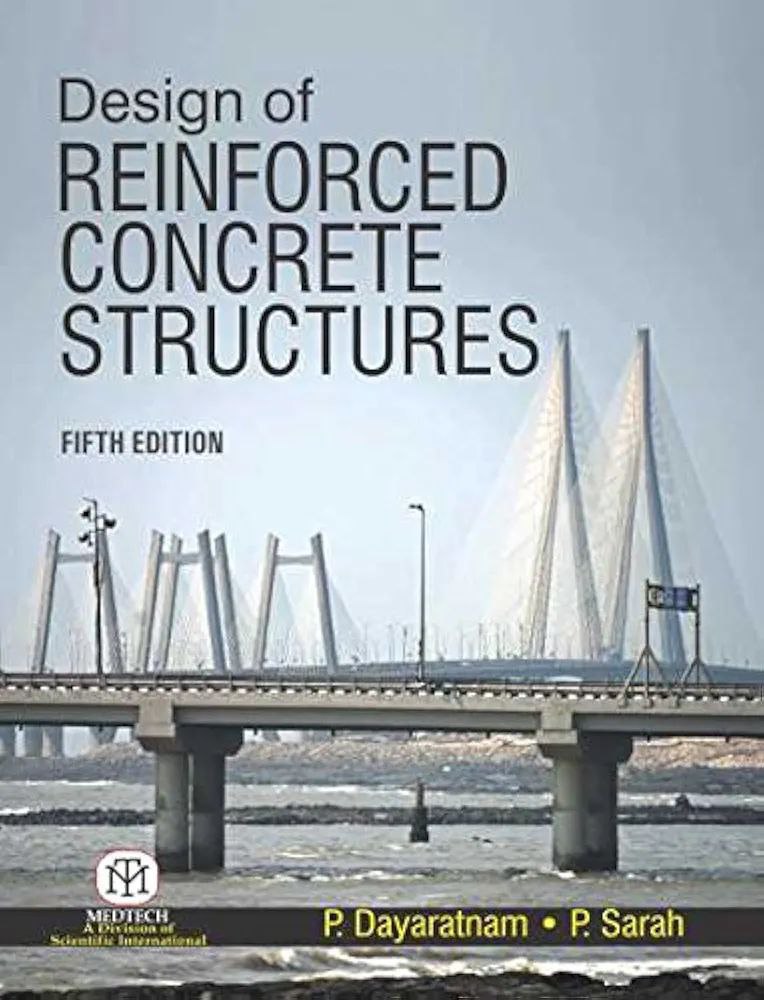
Beyond the classroom, his books became a second classroom for generations of engineers. Titles such as Reinforced Concrete Structures, Prestressed Concrete, Steel Structures, and Theory of Shells and Folded Plates were not merely textbooks—they were gateways into clear thinking. His writing reflected the same qualities he brought to teaching: logic, simplicity and depth.
Students across India, including many who never met him, learned structural engineering through his books. In several universities, including foreign ones, his books became standard references, shaping curricula and guiding project design work.
Many senior engineers often say that if you understood “Dayaratnam’s way of explaining,” you understood structural engineering properly—cleanly, confidently, from first principles. His books continue to be quoted, and referenced because they carry timeless clarity.
Engineering Mastery That Touched Every Corner of the Country
Beyond teaching and writing, Prof. Dayaratnam contributed to a wide range of engineering projects that touched public, private and spiritual spaces across India.
One of his most iconic achievements was the Plexiglas dome at the Ramakrishna Mission in Lucknow—a challenging, aesthetically demanding project that blended transparency, strength and geometry with remarkable finesse. Senior monks recalled how decisively he solved issues that had confounded many others.
He also brought structural elegance into temple architecture, guiding the construction of the Sri Ramakrishna Temple in Lucknow, seamlessly fusing influences from Chandella, Chalukya, Pallava, Mughal and Jain architecture. Symbolic motifs—Shankha, Chakra, Padma, Trishul, Damaru and Vajra—were integrated with engineering precision, cast in red cement for visual prominence.
His engineering repertoire spanned domes, tall buildings, bridges, elevated tanks, foundations, industrial plants and unique structural forms, with project values exceeding Rs. 120 crores—a remarkable figure for his time.
At Andhra University, he helped establish one of India’s first modern structural engineering laboratories, equipped with advanced testing floors, servo-controlled loading systems and sophisticated data acquisition tools. Sponsored projects from CSIR, DST, BRNS and other agencies followed, placing him at the forefront of structural research in Asia.
His engineering legacy remains not only in the structures he designed, but in the methods he taught—always asking teams to return to first principles, logic and material behaviour, never to authority.
A National Leader in Engineering Education
In 1995 he became Vice Chancellor of JNTU Hyderabad, where he strengthened laboratories, modernised curricula, and raised academic standards. He headed the committees which formulated the syllabi for undergraduate and postgraduate engineering education across the nation.
Educationists recall that he brought a rare ethical compass to administration. Rules, in his view, existed not to restrict students but to protect fairness, academic quality and institutional integrity. Whether in matters of curriculum, faculty development or laboratory investment, his decisions were grounded in a belief that India deserved world-class engineering institutions—and that such excellence could be built only through discipline, transparency and sustained effort.
His contributions received national recognition through Lifetime Achievement Awards from the Institution of Engineers, the Indian Concrete Institute, and the Rajiv Pratibha Award from the Government of Andhra Pradesh.
A Life Recorded with Grace
His autobiography, “Building Blocks of My Life,” is a reflection of simplicity, honesty and deep humility. Written in lucid prose, it captures his values—discipline, sincerity, gratitude and an abiding devotion to the profession he loved. It traces his journey from modest beginnings to national leadership, weaving together anecdotes, insights and lessons that continue to inspire readers today.
The Legacy That Continues to Stand Tall
In the end, Prof. Pasala Dayaratnam’s legacy is not only in the structures he designed or the books he wrote. It lives most deeply in his students—thousands of engineers, teachers, researchers and leaders who carry his values into every project, every classroom and every decision.
He may no longer walk among us, but the nation he served continues to stand taller on the foundations he built— one classroom, one idea and one life at a time.