







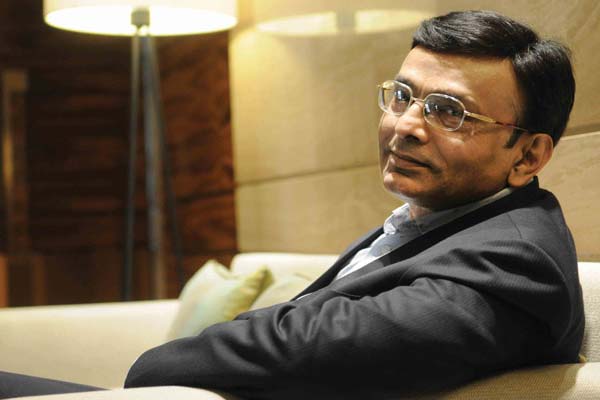






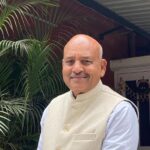


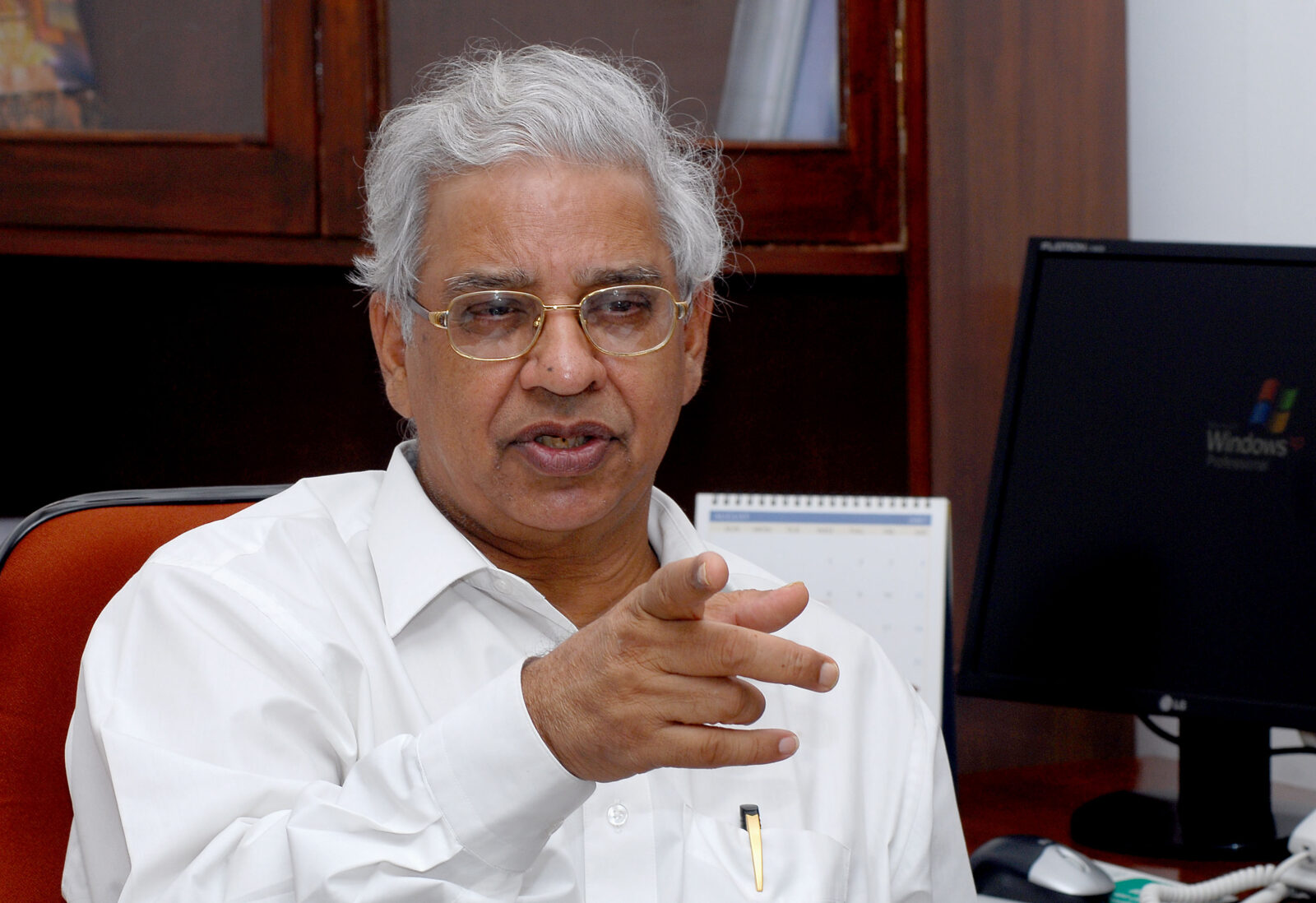
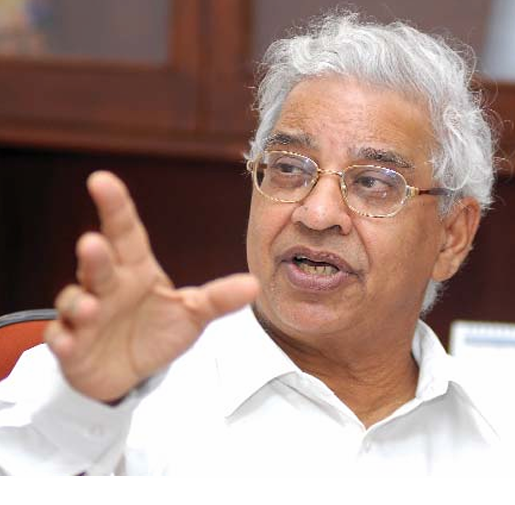
Appointed Cabinet Secretary on June 14,2004,BK Chaturvedi held the post till June 13,2007. An IAS officer of the 1966 batch (UP cadre), he is a postgraduate in physics from Allahabad University with specialization in electronics and began his career as associate professor of physics in the engineering college of the same university. His teaching stint lasted over two years, after which he joined the IAS in July 1966.Chaturvedi has worked in the government of Uttar Pradesh in various posts, including District Magistrate of the backward district of Azamgarh in eastern UP.He was also DM of Allahabad.He has worked in the fields of agriculture, industrial development, urban development and finance, later specializing in finance and commerce. He was Secretary (Finance) in charge of taxation and budget to the UP government and also looked after industrial finance in the State Financial Organization. In 1984,Chaturvedi moved to the Centre and worked as Executive Director,Trade Development Authority of India.He was also Chairman-cum Managing Director,State Trading Corporation of India and worked for the Ministries of Textiles,Finance,Human Resource Development, and the Departments of Women and Child Development, and Elementary Education & Literacy. He pioneered the reforms in the insurance sector and initiated the process of gender budgeting.He is currently Member, Planning Commission.
gfiles: What was the significant work done during your stint as Cabinet Secretary?
BK Chaturvedi:We made efforts to change the dialogue about the bureaucracy, we made the system more transparent and people-friendly.The intention was to promote excellence in governance and disseminate best practices for adoption by the states.To bring stability of tenure and greater accountability, the All-India Service Rules were changed and tenures at senior levels were kept for long periods. Power, infrastructure, health and education were taken up for implementation.The broad approach was to make administration people-centric and to use e-governance for making services provided by the government hassle-free.
gfiles: What does ‘best performers’ mean?
BKC: It means that civil servants should strive for excellence in the areas allotted to them. Karnataka did extremely well in land reforms. Indore’s transport serv ice improved with innovations. Sitapur in UP took initiative in e-governance. Kerala’s programme for the care of the poor won great admiration. Andhra’s efforts in e-governance were generally accepted and appreciated.
gfiles:What is e-governance?
BKC: E-governance means providing services to citizens through electronic mode, making it hassle free and removing corruption. The entire exercise is aimed at bringing automaticity and objectivity in provision of services. It also brings enormous transparency.
‘Bringing in a social order based on equity and justice is throwing up its own challenges. Command economy has given way to competition-based economy’
gfiles: Do you think the bureaucracy guides the leadership or is it the reverse?
BKC: The support of the leadership is vital in initiating any innovation. In Andhra Pradesh, e-governance, extension of the IT system, investment in infrastructure were all initiated by the political leadership. In Delhi, the concept of bhagidari was brought in by the political leadership. The bureaucracy implemented the ideas of the leadership.
gfiles: Do you think the bureaucracy at present is skilled and up to expectations?
BKC: Yes. Earlier, the civil service did not use ITand other modern techniques extensively. With the introduction of extensive training, the scene has changed enormously. The young generation is performing well in IT, finance, communication, defence and a whole range of other sectors.The idiom of the administrative system now is changing from “mistrust”to “trust”of the citizens
gfiles: What impact has economic liberalization had on the bureaucracy?
BKC: A new breed of competent bureaucrats has sprung up. Our management ability is superb and up to the market expectations. Both national and international markets value them.
gfiles: But is the bureaucracy in tune with the new challenges after liberalization?
BKC: Absolutely. The younger officers are extremely competent and skilled.
gfiles: If you are a collector of a remote district today, how would you compare the administrative scenario with that about 30 years ago in terms of duties, responsibilities and challenges?
BKC: The common man’s expectations of the collector were far more earlier. Schools, health services, education, power were the basic issues. In the last decade, incomes have been rising. Bringing in a new social order based on equity and justice is throwing up its own challenges. The command economy has given way to competition-based econo my with far greater involvement of the private sector. Today,India has arrived.Its infrastructure has changed.The collector of today works in an entirely different atmosphere.
gfiles:What did youl ike most in those years?
BKC: The level of honesty and integrity was much higher
gfiles: How can this be changed?
BKC: We have to pay our civil servants well. Along with high salaries must come commensurate responsibility.
gfiles: You conceived the Sarva Shiksha Abhiyan as Secretary in the HRD Ministry. This is an ambitious programme but has come under the scanner. How do you react?
BKC: It was a government programme and I had an opportunity to make my own contribution. The design of the programme was constantly improved and because of flexibility it has general ly met its objective. However, the stan dards of learning and the drop-out rates continue to be cause for concern.These are issues which are to be addressed.
gfiles: But the rural-urban gap is still widening. Our developmental efforts are largely focused on 43 towns of the country.We are neglecting rural India, resulting in more and more skewed distribution of income.
BKC: The government has begun a programme, BharatNirman, to develop rural infrastructure and stimulate growth.This, along with investments in agriculture, rural development, and employment oriented programmes will contribute to improving rural incomes.The process of development is complex. Today, the rates of savings in the economy has gone up to 35 percent, an increase of 8-9 percent in five or six years.This has led to a huge step up in investments in the economy. Investments in infrastructure are rising from 4-9 percent of the GDP by the end of the 11th Plan. All this will lead to more equitable distribution of income.
gfiles: When the district develops, the state develops and then finally the nation. But in India it’s the other way round.
BKC: Districts cannot progress on their own without investments in the economy. It is only after major investments are made in infrastructure, education, health, transport, power and telecom that the country can develop.
gfiles: The Vision 2020 document of the Planning Commission perhaps lacks vision. It says the focus in 2020 would be on the IT sector.However,I feel the focus will change IT. How do you look at it?
BKC: The Planning Commission has a road-map for progress over a period of time. With change in technology, new strategies will come in. I agree we have to plan our long-term strategy based on fast-growing changes in modern science and technology. What will happen in 2020 in the IT sector,none of us can say.
gfiles: The Rajya Sabha Secretary General,Yogendra Narain, has envisaged the Indian Rural Administrative Services for the development of the real India.
BKC: Yogendra Narainji is a very senior and learned colleague of mine. I respect him but differ with his views. India has a very efficient civil service organization and we should not divide it into rural and urban. We should focus on improv -ing management skills, upgrade technical know-how and make the existing system more effective, transparent and
trustworthy. I recall how some of the sweeping reforms with which I was associated covered both the rural and urban areas. When we opened up the insurance sector, the Life Insurance Corporation of India board doubted its ability to meet competition from the new companies. Today, LIC is one of the biggest organizations and has grown faster in the last few years.
‘I am a strong votary of the large states with lower income getting a strong push so that we progress rapidly as a nation and take our rightful place’
gfiles: You are pro-liberalization but how does one regulate the regulator whose performance is dismal,be it IRDA,TRAI or SEBI?
BKC: Indian regulators have performed well in the wake of economic liberalization. Many of these sectors are expand ing rapidly with growing private investments. We add nearly 6 million telephones every month. Huge invest ments are coming into the economy from FIIs and other sources. A large number of new companies are being set up. It is important that a regulatory framework rise to the people’s expectations.
gfiles: You have recently joined the Planning Commission.What are the chal lenges before you?
BKC: I am Member in charge of UP in the Planning Commission. I often wonder, can India progress without UP progressing at a faster rate? I am a strong votary of some of the large states with lower income getting a strong push so that we progress rapidly as a nation and take our rightful place.
gfiles: UP has been stagnating on the developmental front for the past 15 years.Why?
BKC: The state performed well till the Eighth Plan. Subsequently, the rate of growth has dipped.The investments in
health, education, power, agriculture and industry were not forthcoming. The state has an inherent transport disadvan tage. In the absence of any port, its export potential gets constrained. The state can develop faster if we are able to make investments in infrastructure and rapidly develop a social capital.
gfiles: You have worked with both Manmohan and Vajpayee. How do they compare?
BKC: Both trust senior civil servants.Dr Manmohan Singh is the architect of economic reforms. He has experience in all sectors of government and knowledge of international affairs and administrative systems. Vajpayee has enormous experience, a remarkable parliamentary career and knowledge about people of different parts of the country.

Editor, gfiles