
















●Raveena Singh (name changed) topped in MSc (Chemistry) and then reluctantly appeared in the Police Recruitment Examination of Uttar Pradesh on the insistence of her parents. She was first in the written test, securing 168 marks out of 180. But, in the 20-mark interview,she got only one mark.Her total came to 169.The cut-off mark for selection was 170 out of 200. She was not recruited.
●Kavita Tripathi (name changed),allegedly proximate to a powerful Minister in Mulayam Singh Yadav’s Cabinet, was selected despite being a full inch shorter than the mandated 151 cm.
●Shabnam (name changed),an in-house candidate from the police wireless department, was forced to oblige top officials of the police recruitment board, a local goon and the above-mentioned Cabinet Minister. She was then tossed among a group of four men as a piece of meat.Terrified, she resisted and tried to flee. She was chased and overpowered, tonsured and burnt with cigarettes.When they finally let her go, she ran away to Dehra Dun and hid there for a month fearing for her life.
●A candidate belonging to a particular caste obtained 108 marks in the written exam but was accorded a tally of 158 thanks to some crafty use of whitening fluid.She made it to 170 by getting 18 marks in the interview.
●A candidate who did not appear for any physical test as she was eight months pregnant was selected.
THIS list constitutes only the proverbial tip of the iceberg in the scandal of police recruitment in Uttar Pradesh in 2005-06 during the Mulayam Singh Yadav regime. This government set up 55 Recruitment Boards to recruit 22,000 constables in the state. After Mayawati became Chief Minister, she instituted an inquiry headed by Additional Director General, Special Task Force Shailja Kant Mishra to probe the recruitment process. Of the 55 boards, 51 were investigated and nine given a clean chit. Four were left out as two were subjected to legal proceedings and the other two could not complete recruitment.
The findings of the Mishra Committee were submitted in three volumes and were disclosed, though heavily censored, by the government – leading to public outrage and shaming the entire government machinery and police department. Mayawati has suspended 25 IPS officers and cancelled the recruitment of 17,868 persons selected by 42 boards.
The report shows that Mulayam Singh Yadav used the government as his personal fiefdom to amass wealth and create his own caste army in the police system, but it also raises many questions about the body politic of the state and police recruitment. Indicating procedural flaws, it shows that the police administration in the state has collapsed vertically and horizontally. A handful of honourable police personnel who refused to obey the unlawful diktats of the political masters were dumped in insignificant posts and the boards shuffled umpteen times to accommodate yesmen. Rules were flouted with impunity – for instance, the government rules stipulate a one-to-one interview and not a group interview.
A senior police officer narrated how it was done in true Bollywood style: “The candidates were ordered to sit in a big hall in groups of 40 or 50. After some time, the interview boss made his entry, teacup in hand. Standing on the platform in front of the door, he smiled and cast his gaze over the crowd. Then he took a full round of the hall and exited.”
The bribes were justified before the aspirants by telling them that, following their entry into the police force, their “dowry rate” would shoot up to Rs 6 lakh – which is actually true – and that they would have secured a passport to earning illegal money throughout their working lives. The candidates’ parents were told that the increased dowry of Rs 6 lakh that their sons would become eligible for would bring them a profit of Rs 2.5-3.5 lakh immediately.
The recruitment system was then tampered with. The favoured candidates did not appear for the written exams themselves. The answer sheets of genuine candidates who were good were evaluated for the benefit of the favoured candidates. It was common for answers to get more than the maximum marks and for marks to be totted up twice. Cutting/overwriting/erasing were detected without any countersigning by the invigilator or the examiner.
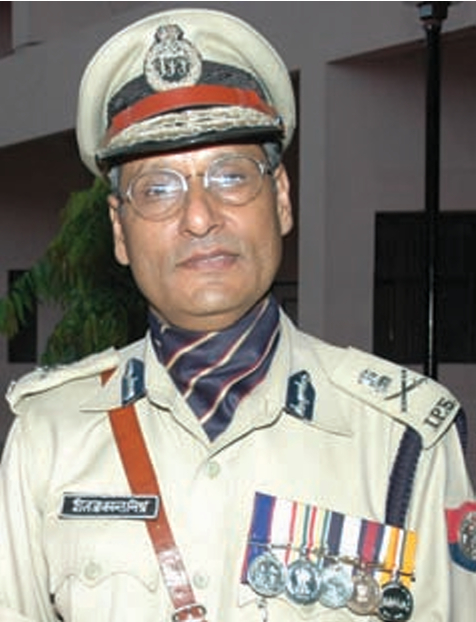
An inquiry headed
by Additional
Director General,
Special Task Force
Shailja Kant Mishra
probed the recruit
ment process
An obscure private company, M Cubetron, was given the contract for scanning Optical Mark Reader (OMR) sheets despite the technical service branch of the police department being technically competent to handle the job. This company did not have a back-up of the hard disk for it had deleted the entire data to hamper any investigation. The results of the main written exam were not signed by the company staff.
According to police officials, the recruitment board chiefs made around Rs 50-60 crore in toto. The investigating agency seized the hard disk of the computer belonging to the ADG, Wireless, and found pornography and music in the police recruitment folder. The broadband internet connection (with unlimited download) cost Rs 1,000. But the bill came to Rs 17,000 while the mobile bill was Rs 35,000. Police sources told gfiles that the suspended recruitment board chairmen are all naming one political master. And a top police official who is part of the investigation fears for his life. He has taken the precaution of keeping the secret documents pertaining to the investigation at several places.
Now, the suspended recruits have nowhere to go and are bearing the stigma of having bribed police officials. Though Mayawati has said they will be allowed to try their luck in the next recruitment drive, most of them will be overaged by then. Besides, there is no guarantee that it would be fair. And what if Mulayam Singh Yadav returns to power and orders a review of recruitments during the Mayawati regime?
The solution lies not with an individual Chief Minister but in overhauling the police department