


















Even with the world economy slowing down and the next general election nearly upon us as we slowly recover from the worst terrorist strike this nation has ever known, political parties and their leaders have so far been unable to enunciate clear issues on the basis of which voters ought to make their choices about their next government. So lacklustre has been the performance of the leaders of the two major national parties, so predictable has been the posturing of the regional, ideological and caste-oriented third-fronters that the crises that stare India in her face have catalyzed no clear agendas for forceful debate and purposeful action.
It’s not as if elemental concerns are not staring us in the face: the need to reorient foreign policy in view of exceedingly dangerous developments in all neighbouring countries; new challenges to our national security; an alarmingly declining rate of GDP growth; the widespread politicization of governance and declining morale and performance of the civil service; our dilapidated educational institutions, our trifling healthcare system and social security for the elderly.
The system and the government are simply delivering far, far less than the best; everybody complains about this and yet, surprisingly, there is not a leader on the horizon articulating even a single one of these issues or building solution-oriented initiatives. It seems as if the wind has simply gone out of the sails of our ship of state and the oarsmen are fast asleep.
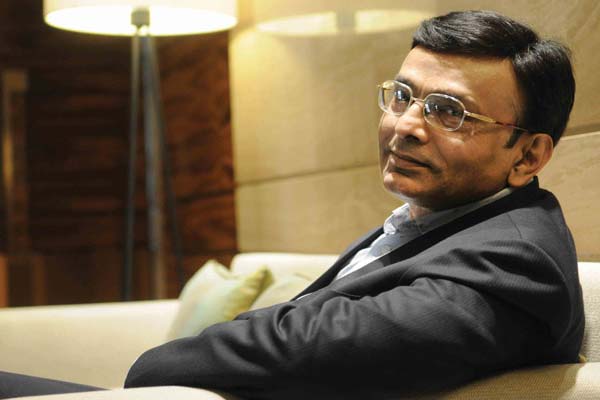
This issue of gfiles, under its “governance” section carries several passionately argued pieces which communicate these concerns. Our cover feature, Anil Tyagi’s interview with BK Sinha, director general of the National Institute of Rural Development (NIRD), deals with a subject of seminal importance to the future of India’s economic health and governance: how to grapple with the problem of rural employment, distress migration, nutritional intake, food security, assets creation, infrastructure, empowerment and purchasing power.
This in itself is a fundamental which, in these trying times, should be the subject of intense national debate and prescriptive ideas. We keep hearing that, to a large extent, India’s agricultural economy has been a socially stabilizing factor and has helped the nation ward off the worst effects of the worldwide meltdown. If so, then isn’t it time we rethought our ideas of rapid forced urbanization as the key to modernity and devoted more resources and better governance to massively strengthening rural India that comprises 70 per cent of our population?
As Sinha puts it: “Sixty per cent of our workers are from the agriculture sector which contributes 17 per cent of the GDP. The problem is that more people are available for work in a sector which contributes only a small amount of the GDP: hence there is poverty. Agriculture is not growing fast enough, wherever it is growing there is no attendant expansion of employment, rural infrastructure is weak and cannot sustain the rapid growth process.”
Surely, after having initiated the National Rural Employment Guarantee Scheme (NREGA) – the biggest programme of the government that is set to pump a humongous Rs 580,576.9 million into rural areas – all political leaders today have the subject matter for a solid issue-based debate that is vital to the future health of our country: how can rural India be developed? Is NREGA a powerful tool to accomplish this and, if so, how can we rally the nation to champion its effective implementation?