







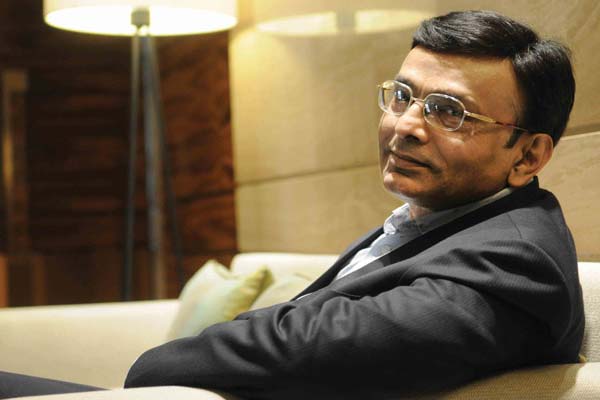









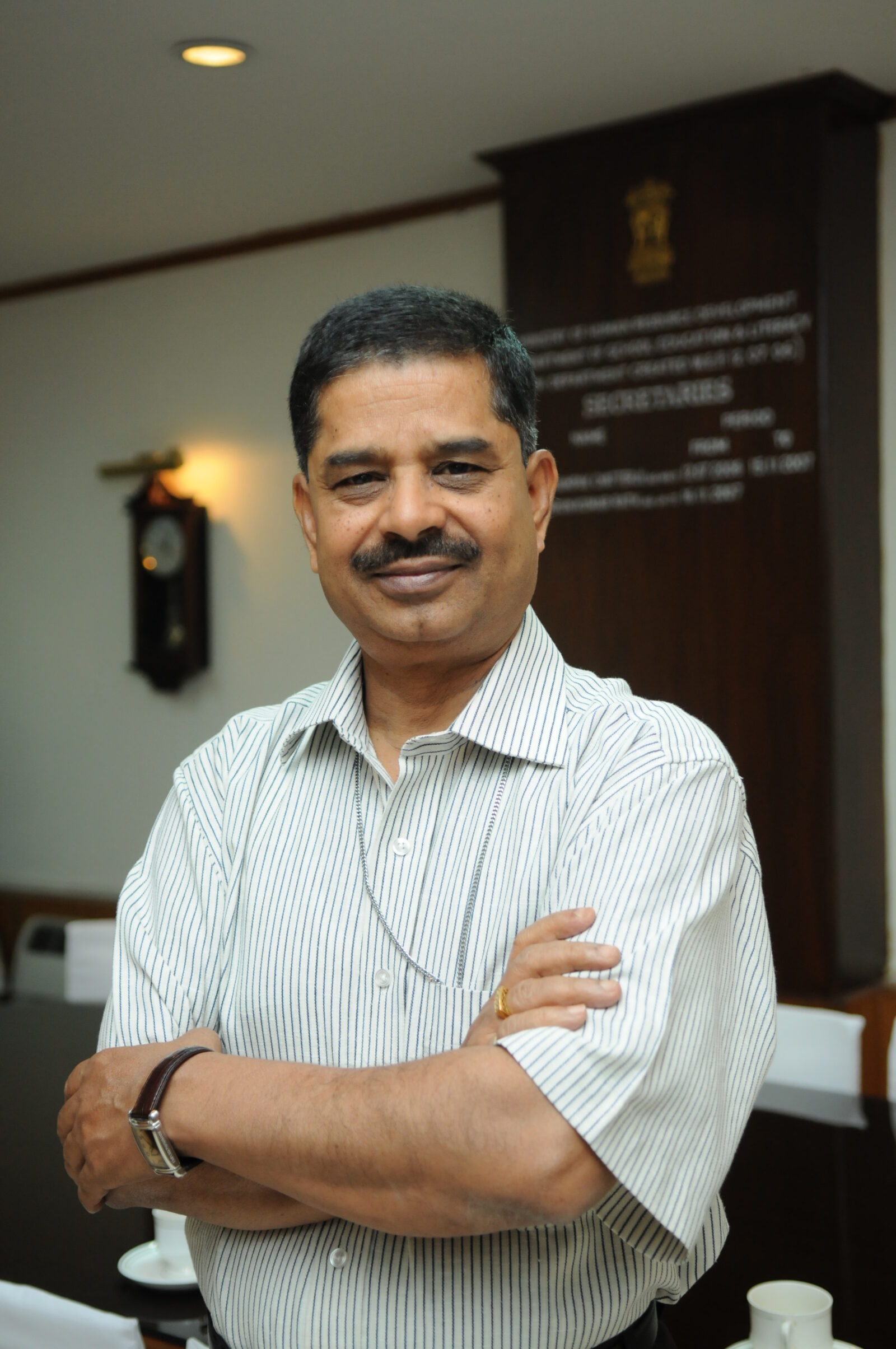
Born in Mayurbhanj, Orissa, Arun Kumar Rath had a brilliant academic career – securing top positions in the Orissa School Board, Utkal University and Delhi University examinations. An MSc in physics, he joined the IAS in 1973 as a member of the Bihar cadre (now Jharkhand). In a career spanning over three decades, he has been Collector of Begusarai and Muzaffarpur, Director of Social Welfare and Industry, Divisional Commissioner of Muzaffarpur, and Secretary in the Departments of Education, Industry, Science and Technology in Bihar. He moved to the Centre in 2000 as Joint Secretary in the Department of Public Enterprises. In 2004, he became Additional Secretary and last year Special Secretary and Financial Adviser for the Ministries of Steel, Earth Sciences and Non‑Conventional Energy.
Rath has also studied management at the universities of Birmingham and Bradford, and is a Fellow of the All-India Management Association. He has delivered lectures on management in universities and business schools in India and abroad. He has also stayed at the Indian Research Station, Maitree, in Antarctica. He was the first Indian to be elected Chairman, Standing Committee of the Commission for Conservation of Antarctic Marine Living Resources.
He has been Secretary, Department of School Education and Literacy, Government of India since November 2007. His major tasks include universalization of elementary education under the Sarva Shiksa Abhiyan, provision of mid-day meal for all children in primary and upper-primary schools, creation and upgradation of secondary schools, and thrust to the adult literacy programme in order to achieve the goals of Education for All by 2015. He enjoys yoga and light classical music.
gfiles: What is the country’s mission regarding primary education?
Arun Kumar Rath: You must see it in the context of universalization of elementary education for all children aged 6-14 years, which is a national goal. It is also a Constitutional mandate in the context of right to education as enshrined by the amendment in Article 21A of 2002. It requires us to provide free and compulsory elementary education, from Class I-Class VIII. Our mission is to impart primary education to every child in the country.
gfiles: What is the objective regarding the child’s future? Is the goal just to make children literate or to lead them towards job orientation or to make them better citizens?
AKR: The objective is universalization of elementary education. You see, 26-30 crore adult citizens are illiterate. This is incompatible with our being a world leader.
gfiles: The goal is a literate India?
AKR: Yes, literacy at the initial level, minimum level of education.
‘Elementary education for all childrenaged 6-14 years is a
national goal…. Our mission is to impart primary education to Every child in the country’
gfiles: Literacy is a must and you want to ensure that the majority have passed at least Class VIII?
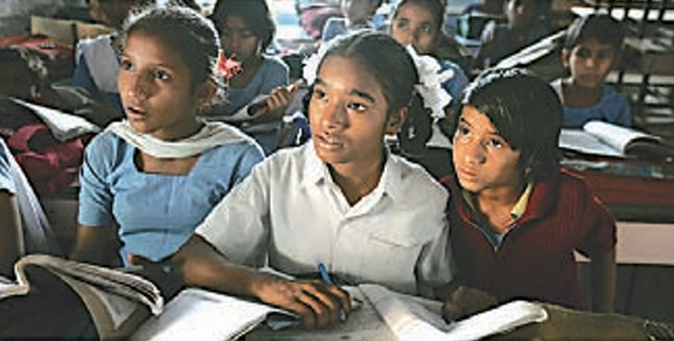
AKR: Yes, “Class VIII-pass” is a must. We have a programme to make 30 crore illiterate people literate. We want to catch them young so that they become responsible educated citizens. This also prepares them for secondary schooling which, in turn, gives a foundation for higher education. This is the focus of primary education. And it is essential to make it available to everybody in the country without any gender or social discrimination or regional disparity. The Sarva Shiksa Abhiyan (SSA) is a flexible programme designed for achieving universalization of elementary education.
gfiles: In the world scenario, where do we stand in the context of primary education?
AKR: There are many assessments but I would regard India as around 100th which is improving every year. When we talk of the educational development index, adult education is also a parameter and adult education is a huge problem for the country. But primary education is doing well. We have already covered about 97 per cent of our children aged 6-14. Our goal is to set up one primary school within 1 km of every habitation, habitation being a unit below the village.
gfiles: How many primary schools are there?
AKR: We have set up about 2 lakh new primary schools under the SSA in addition to 10 lakh existing primary schools. Our goal is to cover the entire country with primary schools within two years. The SSA has two parts – primary and upper primary. A primary school within 1 km and an upper primary school within 3 km. We have achieved 97 per cent success for primary, and about 90 per cent for upper primary.
gfiles: What is the teacher-student ratio in primary schools?
AKR: It varies from state to state. The average ratio is 1:40.
gfiles: How many children are in primary schools and how many in upper primary?
AKR: About 20 crore in all elementary schools – with one-third in upper primary and two-thirds in primary.
gfiles: Teachers, particularly in primary schools, lack enthusiasm, motivation and basic skills to teach.
AKR: We are taking steps to improve teachers’ quality. We have decentralized the process of teacher recruitment and management.
gfiles: What do you mean by decentralization?
AKR: The teachers should be local, so that they stay in the area. Then we have village education committees, school management committees, and also teachers and panchayat representatives. Further, every teacher in the SSA stream is required to undergo 20 days of orientation, and a refresher course through the Block and Cluster resource centres and the District Institute of Education and Training (DIET).
We give yearly grants to every teacher to develop innovative teaching aids and methods. Then there is a school grant to develop innovative teaching aids. These two funds collectively make the teaching process more enjoyable for the students.
gfiles: Children from the adivasi belt, backward classes and minorities are still out of your reach. The response that should have been there in Chhattisgarh, Jharkhand, Rajasthan and the Northeast is not there.
AKR: One reason is access to the schools. In remote, hilly and desert areas – even in the plains – some states have not been able to build schools in the required number. When you do not have access, then attendance becomes a problem. And if you don’t have access, you don’t have teachers and books. Now we are giving free textbooks. Once you provide this, every parent wants to send his children to school and every child wants to study.
‘Malpractices are severely punished. One state remained debarred from getting the fund for months for misappropriation’
gfiles: What about the problem of dropouts, particularly in tribal areas, in Scheduled Caste clusters?
AKR: We have identified special focus districts and areas with high dropout rate. We give special attention by providing extra funds to augment the infrastructure. These districts are showing higher enrolment and lower dropout rate because of this intervention. The mid-day meal is also intervention to retain the child in school besides increasing the nutritional status of the child.
In 2001-2002, when the SSA was started, the dropout rate was as high as 40 per cent. After SSA intervention, figures till 2005-2006 suggest it has come down to 20 per cent. Today, it is 15 per cent.
gfiles: What is the reason for dropping out? Is it lack of parental motivation or infrastructure?
AKR: A gamut of factors. More than parental apathy, it is lack of access. It is also linked to quality. If the school is not providing quality education. If the parents feel the child is going to school and coming back without learning, they consider it a waste of time. Take girls. We are taking a series of measures for girl education. The school must be gender-sensitive. The girl child must feel welcome in the school atmosphere. The national curriculum framework of 2005 insists on gender sensitivity of the curriculum. More and more women teachers should join as girls feel encouraged in their presence. Another initiative we are taking is toilets. A study has shown that if you provide separate toilets for girls, enrolment goes up and the dropout rate goes down.
gfiles: Aren’t parents in the remotest parts still hesitant to send their daughters to school?
AKR: No. This situation existed some time back. Because of our initiatives to have more women teachers, toilet facilities, gender-sensitive atmosphere and curriculum, now the situation is different. Often, the girl child is expected to take care of the young sibling at home. To overcome this difficulty, we have got a tie- up with the Integrated Child Development Services (ICDS) programme which sometimes runs in the school itself. Under the programme, Anganwadi centres are run for below-6 children. We encourage the younger sibling, below 6 years of age, to come to school with the elder sister and also avail of the mid-day meal.
gfiles: How much money is the government spending on education?
AKR: Almost 2 per cent of GDP in the current year’s budget. We don’t feel any shortage of funds for our educational programmes. Happily, school education is now perhaps the second largest department regarding Plan funds, next only to rural development. State governments also share 35 per cent of funds.
gfiles: Education being a concurrent subject, you have to deal with the states without intervention. Don’t you think the states are performing differently, not coming up to your expectations?
AKR: On the other hand, I would consider it a partnership programme between state and Centre. All the states and Union Territories are part of it. We try to ensure that state governments also release their share in the same proportion as us.
gfiles: Which state would you rate the best?
AKR: According to the Educational Development Index, we have identified eight states – Bihar, UP, MP, Chhattisgarh, Jharkhand, West Bengal, Orissa and Rajasthan – as lagging behind. They require greater attention on our part. Infrastructure needs to be developed. In two years, they will meet the national standard. The trends are very encouraging. Out-of-school children were 3.5 crore in 2001-2002. It came down to 75 lakh in 2006-07 and 45 lakh in 2007-08.
‘Navodaya schools ranked first followed by Kendriya Vidyalaya, run directly by my department. Private schools rated lower’
gfiles: What are you doing for out-of-school children?
AKR: There are three angles – enrolment, retention and dropping out. Enrolment has gone up, dropping out has come down drastically and out-of-school children have come down from 3.5 crore to only 45 lakh. This is great success.
gfiles: But some states have done well with their own education formula.
AKR: We encourage the state governments to innovate and learn from each other’s experience. Orissa got the national civil service award for the child tracking system. Every out-of-school child is tracked, monitored, the reason found out and efforts made to bring him back to school.
gfiles: What about the widening disparity in educational standards between rural and urban areas?
AKR: I would say disparity is reducing as more funds are going to backwards areas. We can’t bring it down to zero overnight. If you see the allocation of funds…
gfiles: But the funds are not yielding the desired results.
AKR: The funds are necessary for good quality infrastructure, appointing teachers. Earlier, those areas had no schools, teachers, teaching material, teacher training. This is helping to minimize disparity significantly.
gfiles: Nowadays, nobody prefers government schools.
AKR: The figures speak otherwise. As per a survey conducted by CBSE to evaluate the performance of all schools run on its pattern, the Navodaya schools ranked first followed by Kendriya Vidyalaya – both run directly by my department. Private schools are ranked lower. The craze for English attracted people towards private schools 10 years back. Now that every state has made English compulsory in schools at different levels, this craze is disappearing. The quality and qualification of teachers in government schools is undoubtedly better than private schools. Even the pay structure may not be better in private schools.
gfiles: Don’t you think it’s because of the sheer number (12 lakh) of government schools that the performance is better?
AKR: Roughly, two-third schools are government and one-third private.
gfiles: Are you satisfied with the return from the huge investment – 22 per cent of the budget – on human resource?
AKR: I would say ignorance is the costlier investment.
gfiles: Any alternative to this huge investment in nation-building?
AKR: There is no alternative. We should have done it earlier. Today the concept of education is human capital formation, not just charity. It’s no more a wasteful investment but investment for formation of human resource capital.
gfiles: A common complaint across the country is that the textbooks are not available even in mid-term and the quality of printing and the subject matter is not up to the mark.
AKR: NCERT plans the syllabus, textbook writing and revision on a continuous basis. It’s a huge task. NCERT-produced books are not sufficient for the entire country, and are put on the internet to enable state governments to download them almost free.
gfiles: Now coming to the subject of business houses eying school property in the name of private- public partnership. Can you save your properties from them in prime areas?
AKR: Yes. Regarding the elementary schools, we insist on construction through the Village Education Committee and not the contractors. The rule says the state government or district authorities cannot appoint contractors. They have drafted their own engineers at the block level and village level too as per need. The fund is provided. The technical manpower should be available as per requirement of every district and every block.
gfiles: People are trying to woo the District Education Officer and are submitting proposals to start computer classes in your properties.
AKR: There is absolutely no private sector in the SSA up to elementary school. We are pure government schools and no government school can be let out for private education. If you are talking of secondary education, the matter has not yet come up. If at all it comes up, it is for the government to decide and evolve the mechanism to allow it. Otherwise, we are pure government schools or government-aided schools or municipal schools or corporation schools or local body schools.
gfiles: What steps are you taking to modernize the educational system and techniques?
AKR: Modernization has to take place. The Educational Satellite (EDUSET) is one innovation that offers the advantage of distance learning. Every teacher can be trained to use it. I have set up an academy for teachers in IIT, Kharagpur in which the IIT faculty is getting involved in enhancing the level of science and maths teaching in schools. I went for the inauguration of this facility on July 10, 2008. We will extend it to other parts of the country. In the upper primary schools, we are providing Computer Aided Learning (CAL). We don’t want every young child to start fiddling with computers. We encourage it at the upper primary level or maybe in Class V.
‘I have set up an academy for teachers in IIT, Kharagpur in which the IIT faculty is getting involved in enhancing the level of science and maths teaching in schools’
gfiles: But computers and teachers are conspicuous by their absence. The manpower is short.
AKR: We have sanctioned 11 lakh teachers under SSA who are employees of the states and not the Centre. We only provide money to recruit teachers and the 35 states/UTs have to appoint them. Owing to varying recruitment systems across the states, some delay is bound to happen. But out of 11 lakh teachers, 8.5 lakh have already been appointed during the last five years and the remaining 2.5 lakh have to be appointed by the end of the current year. Also, due to mass recruitment the quality sometimes suffers. To overcome this, we intervene and subject the deficient teachers to distant mode training of IGNOU through our 20-day refresher course.
gfiles: Have you transferred the funds to the states?
AKR: Funds are made available every year. For 2008-09, in February, March and April we had 35 project approval boards and in the very first month of the financial year all sanctions were issued with 10 per cent advance release. Now we have enough time for implementation of the programme.
gfiles: In the Indian context, schools are the prime resource centre of every village and all developmental and human activities revolve around it. Should then the school be made the nodal agency of all developmental efforts?
AKR: This would lead to dilution and diversion of teaching in the schools which I don’t want at the moment. I would recommend remedial teaching for 5-10 per cent of slow learners in school during spare time. Beyond teaching, no other activities should be undertaken.
gfiles: Budgetary provision has risen from 7.7 per cent in the Tenth Plan to 20 per cent in the current Plan. Are you satisfied the way funds are being utilized in the wake of a large number of complaints?
AKR: Yes. We have a number of checks and watch dog committees at every level to ensure proper utilization. Also, the World Bank, DFID, the Commonwealth, and the European Commission are our partners in this programme with support of 10-15 per cent. They too have a Joint Review Mission. They appoint an independent national consultancy to select almost one-third of the states and make their assessment on the spot. We also have 41 national monitoring institutions independent of the government. They are all on the Web and can be accessed. We bear their cost. Then we have formed the district-level monitoring committee of all the MPs, MLAs. Just three months back, we have formed district-level monitoring committees with a public representative on each. We have got the services of retired government auditors from the Indian Institute of Public Auditors.
gfiles: Misuse of funds is not possible?
AKR: I won’t say impossible. Nobody can eliminate malpractices totally. But we are certainly watchful to minimize it. Malpractices are severely punished. One state remained debarred from getting the fund for several months on the charge of misappropriation of funds until it punished the guilty and improved the system.
gfiles: Reports suggest that the SSA has landed in the hands of some unscrupulous elements.
AKR: I don’t think so, because of the presence of so many watch dog machineries with parents as the stakeholders. Parents are also actively involved in local management committees.
gfiles: The mid-day meal takes up about 2-3 hours. Should the government continue with it?
AKR: The mid-day meal scheme has the twin objective of increasing the nutritional status of the child and retaining him in school. The family has to feed the child and so they encourage him to enter the illegal child labour market. The mid-day meal scheme takes this load off the parents and the child is encouraged to go to school.