















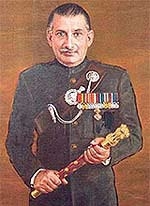
After over three decades, on April 17, 2007, the government announced that Field Marshal SHFJ Manekshaw and Marshal of the Air Force Arjan Singh would be treated on a par with Service Chiefs in terms of pay, accommodation and other facilities. The government also paid arrears due to them. Defence Secretary Shekhar Dutt presented a cheque worth Rs 1.16 crore to Sam Manekshaw in the Military Hospital in Coonoor.
It is not clear what made the Government take the decision after so long. The best thing is that it came without Manekshaw or Arjan Singh asking for it.
I was Public Relations Officer for the Army in the 1960s and early 1970s and was a communicator in the operations against the Chinese in 1962, the India-Pakistan war in 1965, and the Bangladesh war in 197l. I also had the privilege of serving closely with Manekshaw as PRO when he was Chief of Army Staff from 1969 till he relinquished office in 1973.
In the British Army, a Field Marshal never retires from “active service”. It is a tribute that the nation pays to the officer. One expected the Government of India to follow British Army traditions.
I was a witness to the pettiness displayed by bureaucrats and some politicians towards Manekshaw in 1972. All of us expected he would be made a Field Marshal. Apparently, the publicity he received was not to the liking of some politicians and many bureaucrats.
Prime Minister Indira Gandhi wanted to promote him to Field Marshal. She sent a communication in March 1972 through her Principal Secretary, PN Haksar, to the Defence Ministry. The Ministry thought it fit to get the comments of the Navy and the Air Force. The Navy, headed by Admiral SM Nanda, agreed. The Air Force, led by Air Chief Marshal PC Lal, opposed it. Lal did not like the idea of the Army Chief having a rank above the Air Chief’s.
Lal said: “The three Services had operated as equal partners in the Bangladesh war, and they had demonstrated their ability to work effectively together without having a Super Chief sitting over them…I saw in the proposed arrangement a positive danger to frank and free discussions, particularly if the CDS happened to be excessively assertive and intolerant of the ideas of others.”
I was a witness to the pettiness displayed by bureaucrats and some politicians towards Manekshaw in 1972. All of us expected that he would be made a Field Marshal in recognition of the role he played in leading the Indian Army to a glorious victory.
After the announcement that General GG Bewoor would be the next Army Chief, the government finally decided to confer the rank of Field Marshal on Manekshaw, with effect from January 1, 1973.
Manekshaw’s office queried whether the government would follow the traditions of the British Army and extend to him the pay and privileges due to a five-star officer. A Joint Secretary in the Ministry of Defence [later referred to by the Army Chief as “Babu so-and-so”] replied that Manekshaw would be entitled only to the customary pension. My recollection is that the entire package of pension and allowance amounted to Rs 1,600 per month.
I was also told by my seniors in the Defence Ministry that the investiture ceremony would be a quiet affair. I went to the Press Secretary to the President, the late Abdul Hamid, and sought his help to ensure the function secured the publicity it deserved.
On March 26, 197l, Manekshaw was at the Armed Forces Medical College, Pune. He was called to the telephone, and thereafter to Delhi. On board the TU-124, we heard of the Pakistan Army crackdown in the East.
Mrs Gandhi wanted immediate intervention in East Pakistan. Manekshaw said India might have to fight on three fronts, in the west, east and north. His advice was to defer operations till winter when the northern passes would close due to snow. In addition, there would be rains in a couple of months – making eastern India difficult for any military movements.
Army Headquarters prepared for the ensuing operations. Manekshaw frequently toured different formations. Everywhere, he told the soldiers: “The country has looked after us well. We have been fed well, paid well, and our families have been well looked after. Why? To defend the country, fight a war and defeat the enemy. You now have an opportunity. We have to be true to our salt. We will not let down our country.” He would get a thunderous response.
The war broke out on December 3, when the Pakistan Air Force bombed airfields from Pathankot to Jalandhar and Agra. In the days that followed, the armed forces of India worked in a coordinated manner.
An important role was also played by the broadcast to the Pakistani Army by Manekshaw. The substance of the message, broadcast in Urdu, was: “You are living in hostile territory among a population that hates you. You are surrounded by the Indian Army. Your ports are sealed by the Indian Navy. Your Air Force in the East has been destroyed. The Mukti Bahini and the people are all prepared to take revenge for the atrocities and cruelties you have committed. Why waste lives? Don’t you want to go home and be with your children? Do not lose time, there is no disgrace in laying down arms to a soldier. We will give you the treatment befitting a soldier.”
On December 16, 1971, the formal surrender took place in Dhaka (then Dacca) with Lt-Gen. AAK Niazi handing over the documents to Lt-Gen. Jagjit Singh Arora, who accepted the surrender on behalf of the Allied Command, which included the Mukti Bahini of Bangladesh. One felt vindicated when Field Marshal Manekshaw was extended the privileges of a serving Chief of Army Staff, even though it has come after so long.