
















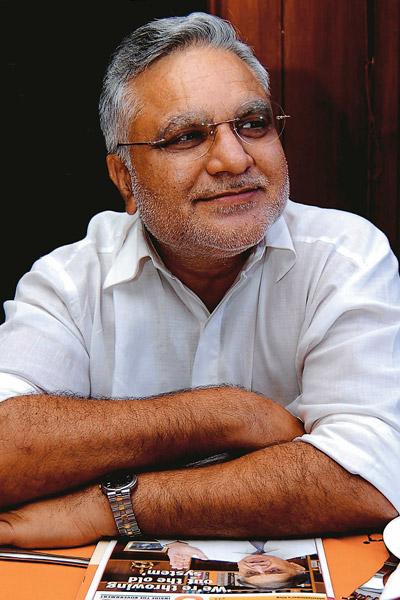
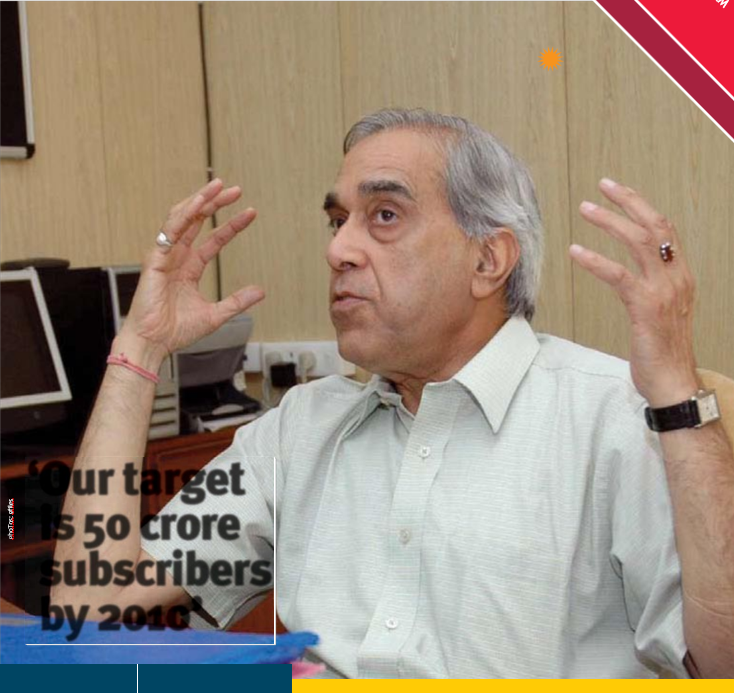
(TRAI), is a 1967 IAS offi cer from the UP cadre. He was Secretary,
Department of Telecommunications (DoT), where his major decision was the
move from analog to digital. | interviewd by Anil Tyagi
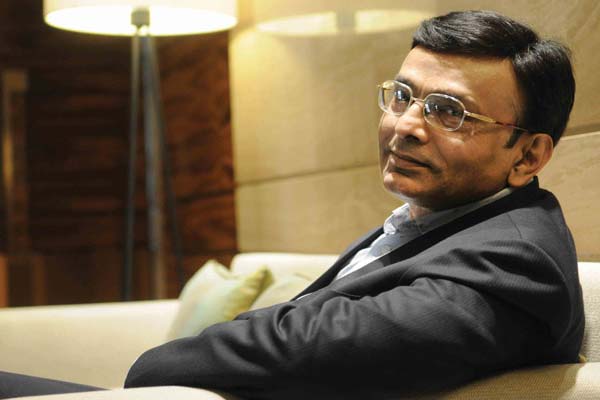
Nripendra Mishra, Chairman, Telecom Regulatory Authority of India (TRAI), is a 1967 IAS officer from the Uttar Pradesh cadre. He was Secretary, Department of Telecommunications (DoT), where his major decision was the move from analog to digital. He also served as Secretary, Department of Fertilizers. He is credited with devising the pricing policy of fertilizers and the rural credit scheme. He has also been president of the All-India IAS Officers’ Association and believes that the federalism of the country has been strengthened and best implemented in spirit by the IAS, of all the Services. Considered a towering figure among senior bureaucrats, he feels that on the senior members of the IAS lies the onus of conveying to the government the grievances of those in the ranks.
gfiles: What is the work of TRAI?
Nripendra Mishra: The Telecom Regulatory Authority of India Act came into being in 1999. First of all, it does not have adjudication power. For adjudication, the Telecom Department set up the Telecom Disputes Settlement and Apellate Tribunal (TDSAT) headed by a Supreme Court judge. TRAI is a body with recommendatory powers. One, it takes cognizance suo moto. Two, it does so on the recommendation of the government. Its third role is regulating licence policy. The fourth is managing spectrum. Under this head, it deals with compliance with rules by licence-holders; quality of service, protection of the customer; interconnectivity, regulation of tariff (absolutely in our power) and telecom rules.
We decide the issues, seek clarification, compliance, do internal analysis, and recommend that the government regulate on something with an explanatory note stating why we are sending the recommendation on that issue.
gfiles: What is the size of the subscriber base that you are regulating now?
NM: We now have a telephone subscriber base of 20.6 crore while the broadband subscriber base is 23 lakh. Our target is to have a subscriber base of 50 crore by 2010. BLURB If you talk about public and private share in the subscriber base, I would say it is 50 per cent in the government domain and 50 per cent in the private domain.
gfiles: Is the private sector benefiting from the infrastructure put in place by the government?
NM: Not at all. All the private players like Airtel, Reliance and so on have their own infrastructure. We took a decision that the government would not unbundle the broadband infrastructure of BSNL and MTNL. We allowed them to continue with copper wire broadband.
gfiles: There is much halla gulla in towns about the telecom revolution but where do you stand in rural telephony?
NM: The government perception of rural telephony is very clear. In rural telephony, we are below 4 per cent connectivity. Nationally, we have 90 per cent connectivity. DoT has set up a fund called Universal Service Obligation (USO) Fund. It provides funds especially for areas where there is no connectivity or less connectivity.
DoT’s satellite and field survey showed there are 7,000 points of gaps in connectivity in the country – much of it in rural areas. Now, these are net negative areas. This means capital cost plus operation cost yields negative revenue. Here the role of the USO Fund comes in. It is a non-lapsable fund and is not allotted to a single operator but to three operators in a particular area.
The problem with rural telephony is that there is no infrastructure like power, housing, liveable conditions. Even BSNL has a negative flow of funds in rural telephony in some areas.

Editor, gfiles


