




















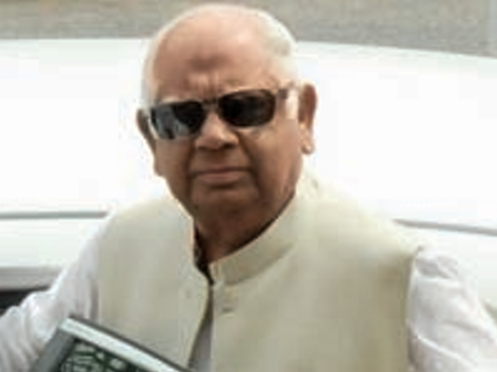
The summary expulsion of Lok Sabha Speaker, Somnath Chatterjee from his party the CPI (M), has raised several questions about the relationship between the Speaker and his party, once he occupies the post. The issue came to the fore when the CPI (M) along with its other left front partners, decided to withdraw support to the UPA Government, and directed Chatterjee to resign from his post. Faced with this unprecedented situation, the Speaker in his wisdom decided that he need not follow his party’s diktat.
The decision of the party to expel him using the “extraordinary” situation clause has come in for much criticism, from all quarters, though it has been pretty muffled within his own party so far. The argument of the supporters of Chatterjee that once a Speaker occupies the post he is no more considered as belonging to the party he was elected from, has found a lot of takers. However neither the Constitution or the Parliamentary rules and procedure, makes any such explicit assertions. It is more in the form of expectation and tradition and therefore does not have any legal or constitutional backing.
It is not clear even now, why Chatterjee took the stand he did, as he has not come out with any clarification. Was it his conscience not permitting him to vote against the UPA Government, and consequently vote alongwith the BJP or whether it was his conviction that the position he holds cannot be subjected to Party’s diktats? What is however known is that he did consult many constitutional experts—he himself has a lot of knowledge of Constitutional law, having been a barrister himself—- and many of them felt that there was no need for him to resign.
However the argument in his favour that he in his position as the Speaker has no party identity and is the custodian of the House, which belongs to all parties, suffers infirmity when one considers Chatterjee’s own track record in the last four years since he became the Speaker. He did resign from the Central Committee of the CPI(M) after he was elected Speaker, though the Party neither expected him to do so nor did it want him to. His decision to resign ostensibly was to keep himself above party affiliations and to reassure the members of Lok Sabha that he was being neutral and unbiased.
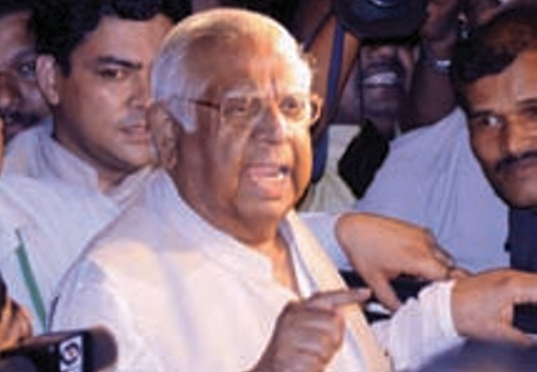
However, it is confirmed by authoritative sources within the party and those close to him, that he did continue to pay the membership fees as well as the levy which is charged by the CPI(M) to all its MPs, all through these last four years and two months. The question which the party is asking, and justifiably so, is having retained his full membership of the party and followed all its rules, how can he claim (if he has done so one is not sure), that his party’s diktats don’t apply to him?
It is a fact that all the other Speakers preceding Chatterjee had also continued to be a member of the party they had been elected from, and even went on to occupy posts both in the party and Governments, after their term as Speaker ended. In any case, neither the Constitution nor even the practice or tradition bars any of them from doing it.
Was it his conscience not permit
ting him to vote against the UPA,
and alongwith the BJP, or was it
his conviction that the position
he holds cannot be subjected to
party diktats?
However the predicament faced by Somnath Chatterjee was unprecedented and therefore has opened up a fresh debate. It is now time for the law makers to have a re-look at the Constitution and the role of the Speaker and his duties and more importantly his party’s authority over him, once he occupies the post. Is it possible and feasible to insulate him from the party, so that the successors of Chatterjee don’t come into clash with their party?
Many more questions are bound to crop up as the debate enlarges. Talking of the debate enlarging, it would also have to encompass the unsavoury happenings in the Parliament, before and during the confidence vote. Was it right on the part of the Speaker to go ahead with the proceedings of the Confidence motion, even after having been apprised in a rather shocking manner( wads of currency being strewn in the well of the House), about attempts at horse trading? Would it have been better if the proceedings were put off for the Speaker to make a prima facie enquiry about the allegations? What methods will have to be adopted in case of such allegations to bring the culprits to book?
As these issues need a serious
and immediate debate to bring
about the necessary changes to
avert such happenings in future,
we also need to have a closer
look at the anti-defection Act
What happens to the outcome of the Confidence vote if later after an enquiry it is found that there indeed were attempts to buy MPs? What happens to the MPs who have made allegations, if their claims are proved to be wrong?
Meanwhile even as these issues need a serious and immediate debate to bring about the necessary changes to avert such happenings in future, one also needs to have a closer look at the anti-defection act.
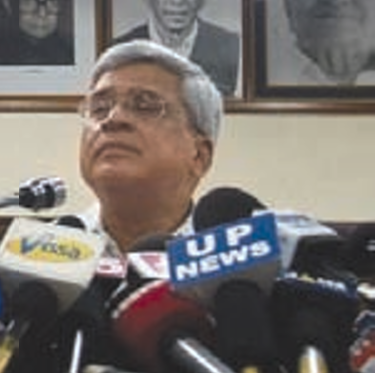
When the anti-defection laws were envisaged and passed and incorporated in the tenth schedule of the Constitution during Rajiv Gandhi’s Prime Ministership, in 1986, many loopholes were left. It has merrily been used (misused would be more appropriate) by the same parties which passed the law after expressing much concern over the defections. In 2003, further amendments were made to the act, to plug some loopholes, one of which was to make defections legal only if two thirds of the party in legislature or parliament, splits, from the previous one third.
However it is evident now that many more amendments are necessary so that the spirit of the act is not trampled upon, by utilizing the loopholes in it.
For one, one needs to bar MLAs and MPs from occupying any office for a specific period of time after they resign from their elected position and join another party. This would discourage the kind of “deals” struck in Karnataka with the four opposition MLAs, who were made ministers and Chairman of a Board, by the BJP Government, recently.
Also there should be stricter laws to ensure that those who defy party whips in situations like the one we saw during the Confidence vote, are barred from becoming members of another party for a specific period of time. This would not only discourage such cross voting, but would also provide a dis-incentive to the political parties to woo potential defectors.
It could also be considered to bar those who get disqualified under the anti-defection laws after the due process of law is observed, from contesting elections, atleast for a specific period of time, or the one which are held immediately after their defection. This would also work as a serious dis-incentive to switch parties at will or for a consideration.
Anti-defection laws like all laws are prone to be misused and it is therefore essential to periodically do a reality check about its efficacy and bring about necessary amendments to make them more effective. Of course, the law makers who will have to be relied upon to make these changes may just do it and also find new loopholes. But then eternal vigilance of the civic society is the only safeguard of democracy.