





















The dispute would not have arisen if the government had specified norms for corporate governance, gas pricing and rationing of gas for all companies
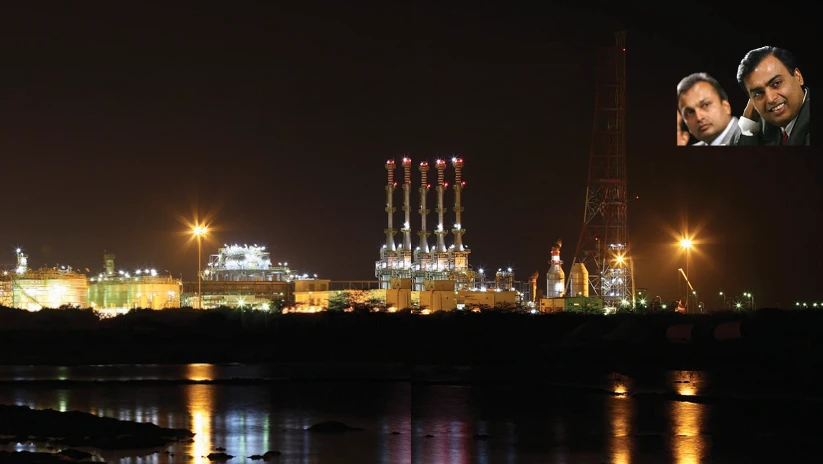
The Bombay High Court verdict in the “gas battle” between the Ambani brothers affects major facets of governance. It will make the country’s gas pricing and gas usage policy messier. It will also generate uncertainty over future investments in oil and gas exploration and gas-based industries. The brothers’ tussle has clouded the governance of natural gas, a vital national resource. It has left a huge question mark about the government’s capability to protect its revenue in the form of royalty on gas and income tax through prevention of transfer pricing. The battle has also exposed the lack of a systematic approach in the judiciary in handling related cases and in overseeing the restructuring of companies under the Companies Act.
The Court has ruled that the family MoU [see box] is binding on RIL and the four companies (including RNRL) which were spun off from it and handed over to the Anil Dhirubhai Ambani Group. The problem with the verdict is that the family MoU has not been made public. It did not form part of RIL’s demerger scheme in 2005. RIL’s public shareholders would have raised a hue and cry had they known that it was under pressure to forego thousands of crores of rupees from its future revenue stream due to an abysmally low gas price.
Apart from committing supply of 24 million standard cubic metres per day for 17 years, the family MoU also makes RIL do other favours for the ADA Group. It is required to supply an additional 12 million standard cubic metres per day at the same price and for the same duration in case the National Thermal Power Corporation (NTPC) deal [see box] does not materialize, thereby aggregating the base volume to 40 million standard cubic metres per day.
According to RNRL, “…thereafter, from the entire future reserves of RIL (including new discoveries of gas from new explorations, and/or bids as may be submitted from time to time) Reliance-ADAG will have the first option to get 40 per cent quantity of gas (option volume gas). This is to ensure that over 20 lakh shareholders of the company continue to benefit from RIL’s gas finds.”
Knowing well RIL’s track record in striking oil and gas and its rising share in the country’s total gas production, ADAG might well end up with rights over half of the gas produced in India.
Had the family MoU been made public, the Central Board of Direct Taxes would perhaps have applied the concept of transfer pricing to see how its tax revenue would get affected by shift of profit from RIL to the ADAG group. Similarly, the government would have raised queries on the demerger scheme had it known that the MoU envisaged grant of perennial rights over gas, which is a national resource. Nor would the Finance Ministry have turned a blind eye to the potential loss of revenue through lower royalty on gas.

No doubt any government has to do tight-rope balancing between the conflicting interests of the Ambani brothers, owing to the clout of each.
The Ministry of Petroleum and Natural Gas did not want to be seen as anti-Anil Ambani when it rejected the gas price of $2.34 in mid-2006. It also did not want to be seen as pro-Mukesh Ambani. So later it rejected the $4.97 price proposed by RIL.
In August 2006, the Ministry constituted a pricing committee for gas produced by oil blocks licensed by the government to different companies under the New Exploration Licensing Policy over the years. In its report, submitted in December 2006, the committee said: “In all situations where price discovery through competitive bidding is possible, there should be no need to apply any other principle for valuation of gas. In cases where the actual supply of gas has not yet commenced, the process of price discovery through the open market mechanism must be resorted to.”
In actuality, there was no need for this committee. The broad principles of gas pricing and marketing are already incorporated in the production sharing contracts which the government signs with companies that put up winning bids for exploration and production of hydrocarbons under the New Exploration Licensing Policy. At this stage, the government could have asked RIL to organize a formal bidding competition among existing and prospective users of gas such as fertilizer, power, steel and petrochemical companies. Oil industry sources say that such a competition would have resulted in an altogether different price of gas because here it is the seller who is soliciting bids from prospective buyers.
In the case of NTPC (buyer), RIL was pitted against multinationals with deep pockets. Perhaps RIL did not want to lose NTPC as a potential customer. The gas price secured by NTPC is an exception. It won’t secure such a price again, if today it invites fresh global bids.
The Ministry, however, continued to tie the government in knots. It tossed the Krishna-Godavari basin gas issue in the inter-ministerial fora. The Committee of Secretaries suggested that the government formulate a gas utilization policy and gas pricing policy. With political pressure from all quarters building up, the Prime Minister referred the Krishna-Godavari gas pricing issue to an empowered Group of Ministers under the chairmanship of Pranab Mukherjee.
In September 2007, the Group recommended a gas price of $4.2. Subsequently, it specified a broad framework for rationing the Krishna-Godavari basin’s projected peak output of 80 million standard cubic metres per day, expected in 2012. It has given overriding priority to the fertilizer and power sectors in allocating gas from D6 block of the Krishna-Godavari basin, which started commercial production in April. The Group decided that the existing demand for gas from the petrochemicals, refineries and steel sectors would be considered for allocation when gas production increases beyond 40 million standard cubic metres per day. This will also apply to RIL’s petrochemicals complexes that need additional gas both as feedstock and as fuel. RIL, the gas producer, thus cannot use its own Krishna-Godavari basin gas at present!
The Group has made a mockery of the production sharing contracts that it signed with RIL for the Krishna-Godavari basin and with other such New Exploration Licensing Policy licencees/contractors. A model production sharing contract reads: “The contractor shall have the freedom to market the gas and sell its entitlement.”
The nation now awaits the next turn of battle. Will RIL challenge the verdict in the Supreme Court? RIL’s official stance is that it is reviewing the judgment. “We will decide the future course of action according to legal advice,” said a company official.
As for the government, it is seemingly groping in the dark in trying to deal with a mess to which it has also contributed. Will it file a special leave petition in the Supreme Court to protect its revenue accruing from royalty. Will it put the matter under the transfer pricing scanner to see whether there will be any loss of income tax revenue as low pricing over 17 years implies shift of significant profit from RIL to the ADA Group? Will the government introduce transparency in the realm of gas pricing and gas allocations? Both these gas disputes would not have arisen if the government had laid down clear-cut norms for corporate governance, gas pricing and rationing of gas in the case of all companies.
It also remains to be seen whether Mukesh Ambani will explore reaching a fresh compromise with his brother and whether the compromise is at all possible. Will their mother intervene? Or will the ADA Group seek damages from RIL for delay as well as failure in creating suitable arrangement for gas supply?
There is also the question of how this verdict will influence the same Court’s pending judgment on the RIL-NTPC case.
The family MoU has not been made public….RIL’s public shareholders would have raised a hue and cry had they known that it was under pressure to forego thousands of crores of rupees…due to an abysmally low gas price
Knowing well RIL’s track record in striking oil and gas and its rising share in the country’s total gas production, the Anil Ambani group might well end up with rights over half of the gas produced in India
A tale of two cases
On June 15, the Bombay High Court ordered RIL to enter into a “suitable arrangement” for supply of gas to Anil Dhirubhai Ambani (ADA)-controlled Reliance Natural Resources Limited (RNRL) within one month. The arrangement is to be on “the basis of quantity, tenure and price as specified and agreed between the parties” (the two brothers and their mother) under the Memorandum of Understanding (MoU) of June 18, 2005 that settled the dispute between Mukesh and Anil. Reliance Industries Ltd (RIL) and RNRL are to arrive at the arrangement by renegotiating the terms and conditions of the agreement so as to make it a bankable agreement for proposed power generation projects of the ADA Group.
Alternatively, the brothers can revert to their mother, Kokilaben D Ambani, who had reserved her ability to intervene again if the parties failed to act upon the MoU, and ADAG can opt for a damages claim.
Under the MoU, RIL had agreed to supply 28 million standard cubic metres per day from the Krishna-Godavari basin at a price no greater than the price to be charged from NTPC. In the case of NTPC, RIL had emerged as the winning bidder for supply of 12 million standard cubic metres per day for 17 years with a base price of $2.34 per million British thermal units in mid-2004. According to an analyst, RIL blundered by quoting this distress sale price. It did so perhaps to keep at bay half-a-dozen multinationals that participated in the tendering competition. The overseas bidders had offered to export gas to NTPC in the form of liquefied natural gas.
In March 2004, a news story quoted NTPC’s internal calculations on gas pricing computed with the help of a reputed global consultant. The report suggested that the delivered price of liquefied natural gas to NTPC’s power projects in Gujarat should be between $2.32 and $2.95 per million British thermal units. RIL might also have felt insecure over the fact that the government’s gas allocation policy was not applicable to gas produced by companies under the New Exploration Licensing Policy.
RIL did not sign the gas sale and purchase agreement with NTPC as it wanted the latter to renegotiate terms and conditions. In such cases, the company inviting bids normally forfeits the bank guarantees given by the defaulting bidder and negotiates with the next most successful bidder. Instead, NTPC dragged RIL to Bombay High Court on December 20, 2005, seeking a directive to the company to sign the contract in keeping with the tendering norms. NTPC also urged the Court to restrain RIL from committing the gas to any other potential customer without first meeting its obligations.
Interestingly, the government did not intervene in this dispute, whereas it went through a series of administrative actions including setting up of an empowered Group of Ministers in the case of Reliance.
Besides litigation, NTPC also questioned other RIL capital expenditure in the Krishna-Godavari basin and the way it had discovered the market price for its gas. According to a corporate lobbyist, the public sector Navratan company appeared to be fronting for ADAG. He pointed out that NTPC Chairman CP Jain joined ADAG’s Reliance Capital as one of its directors in April 2006, a month after superannuation.
During February-July 2006, the pricing of 28 million standard cubic metres per day to be supplied by RIL to RNRL became the subject of correspondence between the companies and the Ministry of Petroleum and Natural Gas. Simultaneously, RIL proposed a base price of $4.97 per million British thermal units for Krishna-Godavari gas on the basis of invitation of offers from a limited number of prospective buyers.
After the Ministry rejected the price of $2.34 per million British thermal units, RNRL approached Bombay High Court in November 2006, seeking gas supplies in accordance with the family MoU. It also urged the Court to restrain RIL from committing gas supply to other potential consumers.
It is anybody’s guess as to why the Court did not club the NTPC and RNRL cases as the latter case hinges on the disputed gas price of $2.34 per million British thermal units which was discovered in the former case.
Alternatively, the two cases could have been sequenced – NTPC followed by RNRL. Assuming the Court’s verdict favoured RIL in the NTPC case, the very basis of price and duration of gas supply in the RNRL case would have become redundant. Hopefully, the new government’s promised judicial reforms will deal with issues such as prioritization of cases and bunching of inter-related cases.
Gas pricing basics
The pricing of natural gas is tricky and complex. Cost of production varies from field to field. It costs less when collected along with crude as in Bombay High and more when produced exclusively as free gas – as in the Krishna-Godavari basin. Also, the higher the heat value, more the price. Composition also affects price. If it has all the four major components – methane, ethane, propane and butane – it fetches a higher price. This is because its different components can be used by different industries. Ethane, propane and butane can be used for production of chemicals, propane and butane for production of liquefied petroleum gas, and methane for production of urea fertilizer or methanol (a building block for several chemicals) and also as fuel for power generation, as automobile fuel or as piped gas for residential use.
In India, there is no uniform price for gas. The government controls the price of gas produced by the Oil and Natural Gas Corporation and Oil India Limited from oil and gas fields that were assigned to them on nomination basis before the launch of the New Exploration Licensing Policy in the 1990s. The underlying principle for this administered price mechanism is that gas price should be equivalent to fuel oil, the cheapest liquid fuel it can be substituted with. ONGC and OIL sell APM gas to fertilizer and power companies at lower prices. They sell APM gas at much lower prices in the Northeast. They charge a higher price from other gas-based industries. The latter price is, however, lower than the de facto free market price charged by a few joint ventures that produce gas from fields discovered by ONGC.
There is a third category of gas price charged by licensees that explored and developed gas from blocks allotted to them through competitive bidding under the Policy. While the non-APM prices are increased periodically through negotiations, the APM price is a matter of political discretion. Last revised in July 2005, an APM price hike is awaiting government approval for over a year.