













[Part 1]
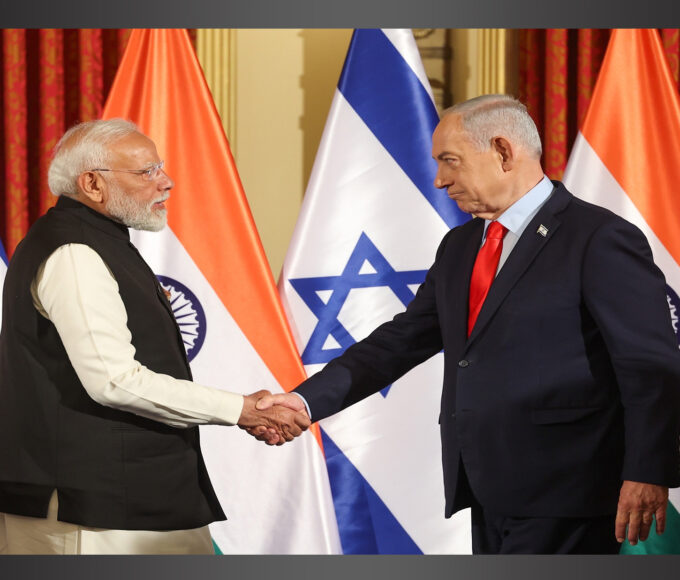
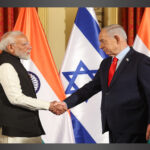
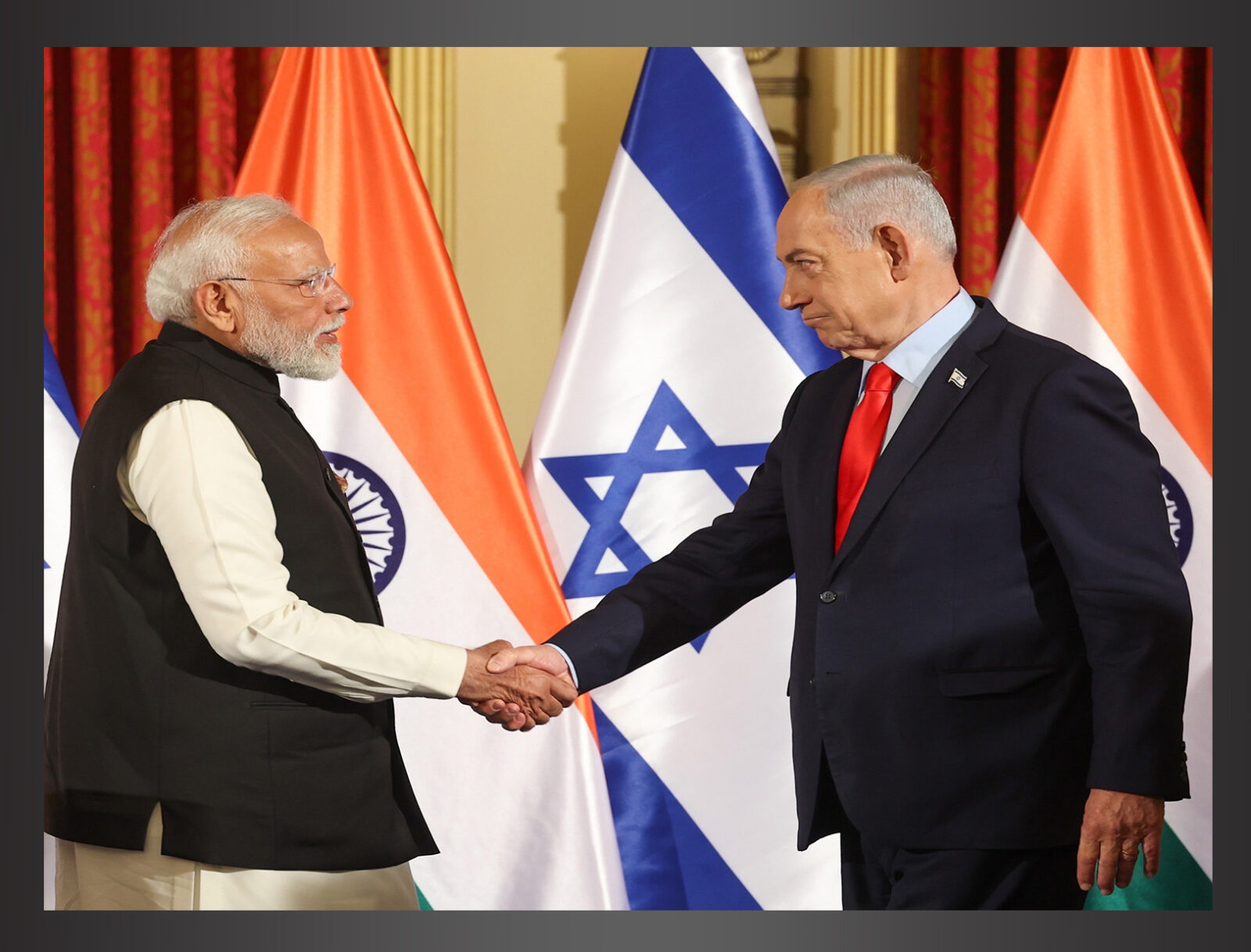
Why did Prime Minister Narendra Modi decide to visit Israel just days before Israeli and US forces launched their premeditated attack on Iran? It appears everyone is quizzical about the peculiar, perilous timing of the visit. At the time of publishing this article, the situation in Iran was unfolding rapidly as news of the killing of its Supreme Leader, Ayatollah Ali Khamenei, along with the top leadership of Iran in Israel-US joint air raids was confirmed. Justifying his visit to Israel, Modi had said, “This visit will further advance cooperation between the two countries in areas such as science, technology, innovation, agriculture, water management, defence, security, trade, and investment.”
But these claims seem to be mere alibis for diverting public attention from the bigger dynamics at play—especially the revelations in the Epstein files and the tariffs war that has been unleashed against India by US President Donald Trump—that have made Modi uncomfortable. The Modi government has not been able to either effectively contain or counter the fallouts of the double whammy, despite the best attempts of the mainstream media to tone down its coverage of the twin issues.
The pertinent question that should be asked is: Is Modi leaning on Israeli Prime Minister Benjamin Netanyahu to smoothen things between him and Trump? However, to understand the depth of Modi’s, and the BJP’s, relationship with Israel, one must go back in time.
By May 2006, Narendra Modi had already consolidated his grip on power as the Chief Minister of Gujarat. Sharad Pawar was then Union Agriculture Minister in the UPA-1 government led by Manmohan Singh. At that time Pawar was one of the few heavyweight politicians in India who enjoyed a good relationship with the Israeli establishment and its politicians across party lines, stretching back more than 45 years. It was against this backdrop that Pawar was to “lead a delegation” comprising state agriculture ministers to take part in Agritech-2006 over May 10-12, 2006. At the time, Israeli companies were also keen to sell drip irrigation systems and other agriculture technologies for mitigating water shortage problems in the drought prone areas of India.
The Agritech-2006 expo was a joint initiative by the Asia Chamber of Commerce and the Federation of Indian Chambers of Commerce and Industry (FICCI) and was organised under the India-Israel agriculture cooperation agreement that was signed between the two countries in 1993—soon after full diplomatic relations between India and Israel were established under Prime Minister P.V. Narasimha Rao’s Congress government. Initially, according to sources, the then Gujarat Agriculture Minister, Bhupendrasinh Chudasama, was chosen by the Centre to be part of the delegation and plans were made accordingly.
But, as multiple sources indicate, Modi called Pawar out of the blue with an unusual request. He wanted to be a part of the delegation, replacing Chudasama, and lead a group of Gujarati businessmen to take part in the expo. Those familiar with the matter say that Pawar told him that the entire programme of the visit had already been finalised with theIsraeli counterparts and could not be changed at the last moment. Since such government-to-government visits are directly cleared by the Prime Minister’s Office (PMO), Modi asked Pawar if Manmohan Singh could be persuaded to make the change. He also impressed upon Pawar that if the PM could be persuaded, the replacement would be a mere formality.
Pawar discussed the matter with Manmohan Singh, who was unwilling to make last-minutechanges to the delegation. This was conveyed to Modi. It is pertinent to note that a little more than a year earlier, in March 2005, the US government had revoked Modi’s tourist visa and refused to grant him a diplomatic visa, citing Section 212 (a) (2) (g) of the US Immigration and Nationality Act, which makes “any foreign government official who was responsible for or directly carried out, at any time, particularly severe violations of religious freedom” ineligible for it.
Sources say Modi kept pestering Pawar for his inclusion in the delegation. His constant phone calls forced Pawar to once again meet Singh and tell the latter of the enormous pressure the Gujarat CM was putting on him. Pawar sought the PM’s advice. Those privy to these exchanges say that Singh told Pawar, “You are the agriculture minister, you may do whatever you think is appropriate.” Pawar took it as a go-ahead to include Modi. It turned out to be a vital break for Modi.
In May 2006, Modi reached Tel Aviv on a two-day official visit accompanied by senior officials of the state government. The two days flew by. India’s Ambassador in Tel Aviv was Navtej Sarna—an Indian Foreign Service (IFS) officer who is said to be close of Manmohan Singh. According to sources, the delegation was keen to understand Israeli agricultural technology, but what Modi was searching for could not be completed in two days.
At the time, Israel was undergoing a power transition. On the evening of the second day, Modi informed Indian Embassy officials that he wished to extend his stay in Tel Aviv to observe the political developments in Israel. The unusual request took the officials by surprise as it went against established diplomatic protocol. The chief concern for the officials was: how could a sitting Chief Minister stay back in a foreign country without appropriate protocol arrangements?
But the officials managed to secure necessary permissions from the Israeli foreign ministry and, sources say, Modi stayed back for three more days. However, what he did in those three days, where he went, or who he met is not in the public domain. Former Tel Aviv Indian Embassy officials might have the information but nothing has been revealed till date. Modi too has not said anything about that unusual visit to Israel.
In May 2024, in the midst of an intensely contested general election, Pawar admitted to the part he played in introducing Modi to Israel. “He used to come to me with problems of the agriculture sector and even took me to Gujarat. Once he wanted to visit Israel, so I took him there. Whatever Modi says now I am not concerned,” said Pawar.
Modi never looked back in Indian politics after that visit to Israel in 2006. A little more than a year later, as reported by the Times of India on November 10, 2007, Modi, as the head of the Gujarat government, hired the controversial international lobbying firm, APCO Worldwide, “sometime in August”, ahead of the Assembly elections “to improve his image before the world community” for a monthly retainership of $25,000, despite “quoting a sum that was three times more than others….” The same report highlighted APCO working with people like “Mikhail Khodorkovsky, an ex-Communist youth leader turned Russian billionaire with mafia links,”, former Nigerian dictator Sani Abacha and Nursultan Nazarbayev, former President of Kazakhstan, who hung on to power from 1990 to March 2019 and was popularly known as “President-for-life.
APCO Worldwide, established in 1984, according to its website opened its Tel Aviv office in 2005—a year before Modi’s first Israel visit. It claims to be “the only international public affairs and communication consultancy with an office in Israel” besides being a “strategic hub with some of the most globally connected leaders”. The firm’s founder and Executive Chair, Margery Kraus, is known for her deep connections with the Israeli establishment. APCO International Advisory Council (APCO IAC) has several influential former Israeli officials on its payroll. In 2010, APCO was accused of interfering with Malaysian elections, though the firm denied the charge.
In 2013, APCO was accused of feeding the media stories of “Modi rescuing 15,000 stranded pilgrims” in Kedarnath after a massive flash flood devastated Uttarakhand and resulted in hundreds of deaths. The firm, once again, was quick to deny the allegations, stating that “its contract with ‘only’ the state government to promote the biennial Vibrant Gujarat Summit ended on March 31, 2013”. However, on January 18, 2018, four days before the start of the World Economic Forum in Davos, Tim Roemer, a Congressman and former US Ambassador to India (2009) and member of Intelligence Committee, who is alsoa member of APCO PAC, published a blog on APCO’s website titled, “What the world needs to hear from Prime Minister Modi” in which he argued that the Indian PM should make his engagements in Davos a moment of reckoning in international geo-politics.
“Prime Minister Modi can capture some of the international spotlight focused on President Xi [Jinping] last year, and has the potential to expand even further on his agenda. Modi’s speech, the first by an Indian Prime Minister at Davos since 1997, will be one of many by major world leaders during the four-day event. However, Modi’s speech will be given without the disruptive storms of regional or domestic issues facing his counterparts,” waxed Roemer.
He went on to make a case for Modi as a global “problem solver”. “For his fellow heads of state, Modi must show that India is not content to be a regional power, but must be seen as a global decision maker, problem solver and leader. He will need to show that Indian influence, as the world’s largest democracy, as the Davos theme articulates, creates a shared and prosperous future in a fractured and disrupted world. He should focus on India’s vital economic role in Afghanistan and in international peace-keeping efforts at the United Nations.” For unknown reasons, the dateline of the blog was subsequently changed to January 19, 2019, though the contents remain the same.
The foremost question that arises is: why would one of the world’s most influential lobbying firms, which has deep connections with the Israeli establishment, and which claimed to have stopped working for Modi way back in 2013, wax eloquent about the Indian PM in 2018? Since there are no records of Modi’s itinerary during his three-day extended stay in Israel in 2006, it cannot be ascertained whether he met any APCO officials there.
It must be noted that the words “Gujarat Model”, which became the preferred lexicon for the news media for describing Modi’s administration in the state, gained traction after APCO stepped into the picture in August 2007. The circumstantial thread stretching from APCO’s headquarters in Washington, DC to Modi to Israel is far from tenuous.
[Part 2]
To understand the complicated relationship between India and Israel, we must step back in time even further. Between 1988 and 1991, the world was witnessing great upheavals and a power churn in international geo-politics. The first Gulf War, the winding down of the proxy war between the US and the Soviet Union playing out in Afghanistan, the fall of the Berlin Wall, one of the most potent symbols of the Cold War, and the Soviet Union’sunprecedented political churn triggered by Mikhail Gorbachev’s glasnost and perestroika, which eventually consumed the Red Star, among others, are some of the most important pivots of the fraught period around which a new form of geo-politics was taking shape.
The old order forged in the aftermath of World War II has given way to new alignments amidst turmoil. In that time span, both former Indian Prime Minister Rajiv Gandhi and Pakistan’s President, General Muhammad Zia-ul-Haq, were active behind the scenes, trying to resolve the Afghanistan issue between the US and the Soviet Union. At the time, the President of the United States was George Herbert Walker Bush (Senior), who had the full backing of the US Jewish business lobby.
But, on August 17, 1988, the sub-continent’s history took a shocking turn when the C-130 Hercules aircraft, carrying Zia-ul-Haq, crashed in Bahawalpur (Punjab, Pakistan), killing the Pakistani dictator along with the US Ambassador to Pakistan, Arnold Lewis Raphel, Brigadier General Herbert M. Wassom, a high-ranking US military officer, and General Akhtar Abdur Rahman, a Pakistani military officer and former Inter-Services Intelligence (ISI) chief. Though the news sent ripples across the world, the US’ greater concern was the flow of America-made weapons to the Afghan mujahideen through Pakistan. With the Soviet Army on the backfoot, the US’ prime interest was to ensure an uninterrupted supply of weapons to the Afghans. With Zia’s death, the Americans were apprehensive that this pipeline might be disrupted.
On December 2, 1989, Vishwanath Pratap Singh became Prime Minister of India. On August 2, 1990, the Iraqi Army, under orders from Saddam Hussein, invaded Kuwait, marking the start of the first Gulf War and triggering an international crisis. With the world focussed on the fiery developments in the Gulf region, closer home, V.P. Singh uncorked a political earthquake by announcing the implementation of the Mandal Commission’s recommendations.
According to journalists Ram Bahadur Rai and the late Dinanath Mishra, the Bharatiya Janata Party (BJP) leader, Lal Krishna Advani, told them, “Now something must be done.” On September 25, 1990, Advani launched the ‘Ram Rath Yatra’ from the Somnath Temple in Gujarat, raising the banner of Hindutva politics. Modi was in charge of the Gujarat leg of the Rath Yatra. On October 22, 1990, late at night, the Janata Dal government of Lalu Prasad Yadav in Bihar arrested Advani at the Samastipur Circuit House, halting his Yatra. In retaliation, the BJP withdrew its support for the Janata Dal government and V.P. Singh’s government collapsed on November 7, 1990. On November 10, 1990, socialist leader Chandra Shekhar was sworn in as Prime Minister with Congress support.
In February 1991, Rajiv Gandhi visited Moscow to meet Gorbachev. Officially, the main purpose of the visit was to discuss peace proposals to end the Gulf War, but sources say that behind the scenes Gandhi was working to resolve the Afghanistan issue between the Soviet Union and the US.
This sequence of events is important, because Prime Minister Chandra Shekhar one day received a call from Palestinian leader Yasser Arafat, who was in Bangladesh and wanted permission to come to India for an hour to meet Rajiv Gandhi for something crucial. Chandra Shekhar granted permission and instructed Minister of State for External Affairs Digvijay Singh (the former Janata Dal MP from Bihar) to receive him at Palam Airport in Delhi.
Arafat went directly from the airport to meet Rajiv Gandhi. Sources say that he told Gandhi he had solid information that certain global powers had planned the latter’s assassination. He advised Gandhi not to travel to South India during the elections. After the meeting, Arafat returned to his country without meeting Prime Minister Chandra Shekhar.
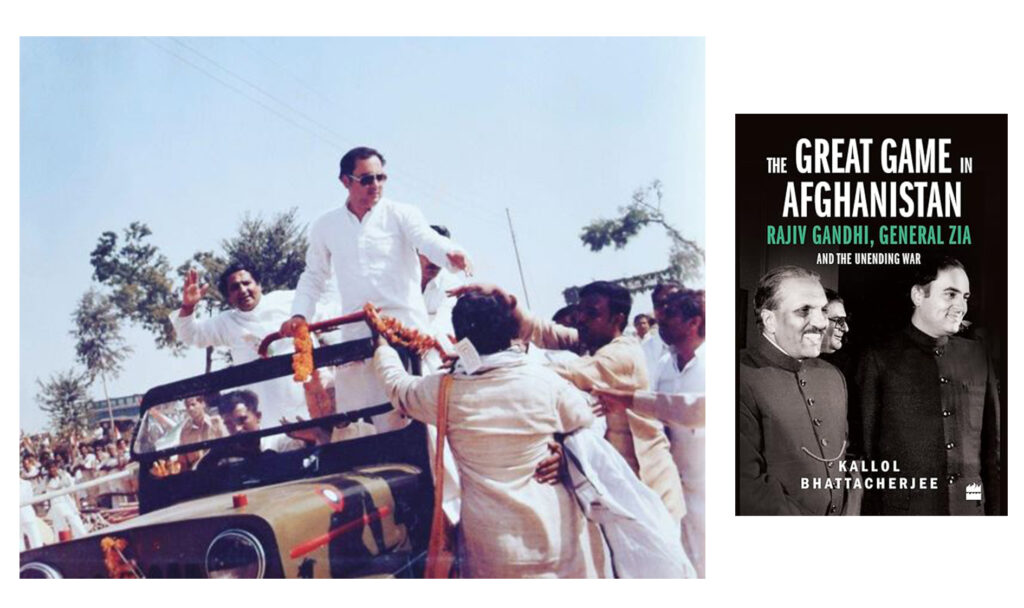
Arafat’s warning came true on May 21, 1991. In Sriperumbudur, Tamil Nadu, a Liberation Tiger of Tamil Eelam (LTTE) suicide bomber, Thenmozhi Rajaratnam (alias Dhanu), killed Rajiv Gandhi at an election rally. The LTTE may have been a cover; the assassination was allegedly planned elsewhere, involving major powers. Kallol Bhattacharjee’s The Great Game in Afghanistan: Rajiv Gandhi, General Zia and the Unending War provides more details.
A dark chapter in Indian politics began unfolding from June 1991 onwards. On June 21, 1991, P.V. Narasimha Rao became Prime Minister. A seasoned political strategist and an expert in foreign policy, he appointed Pawar—a major power centre in the party—as Defence Minister and Manmohan Singh as Finance Minister. Their inclusion in the cabinet was part of Rao’s larger political game plan. According to insiders, Congress leader M.L. Fotedar, another political heavyweight, played an important role in Rao’s elevation to the PM’s post by convincing Pawar not to stake a claim to prime ministership. Pawar was initially the frontrunner for the top post.
India had recognised Israel in 1950 but had not established full diplomatic relations. In 1991, when Nawaz Sharif was Prime Minister of Pakistan and George H.W. Bush was the US President, India’s economic condition was in dire straits. Rao had to look to America, as the Soviet Union was disintegrating and there was no hope of economic assistance from elsewhere.
Rao played his trump card. On January 29, 1992, he formally established full diplomatic relations with Israel and allowed it to open an embassy in Delhi. Interestingly, Arafat was in Delhi that day and was informed of the development by Rao at the dinner table. Two days later, on January 31, 1992, Rao met Bush at the Waldorf Astoria Hotel in New York on the sidelines of the UN Security Council summit. Though Bush was displeased with Rao over nuclear non-proliferation, the Indian PM establishing full diplomatic relations with Israel left the Americans with little choice than to assist India during its turbulent times.
Between 1991 and 1993, Pawar as Defence Minister significantly strengthened ties with Israel, initiating the procurement of Searcher UAVs from Israel Aerospace Industries and purchasing surveillance equipment, reconnaissance systems, artillery ammunition, and spare parts. On March 6, 1993, Pawar became Chief Minister of Maharashtra.
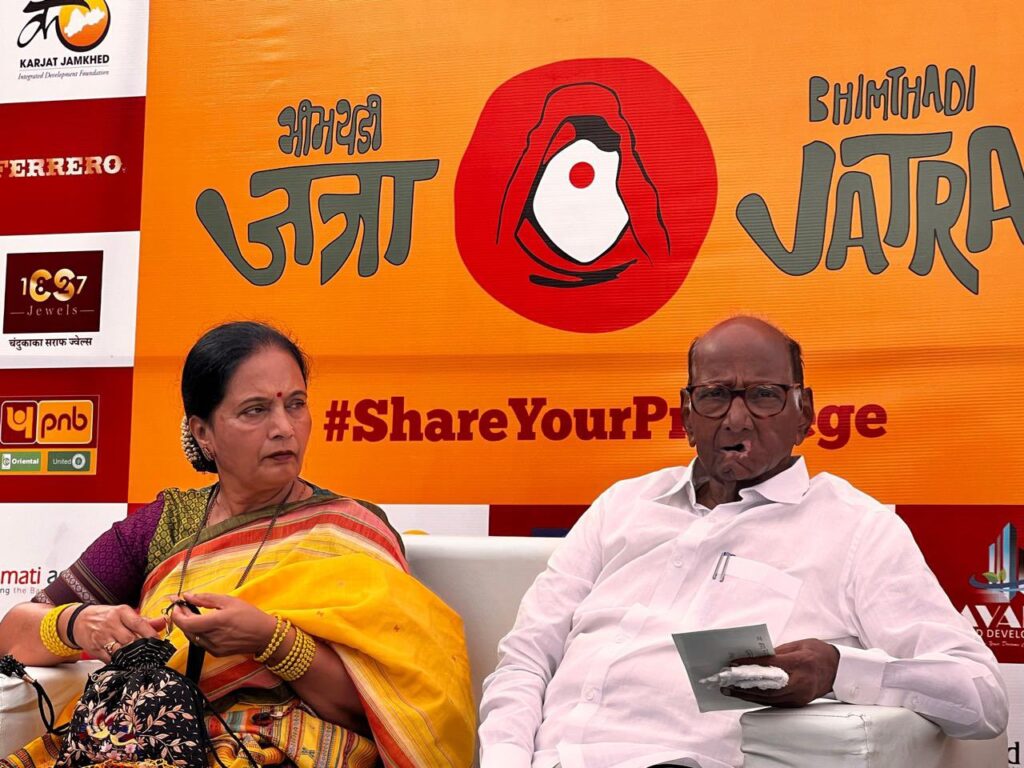
Before the 13th Lok Sabha elections, internal opposition to Sonia Gandhi’s foreign origin emerged. Pawar, along with P.A. Sangma and Tariq Anwar, broke away from the Congress to form the Nationalist Congress Party on June 10, 1999. At the time, Pawar indicated that he would not accept Sonia as Prime Minister due to her foreign origin.
His opposition was a calculated move, and it aligned with the BJP’s stand on Sonia’s foreign origin. People who were observers or were part of the Congress party’s internal dynamics at the time say that some of the major power centres within the party were opposed to Sonia becoming Prime Minister not because of her foreign origin but owing to her Catholic faith. This was another issue that firmly aligned with the BJP’s position on Sonia. Eventually, the party’s internal power play led to Manmohan Singh becoming Prime Minister.
Once Rao established diplomatic relations with Israel, subsequent Prime Minsters—Inder Kumar Gujral, H.D. Deve Gowda, Atal Bihari Vajpayee and Manmohan Singh—nurtured their links with the Israeli leadership. From the 1990s onwards, Israel’s relations with India have only flourished over time, irrespective of who was the Prime Minister or which party was in power.
After Modi swept to power in 2014, he picked up from where Pawar left off vis-à-vis Israel. Modi has deepened defence and security ties with Israel like no other Indian leader before. The Pegasus scandal is a point in case. Officially, India has not purchased the Israeli Pegasus spyware, but the reality is widely known. People in the know say that the spyware hangs like a double-edged sword over Modi, because a large chunk of Indian surveillance data is in Israel’s grasp. This kind of sensitive surveillance data in control of a foreign power is what intelligence professionals call as kompromat.
The Nikhil Gupta case has turned into a scalding hot potato for Modi. Gupta is being prosecuted in the US for allegedly attempting to assassinate Khalistani separatist leader Gurpatwant Singh Pannun, a US citizen. According to the US Justice Department, the plot to kill Pannun in the US was allegedly hatched at the highest levels of the Indian government. It has indicted India’s external intelligence agency, RA&W, which reports to the Cabinet Secretariat under the PMO. Then there is Modi’s friend, Gautam Adani, being prosecuted by the US Securities and Exchange Commission for allegedly designing a bribery scheme by using funds raised from the US financial markets for procuring solar energy contacts in India.
Since becoming Prime Minister, Modi’s biggest mistake was to raise the slogan, “Abki Baar Trump Sarkar”, in the US on December 22, 2019. Since then, foreign policy has been marked by simply noise and theatrics. Amid the bustle of G20, BRICS, ASEAN and QUAD summits, Modi may have failed to grasp an essential element for practicing foreign policy—talk less and see more.
In the past few days, international geo-politics is once again witnessing tectonic shifts. Pakistan has started attacking the Taliban government in Afghanistan—the same Taliban it had helped prop up by funding a 20-year insurgency campaign against US presence in that country. Trump wants Bagram Air Base at any cost, which Afghanistan will not yield. Israel has attacked Iran, Lebanon, Syria, Qatar, and, of course, virtually obliterated Gaza, killing tens of thousands of Palestinians.
With Petroleum Minister Hardeep Singh Puri featuring extensively in the Epstein files along with Anil Ambani, who was once considered close to Modi, the Gupta and Adani cases underway in the US courts, the sword of the Pegasus spyware threatening to drop at an opportune moment, Trump’s repeated assertion that he effected the India-Pakistan ceasefire in May 2024, and China still a threat in Eastern Ladakh, Modi finds himself pushed into a corner like never before.
In these complex circumstances, perhaps the key to extricating Modi lies only in the hands of Israeli Prime Minister Benjamin Netanyahu, who is the undisputed poster boy of the Zionist establishment. According to Haaretz newspaper, there is a long history, going back to the 1960s, when Israeli intelligence front organisations actively engaged with the Bharatiya Jana Sangh, before it rebranded itself as the BJP in 1980.
Despite having no diplomatic set-up in India then, the Israelis funded some of the agitations by the Rashtriya Swayamsevak Sangh’s (RSS) front organisations.
Whether Israel will rescue Modi or not cannot be said at this juncture. A great, new global power game is unfolding. The position India finds itself in at this moment in history is both tragic and dangerous, it merits close observation.

Editor, gfiles

Journalist | Editor | Allahabadi

