
























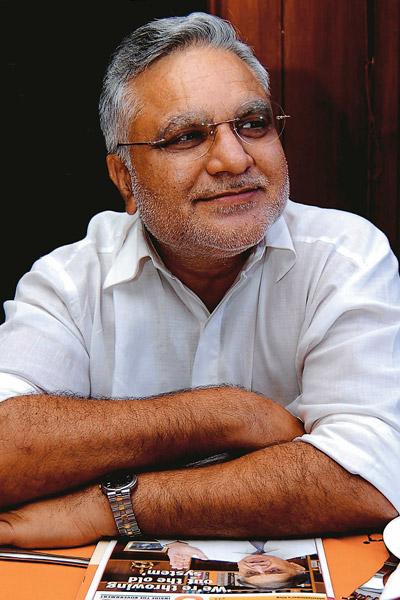
When Dr Farooq Abdullah ruled Jammu and Kashmir, he was known to forcefully assert that
he and he alone was the Chief Minister. In his turn, Mufti Mohammed Sayeed coolly declared he was the only CM who could deliver. Now, with Ghulam Nabi Azad at the helm, the Valley asks: “Do we have a CM nowadays?” Yet, despite his singular style of functioning, the 57-year old Azad has the state’s reins firmly in his grasp. He is the state’s third Congress Chief Minister after GM Sadique and Syed Mir Qasim. An evergreen Congressman, Azad has alternated between a Cabinet berth and a General Secretary’s post – depending on whether the party is in power or out. He has been General Secretary nine times and a Cabinet minister umpteen times. He once confided to a close associate: “Keep showing your face to the king unfazed, regardless of his displeasure. A day will come when the king will start giving you assignments.”
Azad’s original name was Ghulam Nabi Bhatt. He was born on March 7,1949 to a contractor in Soti village, Doda district. His uncle, Ghulam Rasool Bhatt, was an MLC from the teachers’ constituency. He harboured enormous respect for freedom fighter Chandra Shekhar Azad and so changed his own name to Azad. Inspired by his uncle, the young Ghulam Nabi Bhatt became Ghulam Nabi Azad.
He joined politics in 1973 after earning an MSc in zoology. His first political assignment was as Secretary of the Congress committee of Blessa block. But he wanted to head the state’s Youth Congress. The state Congress Committee chief, Mufti Mohammed Sayeed, was reluctant to appoint him without recommendation from the Centre.
It dawned on Azad that he was doomed to stagnation in his state without a godfather in Delhi. Luckily, he found his advocate in an influential journalist close to the then Minister of State for Home, Om Mehta. The journalist requested Mehta to put in a word for Azad with Sayeed. And, since Mehta was also from Kishtwar of Jammu region, he developed a soft corner for Azad and made the necessary recommendation to Sayeed. Azad thus achieved his first important post in 1975.
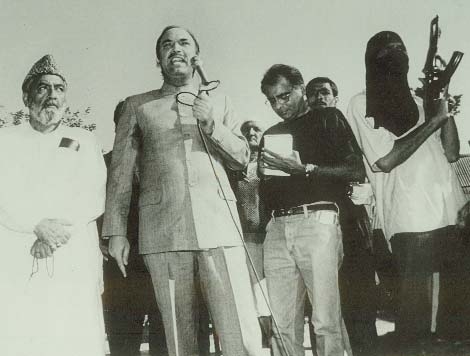
The Emergency intervened; and in 1977,the Janata Party swept the general election. The Gandh is were fighting for political survival. Sanjay Gandhi was in the forefront of Congress politics with his army of firebrand youth leaders. A farsighted Azad moved to Delhi. Bereft of the means to rent a place on his own, the young man shared a room with members of the Sanjay brigade on Curzon Road. Then Sanjay arranged for him to live in a barsati at 70 South Avenue with Syed Sibte Razi, now Governor of Jharkhand. Azad began to ensure his omnipresence before the “king”. Within a year, Sanjay anointed him General Secretary of the All-India Youth Congress Committee.
Meanwhile, friend Hasan Ahmed floated the All-India Youth Muslim Congress Conference and made Azad its president, too. Subsequently, Hasan was forced out of the organization and Azad was its sole custodian till 1981.
The Kashmiri politician has mastered the skill of watching over a flotilla of boats simultaneously. Anticipating the sinking of one, he adroitly transfers his weight to another. His astuteness saw him keep his head above water under a succession of Congress chiefs – Rajiv Gandhi, PV Narasimha Rao, Sitaram Kesari and Sonia Gandhi.
In 1982,he was elected from Washim in Maharashtra and was inducted into the Union Cabinet as Deputy Minister, Company Affairs and Law. Soon, he was promoted to Minister of State. Azad’s first stint as minister saw him strengthening his network in Delhi. In the general election
after Indira Gandhi’s death, he won again from Washim and became Minister of State for Home Affairs in the Rajiv Gandhi Cabinet. From 1982 to 1990, he consolidated his position in both party and “palace”, so to speak.
However, in the 1989 elections, Sharad Pawar – then Agriculture Minister – prevented Azad from contesting the Washim seat. The next year, Hasan Ahmed- also a friend of Farooq Abdullah – managed a Rajya Sabha berth from Kashmir for Azad. After Rajiv’s death in 1991, Narasimha Rao became Prime Minister and President of the Congress. Azad made a smooth transition to the new government, becoming Cabinet Minister for Parliamentary Affairs. He was later shifted to Tourism and Civil Aviation.
This is the first time a politician from Jammu has taken over the reins of the state. People harbour expectations….He has chosen to maintain a status quo, often working in splendid isolation
LK Advani’s rathyatra catapulted the BJP into political prominence and the 1989 election saw it register a quantum jump in seats in the Lok Sabha. During the Janata Dal’s stint in power from 1996 to 1998, Azad emerged as the most powerful General Secretary in the Congress. Then came Atal Behari Vajpayee and, during the saffron rule, Sonia began to consolidate her position in the party. She needed someone to call upon at any time and Azad fitted the bill. Soon, he was indispensable in the “palace”. All along, he looked after political affairs of the Northeast, Karnataka, UP, Arunachal Pradesh and sundry important party wings. By 2002, he was a force to reckon with.
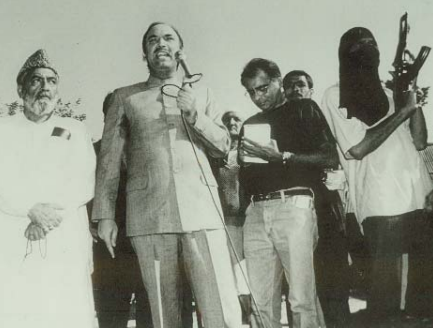
Yet, palaces are mercurial places – and one basic law is prevalent. The most powerful man is shunted somewhere with a second-best sop. In 2002,much against his will, Azad had to move back to Kashmir as President of the state Congress. His opponents in Delhi cheered at what they
took to be the beginning of the end of his political career in the strife-torn state. But destiny came to his rescue when the People’s Democratic Front and Congress won the Assembly polls. The power-sharing agreement between the two parties accorded Sayeed a three-year term as CM.
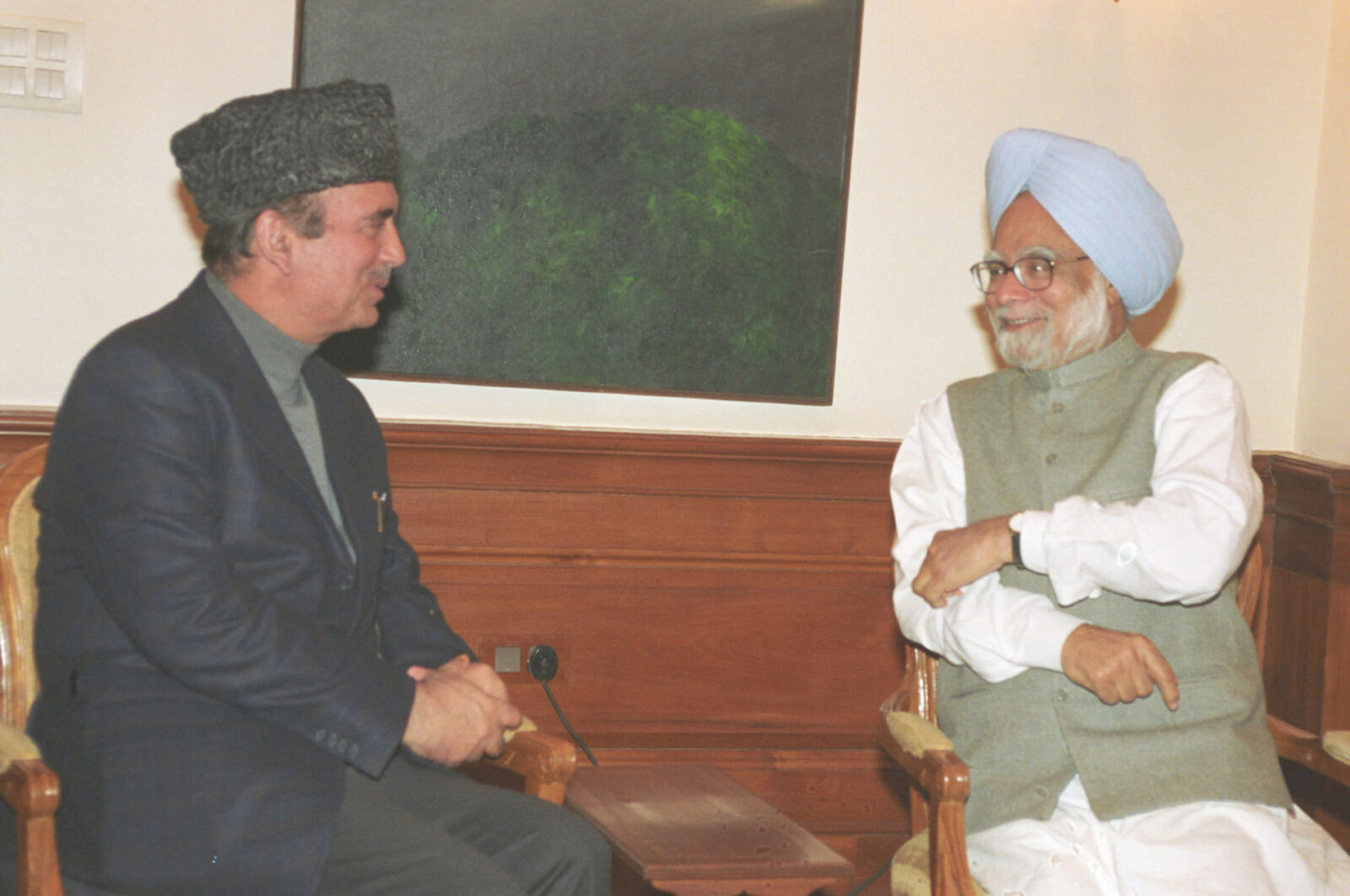
PM Manmohan Singh settled on the experienced Azad to help him run the UPA coalition government and the Kashmir politician was back in Delhi as Union Minister for Urban Development, Law and Parliamentary Affairs.
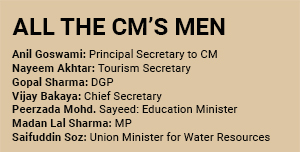
But, when Sayeed’s three-year term got over, the chief ministership devolved on the unwilling Azad. His reluctance stems from his – fairly accurate – perception that his detractors in the party will spare no effort to reduce his stature from a national to a provincial leader
The political agenda of the Congress and its Chief Minister in Kashmir is yet to become clear. This is the first time that a politician from Jammu has taken over the reins of the state. The people harbour many expectations of him, including fine-tuning the state bureaucracy. However, he has chosen to maintain a status quo, working in isolation yet governing in a bureaucratic manner. He has brought in more Central funds but fundamentally nothing has changed. He is a hardworking CM, not given to speaking or sleeping much and touring a good deal. Still in the nationalistic mould, he has failed to get into the groove of state politics. Congress workers and MLAs find him inaccessible and in no need of them. His latest fiat has made the Secretariat out of bounds for party workers. Even Congress MLAs are not allowed to bring in complainants.
“He dreams of becoming a cyber CM. He talks like Chandrababu Naidu, claims he will take information technology to every village of the state. But it is unemployment, education, revival of industry and return of the Pandits that should be his priorities,” comments a senior journalist.
The countdown for next year’s Assembly polls has begun and Azad is determined to prove he alone can turn the tide in favour of the Congress even against heavy odds. He has reportedly assured the high command of a two-thirds majority, which will destroy the myth that the Congress cannot gain absolute majority in the Assembly on its own. Azad’s track record demands that his assurance not be dismissed. And adding drama is the fact that Azad and his former mentor, Sayeed, will be pitted against each other in what will be the battle of a lifetime for both.
Anil Tyagi is a distinguished Indian journalist. An alumnus of the Delhi School of Economics (M.Com) and the University of Delhi (LL.B), he brings decades of rich experience to journalism. He presently serves as Editor of gfiles.