


































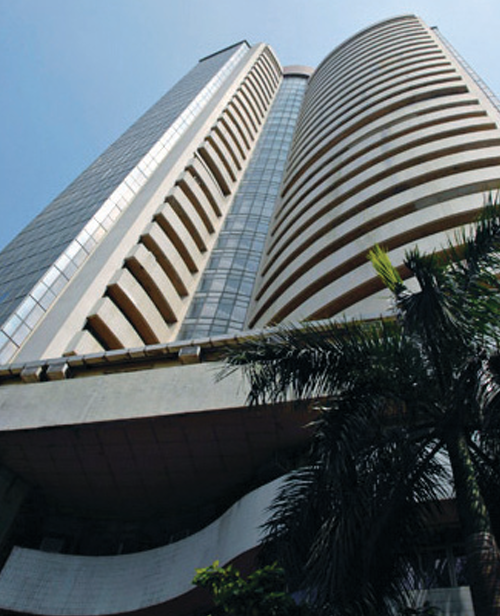
Defying uncertainty and widespread scepticism, Indian equities posted handsome gains on fresh buying by FIIs, retail investors and traders. The BSE Sensex made more history when it crossed 15,000, contrary to the popular perception that the Indian stock market is overheated and that the key indices are overvalued. However, unlike the move from 13,000 to 14,000, which took only 26 days, it has taken 146 days for the index to move from 14,000 to 15,000 – an increase of 7 per cent. This witnessed a healthy correction in February.
During the rise from 10,000 to 15,000, two thirds of Sensex stocks have actually seen a dip in their trailing P-E ratios. Only Reliance and SBI have seen a re-rating of the sorts with the P-E of Reliance going up to 21.9 from 11.3 and that of SBI to 18 from 10. That this time there is no euphoria is anoth er sign that the markets have matured. The price to earning (PE) multiple when Sensex crossed 14,000 in December was a little over It is a little over 21 now. Moreover, share prices are more a reflection of future earnings, not past ones. This makes forward PE more important than the trailing one. Most research houses estimate the forward PE for 2007-08 to be between 17 and 19. If the economy continues to do well and inflation remains under control, with strong corporate growth the current valuations may not appear too expensive. This looks convincing with the PM’s Economic Advisory Council estimating the growth rate of the economy at 9 per cent in 2007-08.
There may be concerns in the near term about the US economy, oil prices, global inflation, liquidity and carry trades – to make the markets volatile in the near term. But any cor rection that takes place is likely to be short lived due to availability of ample liquidity. Last year when everybody expected correction, it was Japanese money that took the markets to a newer high. This year it could be Chinese money that may chase Indian stocks. China is sitting on over a trillion US dollars. The FIIs are surprise beneficiaries of the rupee’s rise. A positive outlook on the Indian currency is attracting them to investing in Indian stocks. The net inflow over six months this year has already sur passed the total inflows in 2006. The FIIs invested $8.45 billion till July 13, com pared to $7.99 billion in 2006. Besides, the domestic savings rate of 30 per cent plus is one of the highest in the world. Globally, equities attract an aver age 15 per cent of savings in any country. This figure is just 4 per cent in India, ensuring perennial flow of domestic liq uidity and also making our markets fairly insulated from macro factors such as FII inflows, interest rates and so on.
By and large, Indian investors – both individual and MFs – have displayed less confi dence in the Indian economy than FIIs. In this process, they have lost substantial upside because they booked profits very quickly whenever they saw some gains. Big money is made not just by buying right but also by selling right. So, stick to fundamentals with a
long-term perspective to encash opportunities for bigger gains. Since the returns in the Indian market are usually concentrated in short intervals of time, a strategy of getting in and out of stocks in a bid to time the mar kets may make you lose out on that surge.
NIIT Technologies (CMPRs 474)

WITHthe recent beating technology stocks have got, this is probably the best time to give them a relook. NIIT Tech is available at 75 per cent of the peak price of Rs 636 that it achieved recently. The stock available-cum bonus (1:2) looks cheap at this price. The fiscal concluded has not only witnessed a double-digit sequential growth in net profits
but also seen successful integration of acquisitions made. This gave the company access to global Fortune 100 companies. The business momentum is expected to remain strong from key verticals and geog raphies. The likelihood of sale of NIIT’s stake in the company may come soon to give the stock a further fillip. The stock can appreciate by 50 per cent within three to six month.
IOL Chemicals (CMPRs 68)

Amanufacturer and supplier of industrial chemicals and bulk drugs, IOL’s products cater to high growth industrial sectors such as agriculture, textiles, pharmaceuticals and packaging, most of the user industries being drivers of growth in the Indian economy. The company has completed major expansion of its various product capacities and has also set up a 4-MW co-generation plant to meet its energy requirements. The company is a regular supplier to Ranbaxy Labs, CIPLA, Flex Industries, ICI Paints, Asian Paints, Pidilite, Rallis India, etc. as well as overseas customers. For the financial year 2006-07, IOLamassed a revenue figure of Rs 231.7 crore with a net profit of Rs 7.55 crore. On a
share capital of Rs 9.45 crore, this gives an EPS of Rs 9.18 and discounts the current market price by less than eight times. Compared to companies with a similar product profile, IOL’s valuations appear extremely cheap and can appreciate by 70-80 percent in six months to a year.

The author is retired as Professor from the University of Delhi in 2024. He is an alumnus of IIM Indore and holds a PhD from the Delhi School of Economics. An investor activist and former member of various SEBI committees. He taught Capital Markets and Investment Banking at leading business schools of India.