
























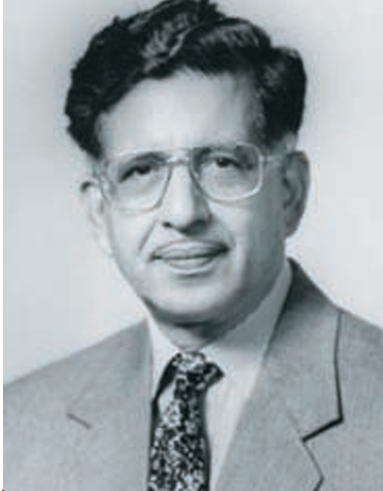
I was born in Lyallpur in the Punjab of undivided India as the youngest of 10 siblings. At the time of Partition, I was 12 years old. We moved to Delhi and, through the intervention of Pandit Nehru, I could join a good school. Thereafter, I studied at St Stephen’s College and the University of Delhi. After postgraduation in physics, in accordance with my mother’s wish, I appeared for the IAS examination in 1957 and was selected.
I joined the IAS training school at Metcalfe House, New Delhi in 1958. We spent a full year there. The institutional programme was followed by an inter-active study tour out of Delhi for four-five weeks. There were three major study tours and most of the travel was by train. We all shared one dominant thought: Join the IAS to see India! K Radhakrishnan of the Indian Civil Service was Principal at Metcalfe House. Plans were also afoot to set up a bigger institute near Mehrauli. However, some political interests, wanting to revitalize the fading glory of Mussoorie, succeeded in changing these plans. Radhakrishnan, not happy with the proposal to shift the school to Mussoorie, did not stay with us long.
After a year of training on probation, I was seconded to the Uttar Pradesh cadre. Over 35 years, I was to have a variety of postings under the state and Central governments. I also served for some years in the UN. My first posting was in Jhansi district followed by a structural instructional programme at the Officers’ Training School, Allahabad.
When Ram
Jethmalani came as a
Speaker at a function
organized by the local
Bar Association, some
of the things he said
seemed actionable. I
mentioned this to him
with obvious hints
After two years, when I was entitled to a month’s leave on full pay and another 15 days on half pay, I decided to take a sea voyage to Europe. The Collector forwarded my leave application to the Commissioner who was an officer inducted into the IAS from the state cadre. He had the official experience but his vision was limited. He summoned me and discouraged me from undertaking such a trip. He then advised me to be serious and concentrate on my career. I was badly disappointed. The next day, Chief Secretary Govind Narain visited Jhansi and I was deputed to escort him. He was a member of the Indian Civil Services and known for warmth and leadership qualities. I mentioned my travel plans in passing and his response was spontaneous and overwhelming. He said it was the best thing I could do at this stage as travel itself provides education. My leave was sanctioned and I sailed out of Mumbai!
While I was posted in dacoit-infested Jhansi, the local MP, Dr Sushila Nayar, was keen to secure the surrender of a prominent dacoit, Devi Singh. It was arranged that she would meet him in his hideout. But Devi Singh said politicians could not be trusted and that he would much rather die in dignity than live as a corpse at their bidding. The mission failed. As she was getting into her car, he proffered a wad of hundred-rupee notes as an expression of brotherly regard. Her reply was: “I would have accepted it if it were from the earnings of a brother’s sweat and not from hands soaked in other people’s blood.” But the wad fell into an accompanying Congressman’s lap. Nayar told him to throw it out and he did so. But, when Devi Singh picked it up later, it was short by four notes! He is believed to have remarked: “See, the wretched Richariya has taken his cut!”
For sheer dignity and nobility, there was perhaps no one equal to Lal Bahadur Shastri. In the 1962 general election, he came to Jhansi to campaign as Home Minister. I, as city magistrate, followed his entourage. It was a long and tiring day. At the airport, before leaving, he grasped my hand with both his hands, and said: “How much trouble you people have to bear because of us!” Such humility…I had tears in my eyes!
My stay as District Magistrate in Varanasi turned out to be the most fulfilling period of my life. From the work point of view, there were challenges galore. It was the magical milieu of the city, however, that gripped my mind and soul. The vibes of its antiquity, celebrity and distinction had found a permanent place inside me. During the Emergency, I enjoyed extraordinary administrative powers but was never guided by any malice. When Ram Jethmalani came as a Speaker at a function organized by the local Bar Association, some of the things he said seemed actionable. I mentioned this to him with obvious hints. He was quick to explain: “I made my remarks only as a jurist; it was not a political statement nor was I addressing a political forum.” I decided not to take any punitive action.
In another incident, an MLA, a very dignified school teacher brought up in the true Gandhian mould, came to my office with a fervent request to be arrested. I told him that we could not do that as we had nothing against him and he was such a good man. He said that since his leader, Chaudhry Charan Singh, had been arrested, he had no moral right to be where he was. Finally, I told him to stand outside my office and raise a few slogans against Mrs Gandhi. He did so. I called the Senior Superintendent of Police and the MLA was arrested.
Moving from the field to the state Secretariat, my first posting was Deputy Secretary, Home, Confidential & Vigilance, with virtually no power to decide any matter or policy at any level. In 1968, I shifted to Delhi as Deputy Secretary, Ministry of Commerce. This was a big change in perspective. On December 15, 1989, I took charge as Secretary, Ministry of Labour.
About 13 years have passed since I retired. Throughout my career, my personal record remained unblemished. Nevertheless, a feeling lurks inside that, whatever I did or did not do, the soul was not always the master of self!

