




















What is taking place in the electoral arena is commerce rather than the democratic exercise of the right to vote
Six decades ago, “we the people” gave ourselves adult suffrage based on a democratic system of governance through a Constitution built on four solid pillars – justice, liberty, equality and fraternity. We are now in the midst of the general election to constitute the 15th Lok Sabha, the supreme elected institution of India’s democracy. This is the time for us to introspect as to where we are and where our democracy is. With the Economist Intelligence Unit recently ranking India among the world’s “flawed democracies”, this becomes all the more significant.
Even a cursory assessment of the state of the nation today would reveal that all the four pillars of India’s Constitution stand severely corroded. This is largely because Parliamentarians – representing “we the people” – have by and large failed to stand by, protect and defend these pillars of democracy. Because, for them, such matters were mundane and the last priority.
The Constitution of India draws much from that of the US. Decades ago, while hailing the American Constitution as a document “reared for immortality”, Joseph Story had entered a caveat: “It may nevertheless perish in an hour by the folly, or corruption, or negligence of its only keepers, THE PEOPLE. Republics are created – these are the words, which I commend to you for your consideration – by the virtue, public spirit and intelligence of the citizens. They fall when the wise are banished from the public councils because they dare to be honest, and the profligate are rewarded because they flatter the people in order to betray them.”
These premonitions seem to be coming true in the Indian context. Our Republic is tottering and wavering because the honest, sincere and genuine among her sons and daughters are being increasingly banished from the public councils and do not find place in the hallowed portals of Parliament or state legislatures. In the event, India’s fabric of democracy is getting rent and is being replaced by a system of top-down kleptocracy marked by sycophancy, arrogance, criminalized corruption and vulgar wealth.
Our chaotic political system and the resultant convulsions in the electoral arena are the root causes of this malady. Though India’s Constitution is very comprehensive, it has totally left out politicians and political parties from its purview and has not prescribed any standards or norms for them. As a result, parties are mutating and multiplying like frogs and are being run as autocratic fiefdoms with assured dynastic succession. This is what India Today wrote in 2004: “They all sound like Louis XV of France: Après moi le deluge – ‘After me the Deluge’! Indian politics is fast evolving into a singular story, biologically at least, in which the paranoid helmsman/helmswoman has become the least democratic entity in one of the world’s most volatile democracies. He/She is the party. He/She is the policy. He/She is the ideology. Across the political spectrum the heir is no longer apparent, unless he/she is a genetic extension of the paramount leader….”
This stark reality is brought home in Priyanka Gandhi Vadra’s spontaneous response to Narendra Modi’s taunt likening the 125-year-old Congress party to a budhiya: ‘Does Sonia Gandhi, Rahul Gandhi or I look old to you?’ The message is clear: only they constitute the Congress party
The apportionment of cash-for-vote is 70 per cent for bribe/liquor and10 per cent each for vehicles, publicity and miscellaneous expenses….This time, one vote is likely to cost Rs 1,000 in most constituencies…for a Lok Sabha constituency the cash flow may range from Rs 10-15 crore
This stark reality is brought home in Priyanka Gandhi Vadra’s spontaneous response to Narendra Modi’s taunt likening the 125-year-old Congress party to a budhiya: “Does Sonia Gandhi, Rahul Gandhi or I look old to you?” The message is clear: only they constitute the Congress party and none else! And they have appointed their own present and future Prime Minister!
This is not the story of the Congress alone. Rather, it is the colonization of Congressism… .It is the age of the chosen/appointed leader, not the elected one. Fear of the unknown and the survival instinct ensure that the chosen/appointed one chooses the family – or divides and rules. Ideology is dead. And ideas are far from any leader’s mind. The alternative to the leader is the leader himself/herself. The next leader in any of the political parties will not be chosen by inner-party democracy, but by ancestry or desperation.
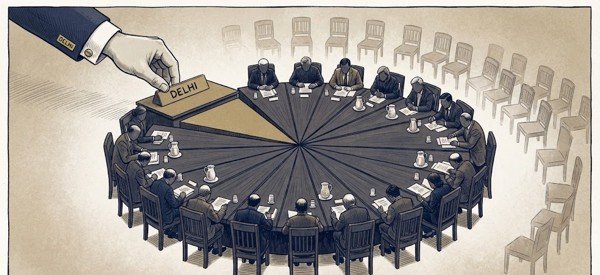
What is taking place in the electoral arena is commerce rather than the democratic exercise of the right to vote. The ongoing election is likely to witness “note power”, almost totally eclipsing “vote power”. To ensure this, a cash flow-based business model has been perfected and put into practice! Under this model, cash flow (ensured to party leaders by candidates seeking a nomination, to cadres and competitors during campaigning, to voters before voting) is refined and restructured. Party tickets are purchased with huge amounts of cash or benami property. And votes are booked in advance through cash payments and tokens for gifts and gadgets along with lavish biryani feasts.
The Centre for Media Studies has been researching the impact of this cash-for-votes practice among the low-income electorate over the last couple of years. Its finding is that a high percentage of voters are being paid cash. Coming specifically to states, its report says: “A much higher percentage of voters in Karnataka, Tamil Nadu and Andhra Pradesh acknowledged receiving cash as an inducement than in Bihar or Uttar Pradesh. The amount involved in these northern States was much less than in the southern States. The 2009 Assembly-cum-Lok Sabha elections in Andhra Pradesh could well be the most ‘expensive’ ever: nearly half the voters, it is expected, will be given Rs 500 or more per vote.”
No wonder, a former president of the Andhra Pradesh Congress Committee says, “If you don’t have a minimum of Rs 2 crore cash in hand, there is no use contesting an Assembly election.”
The apportionment of cash-for-vote is 70 per cent for bribe/liquor and10 per cent each for vehicles, publicity and miscellaneous expenses. Typically, there are around 2 lakh voters in an Assembly constituency and a substantial number need to be purchased to ensure victory. This time, one vote is likely to cost Rs 1,000 in most constituencies. Inclusive of expenditure on liquor, this accounts for 65-70 per cent of the total budget of Rs 2-4 crore. Using the same ratio, for a Lok Sabha constituency the cash flow may range from Rs 10-15 crore.
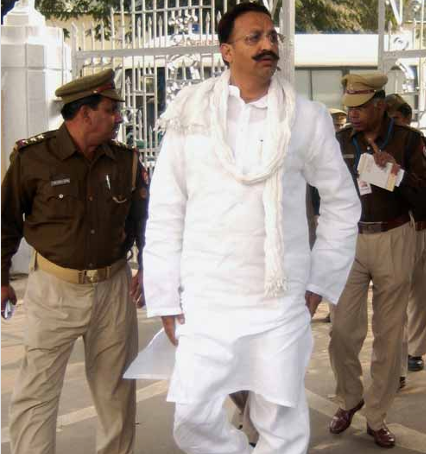
Crime is the “value-added” component of this business and we now have a well developed “cash & crime business model”. The popularity of this model in the ongoing election is evident from the fact that in the 124 constituencies where the first phase of the election took place, there were 222 candidates with criminal records and 193 declared crorepathis. Most of them belonged to national parties. In eastern Maharashtra’s 13 poorest constituencies – known for farmer suicides – there were 29 crorepathis in the fray.
In the 15th Lok Sabha, democracy will be “enriched” by the people’s representatives getting in through this business model. This state of affairs is due to the “folly, corruption and negligence of its only keepers, THE PEOPLE”. In the event, the Election Commission’s exhortation – “We, the People, through the exercise of our right to vote have the ultimate power to shape the destiny of our democracy by electing our representatives” – sounds utterly hollow.
An amended Nani Palkhivala version would be more appropriate: “We, the People, who gave unto themselves a Democracy but not the passion to keep it, who suffer and endure in silence after trading their votes for cash and crumbs.”

IAS (retd) with a distinguished career of 40 years - worked in Army, Govt, Private, Politics & NGOs.


