



























India goes fighter plane shopping to offset the phasing out of its MiGs and the delay in qualification of Tejas
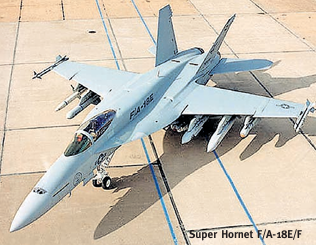
A no-holds-barred race to bag what is billed as the biggest Indian defence order ever has taken off. And the dogfight to grab the contract for the supply of 126 medium multi-role combat aircraft (MMRCA) whose worth could easily exceed $1 billion has begun with the twin engined Super Hornet F/A-18E/F of American defence and aerospace giant Boeing displaying its awesome manoeuvres and breathtaking stunts across the skies of Bangalore, the aerospace capital of the country. Bangalore skies will also witness the roar and thunder of the five other contending aircraft in a sequential and phased manner. The six fighter planes in the race for the MMRCA contract will also be evaluated under the hot conditions of Jaisalmer and the cold conditions of Leh on a “no cost, no commitment” basis. “The performance of the aircraft under various stages including their take off and landing, their manoeuvring capability as well as their operational efficiency under hot weather and cold weather conditions will be evaluated,” said an IAF official.
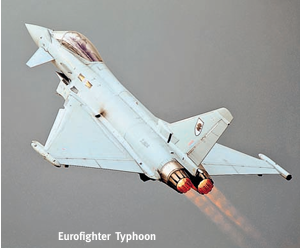
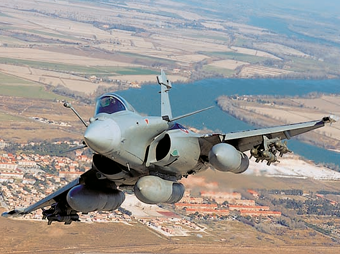
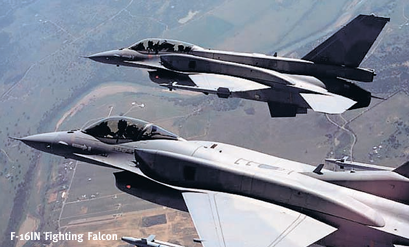
To evaluate the performance of the contending aircraft from a variety of angles and under varying environmental and climatic conditions, a multi-disciplinary team of experts drawn from ASTE (Aircraft Systems and Training Establishment) of the Indian Air Force, CEMILAC (Centre for Military Airworthiness Certification) of the Government of India-owned Defence Research and Development Organization (DRDO) and the state-owned aeronautical and defence major Hindustan Aeronautics Ltd (HAL) has been set up. The six competing fighter jets are: F/A-18E/F Super Hornet of Boeing, F-16IN Fighting Falcon of Lockheed Martin, Rafale of French aviation major Dassault, Russian MiG-35, Eurofighter Typhoon and Saab Gripen. “MMRCA is fascinating because it represents an enormous choice for IAF and perhaps India. It is between continued reliance on Russian equipment with low purchase costs but with high life cycle costs and a move towards western equipment which costs more to buy but is less expensive to operate and more reliable in the long run,” says Richard Aboulafia, Vice-President of Analysis at Teal Group.
Once the rigorous trials and flight performance evaluation in the Indian locations are over, the aircraft will be ready for carrying out actual weapons firing trials that can take place either in the country where the aircraft is produced or in a country suggested by the aircraft manufacturer. This will be the final and most critical phase of the aircraft evaluation preceding the identification of the flying machine for final selection. All these procedures are expected to be completed by the first half of the next year.
Indian pilots have already undergone training for the competing aircraft in the country of production. The exhaustive technical evaluation of the bids offered by the six aircraft vendors was completed early this year. The Request for Proposal (RFP) for MMRCA issued in August 2007 has a provision whereby India can exercise the option of acquiring another lot of 63 aircraft in the future without cost escalation. But, as pointed out by IAF Chief PV Naik, “The acquisition of more aircraft would be assessed at an appropriate time based on our experience and requirements.” As stated by Indian defence analysts, the MMRCA, which pits the world’s leading combat jet manufacturers against one another, could provide a new direction to India’s high-ticket defence procurement programmes of the future.
While 18 aircraft will be made available in flyaway condition, the rest of the 108 will be licence manufactured by HAL. The first aircraft will be supplied within 36 months of the contract being signed and the 18th within 48 months
Once all the formalities are successfully completed and the aircraft identified for acquisition, commercial negotiations will commence. However, the zeroing in on the final vendor will be the responsibility of the Cabinet Committee on Security headed by the Prime Minister. “It is a political decision taken after considering the strategic and geopolitical conditions,” said a government official in New Delhi. While 18 aircraft will be made available in flyaway condition, the rest of the 108 will be licence manufactured by HAL. The first aircraft will be supplied within 36 months of the contract being signed and the 18th within 48 months. The 19th aircraft at HAL will be produced within 54 months of the signing.
Meanwhile, the no-nonsense Defence Minister, AK Antony, known for his clean image, has said that India should get the best out of the MMRCA deal. Without mincing words, he has made it clear that the aircraft that would be selected finally would meet all the IAF’s requirements. He has also warned against any kind of deviation or impropriety in the selection procedure. Further, he has hinted at ruthless action against any act of corruption or wrong-doing.
The offset clause forming part of the defence acquisition programme will expose Indian industries to many of the new and emerging technologies and innovative manufacturing practices so that their expertise level could be scaled up to the best in the world
Significantly, the MMRCA deal, described as “the mother of all defence deals”, carries an offset obligation of 50 per cent of the total value of the final order. To fulfil this obligation, some of the vendors in the race have signed agreements with Indian industrial outfits and IT and software companies for joint development, co-production, technology transfer, and supply of components and services. The Defence Ministry is of the view that the offset clause forming part of the defence acquisition programme will expose Indian industries to many of the new and emerging technologies and innovative manufacturing practices so that their expertise level could be scaled up to the best in the world.
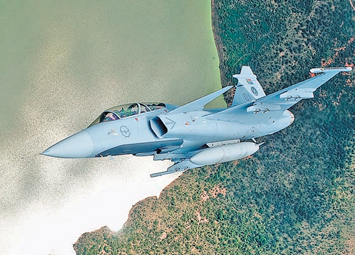
As things stand now, the IAF is keen on a double engine fighting machine since it makes for a higher level of reliability and safety besides being useful in covering vast distances and operating smoothly under widely varying climatic and topographic conditions. Stealth, cruise speed and scope for technological upgradation are other factors the IAF would weigh before zeroing in on the aircraft best suited to meet its needs. The IAF would need to make sure that the fighter, its engine and weapons systems are state-of-the-art and can be upgraded without heavy investment or complicated and time consuming modifications.
Also in focus will be other vital issues such as stability, range, endurance and operational efficiency. As part of the selection procedure, the IAF will also thoroughly evaluate the systems onboard the aircraft, including radars, navigation and avionics equipment, self-defence suites and electronics warfare devices. More important, the IAF will for the first time work out the actual cost of the ownership of each fighter jet. The IAF will take into account the reliability of quality spares supply and maintenance support on time.
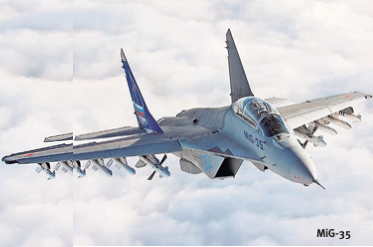
On another front, the IAF also expects the finally selected aircraft to have a lifespan of 40 years and well equipped to carry out defence and ground attack as well as reconnaissance operations in addition to possessing the capability of mid-air refuelling. The IAF will also consider issues like training, infrastructure and leveraging the geopolitical advantage of the deal. In the ultimate analysis, the selected aircraft should give the IAF a clear-cut edge in projecting its power in the Indian Ocean and South China region. This implies that the aircraft should have a longer range and be equipped with systems like AESA radar.
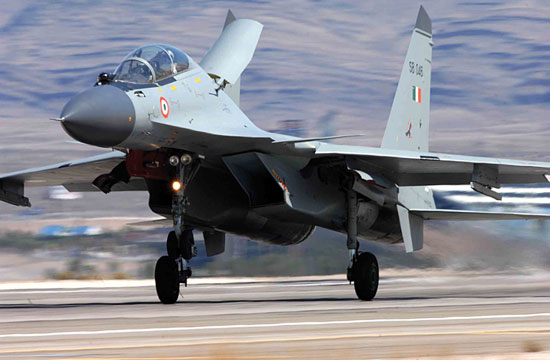
The MMRCA along with the Russian origin Su-30 MKI and India’s homegrown Tejas Light Combat Aircraft (LCA), which is some time away from induction into service, will constitute the mainstay of the frontline fighter fleet of the IAF. It was the rapid depletion of the combat aircraft squadron owing to phasing out of the ageing MiG-21s along with inordinate delay in the qualification of Tejas that prodded the IAF to go in for the MMRCA. Meanwhile, as a contingency measure aimed at bolstering its operational preparedness, the IAF ordered 40 Su-30s from Russia in fast-track mode. Recently, Antony informed Parliament that by 2015, the IAF will have as many as 230 Su-30s, considered a versatile and formidable frontline fighter.
On the runway
- F/A-18E/F Super Hornet (Boeing)
- F-16IN Fighting Falcon (Lockheed Martin)
- Rafale (Dassault)
- MiG-35 (Sokol)
- Eurofighter Typhoon
- Gripen (Saab)