



















The Vijayan episode spells ruin for both the CPI(M) and its General Secretary
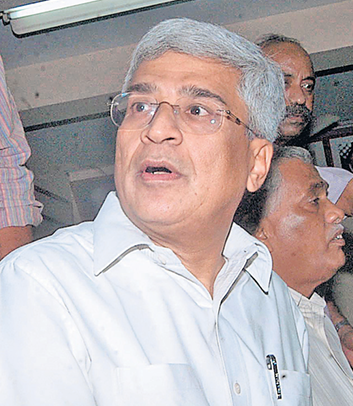
He was a perennial symbol of defiance, even when the government of the day apparently survived on his sufferance. He was perceived as a dedicated soldier fighting for values and beliefs that appeared laudable to some and archaic to others. Criticized for arrogance, superciliousness and belligerence, never was he considered unprincipled.
Yet today he stands suddenly dwarfed, stripped of his reputation for honesty. This tale of the rise and moral fall of a leader who ended up according more value to party than principle is that of Prakash Karat.
Karat has failed astoundingly the acid test of 2009, and we are not talking of the Lok Sabha election in which the CPI(M) fared so disastrously. It was a different test altogether that was imposed on him by the deeds of Pinarayi Vijayan, secretary of the Kerala CPI(M).
Vijayan faces prosecution by the CBI for signing, as Kerala power minister, a deal with a foreign company that caused a heavy loss to the exchequer and smacked of dishonourable intention. In a party like the CPI(M), known for the simple lifestyle and uprightness of its leaders, that had fought Rajiv Gandhi tooth and nail on the Bofors issue, Vijayan should have been immediately seen as a costly liability.
Like many others, Kerala Chief Minister VS Achuthanandan did see him thus. Achuthanandan is a veteran with an impeccable record of upholding communist values. Many of his actions, such as the movement for reclamation of paddy fields, were unacceptable to non-communist society. His fight against corruption popularized him and led to his becoming Chief Minister in 2006.
For years, trouble had been brewing between the Achuthanandan and Vijayan camps and it came to the surface when Karat sided with Vijayan, expelled Achuthanandan from the Politburo and reportedly tried to oust him from chief ministership. He was unsuccessful only due to stiff resistance from Sitaram Yechury, MK Pandhe, Manik Sarkar and Brinda Karat.
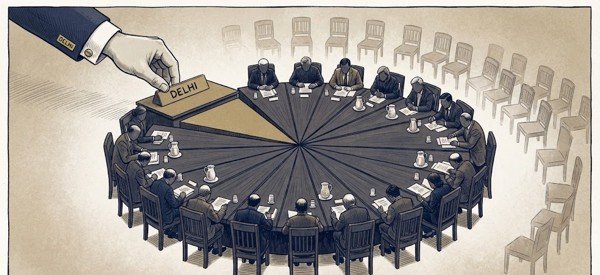
This single act has damaged Karat’s image beyond repair. Why did he do it? The answer lies in the fact that the Bengal party unit is not wholly with him. Vijayan has absolute control over the party organization in Kerala. By sidelining Achuthanandan, he has ensured Vijayan’s mastery of the state organization and loyalty to him.
But the result is that his mindset has been exposed. In his scheme of things, it is not the people who have the last say. He should have sided with Achuthanandan after the electoral debacle. But he chose his party organization over the people. Under his aegis, the party has decided to fight the corruption case against Vijayan “politically and legally”.
Karat’s logic means that he can subvert the legal process and democratic functioning to protect his colleague. This is true Stalinist mindset
For democratic governance, this is an important matter. What does “politically” fighting a legal case imply? Is it not pressuring the judges? Why should the Election Commission not take cognizance of such an utterance by a political party? Karat’s logic means that he can subvert the legal process and democratic functioning to protect his colleague. This is true Stalinist mindset.
But, even in the days of his formidable stature, Karat had always remained an enigma for the people and even the party cadres. He was never a mass leader, unable to win an Assembly election without help from Bengali or Malayali comrades. A Malayali, he began his political career in JNU and then in Delhi politics. He was initiated into Marxism by Victor Kiernan, his professor in Edinburgh, and was a hardliner from the very beginning. He was leader of the Students’ Federation of India (SFI) and then secretary of the Delhi party unit.
Inducted into the Politburo in 1991, Karat did not have much experience of mass movements. But that was not a disadvantage for the then 43-year-old. Leaders of his age group, those below 65, from Bengal and Kerala or any other state, do not boast of meaningful participation in any mass movement either.
Within a few years, he became the representative of the hardcore communists. He utilized the vacuum in the party left by the death and disability of leaders like BT Ranadive and, more relevantly, P Sundaraya. A large section of the district or state leaders of the party believed Harkishen Singh Surjeet and Jyoti Basu were soft on the Congress and eager to compromise with the ruling elite. In Karat they found their man in the Politburo.
From the mid-1990s, Karat also started looking after the organization. It was a laborious job, but he took it to heart. By 1996, he became leader of the majority group in the party and yet showed the magnanimity of asking Surjeet to continue as General Secretary. It was he who led the majority faction in rejecting the proposal from the then Third Front to make Jyoti Basu Prime Minister in 1996. When the issue of whether it was a historic blunder was discussed at the party congress in Kolkata in 1998, he led the defence of the decision and garnered support of two-thirds of the delegates. He became General Secretary because the majority of the Politburo, the Central Committee and the delegates of the party congress wanted it.
Karat’s ascendance to the top post was due to a lack of alternative. Nobody else had his three qualifications – command over party organisation, a national perspective, and the qualities of an ideologue
Karat’s ascendance to the top post was due to a lack of alternative. Nobody else had his three qualifications – command over party organisation, a national perspective, and the qualities of an ideologue.
But success has not been his thereafter. He withdrew support from the Central government on an elitist issue and failed to relate it to the masses. Earlier, he failed to prevent the Bengal party from committing the Nandigram fiasco. He failed to check the civil war within the Kerala unit. And topping it all was the electoral debacle that was apparent even before the election was announced.
The cul de grace was the Vijayan episode. None can say whether he or his party will be able to rise from it.