




























General Vijay Kumar Singh, the new Chief of the Army Staff, commenced his innings as head of the world’s second largest standing Army with a candid remark: “The armed forces have their own value systems, which have to be different from civil society.” He thus laid down two distinct arenas and value systems – civil and military. The question is, should they be in consonance or in conflict?
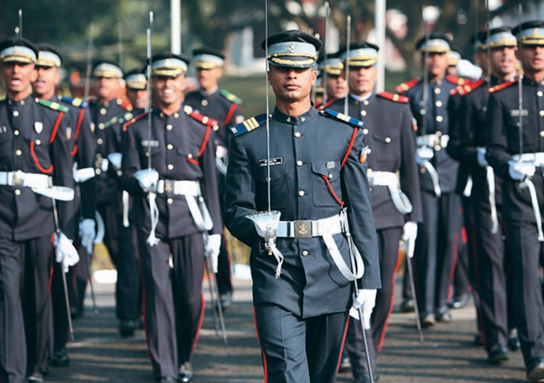
It is indeed true that the value system in the armed forces is distinct from that in civil society. But one should realize that every soldier, sailor or airman is born and brought up in civil society before entering the armed forces and returns to the same society after his/her services for the prescribed tenure. During the interregnum he/she imbibes a fundamentally different value system that is enshrined in the soul-raising credo of the Indian Military Academy (IMA): “The safety, honour and welfare of your country come first, always and every time. The honour, welfare and comfort of the men you command come next. Your own ease, comfort and safety come last, always and every time.”
Crowning the valour of the soldier is the heart-rending inscription at the entrance of the Kohima War Cemetery: “When you go home, tell them of us and say – for your tomorrow, we gave our today.” In the event, Gen Singh was right when he said: “The Army has very strong traditions, core values and way of working and that is what I want to emphasize….We have to set our own culture right. We have to ensure the image and dignity of our soldiers is upheld. To that extent, our core values, our ethos, traditions will receive due attention.”
The message is loud and clear: The Army needs to ensure that it retains its robust moral fibre of yore that has spawned the credo of the IMA and the cemetery inscription. Coming after a flurry of Army scandals ranging from liquor, meat, cereal, petrol, real estate and other scams to even sexual harassment cases in recent times, the message is timely and in order. And the evil that is to be tackled head on is corruption, spawned by avarice, which is the venal virus eating into the vitals of our society – of which the armed forces form a part.
The Army chief’s attempt to ring-fence and isolate the armed forces’ value system from that of civil society’s, suggesting that a soldier’s values are different from society’s and never the twain shall meet, is untenable. It is prudent for both to merge and the latter to be upgraded by the former’s high standards. Strange as it may sound, the military profession whose practitioners are characterized by loyalty, courage, integrity, and selflessness can be a moral anchor for a parent society that is besmirched with moral deprivation, egoism, and acquisitiveness. For, despite all that has gone wrong with the armed forces, any opinion poll today will still put that institution at the top of the table in honesty, integrity and trustworthiness.
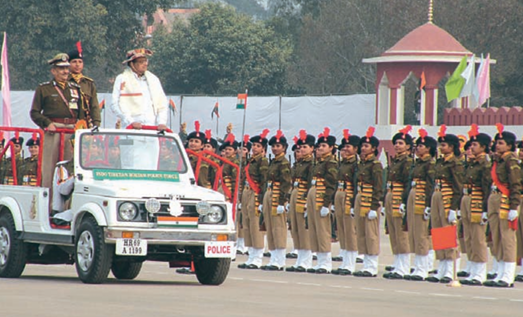
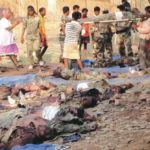
Environment vandalization, greed, corruption, bribery, black marketeering, money laundering, thuggery and extortion have become all-pervasive. Today, we have governments at the Centre and the states run on agenda set by greedy and profit-oriented “investors” and multi-national companies (MNCs) even if it means waging war on our own people. The ongoing “war on tribal terror” is a case in point. The mandate for the paramilitary forces in this war is to clear the tribal area of insurgent groups, hold the territory and prepare the ground for development projects by civilian agencies. This is not a mandate for a counter-insurgency mission in the jungles where paramilitary forces are expected to “fight guerrillas like a guerrilla” and not capture or hold territory.
The mandate is obviously to facilitate the mining MNCs to build their industrial empires on this “captured” territory. A look at the interests of the London-based MNC — Vedanta Resources plc, one of the world’s largest — gives enough clues. Of India’s total aluminium capacity of 1.3 million tonnes, Vedanta will account for 885,000 tonnes once its Jharsuguda smelter in Orissa is commissioned in the coming months. In a move to make the best use of Orissa’s bauxite and coal deposits, Vedanta is creating 1.6 million tonnes of smelting capacity at Jharsuguda to be backed by a five-million tonne refinery at Lanjigarh and a power complex of 3,750 MW.
In Lanjigarh alone, Vedanta has access to bauxite deposits of 75 million tonnes and the government has promised an equally large deposit nearby. A five-million tonne refinery is justified, provided links to bauxite deposits lasting for about 50 years can be acquired. Orissa, where most of Vedanta’s aluminium action is to unfold, has an estimated 1.7 billion tonnes of the country’s total 3.3 billion tonnes of reserves. Vedanta says it has strong claims to free deposits because of the world’s single largest smelter it is committed to building at Jharsuguda. If Vedanta has its way, all this capacity will be on the ground by 2013.
These reserves lie under the vast Dandakaranya forests spread over parts of Andhra Pradesh, Maharashtra, Chhattisgarh, Madhya Pradesh, Jharkand, Orissa, Bihar and West Bengal. It is these lands that have to be cleared and held for MNCs to develop for which they have signed scores of MoUs with governments. Largescale mining is synonymous with massive kickbacks and irreversible environmental destruction. Yet a state-of-war has been declared to fulfill the MNC agenda by sacrificing the lives of our hapless paramilitary jawans.
An acid test for the armed forces’ upholding of their long-cherished values will come in the role they will play in this “war”. Home Minister P Chidambaram, whom the Congress has discarded but the BJP hails as the “General at the battlefront” has promised to lead from the front and is very keen to launch the full might of the armed forces – especially the Air Force and Army – for “securing the tribal territory” for the MNCs by 2013, the same deadline as set by Vedanta for building its infrastructure!
The reasons for the synchronization of the Vedanta-Chidambaram deadline are not far to seek. This is best explained in Vedanta’s 2004 Annual Report in which Chairman Brian Gilbertson records: “On 22 May 2004, Mr P Chidambaram resigned from the Board, following his appointment as Finance Minister in the new Indian Government. I would like to thank him for his contribution and I am sure he will play a pivotal role in the continuing development of India.”
Air Chief Marshal PV Naik, too, has made his position clear: ‘I am not in favour of deploying the Air Force. Our training and weapons are meant for enemies across the border and to inflict maximum lethality on them. We cannot do this on our own people.’
Participating in a “war” meant for this “continuing development” runs against the most basic value system of the Armed Forces. Defence minister AK Antony has made it clear that there is no scope for directly employing the armed forces in the ongoing battle against the Maoists. Air Chief Marshal PV Naik, too, has made his position clear: “I am not in favour of deploying the Air Force. Our training and weapons are meant for enemies across the border and to inflict maximum lethality on them. We cannot do this on our own people.” The Army chief was more reserved, holding that our polity was “wise and astute enough”’ not to deploy the Army against Naxalism, which was “not a secessionist movement”’.
All this is gratifying. Hopefully, the Defence chiefs will stick to their stand even under immense pressure from vested interests and the mercenary spin-media asserting that their duty lies in upholding the “safety, honour and welfare of the nation and its people” and not in securing and holding territory for MNCs.Only then will “the image and dignity of our soldiers” remain untarnished and the armed forces can one day hope to be the moral anchor for a parent society that is drifting without mooring.

IAS (retd) with a distinguished career of 40 years - worked in Army, Govt, Private, Politics & NGOs.