














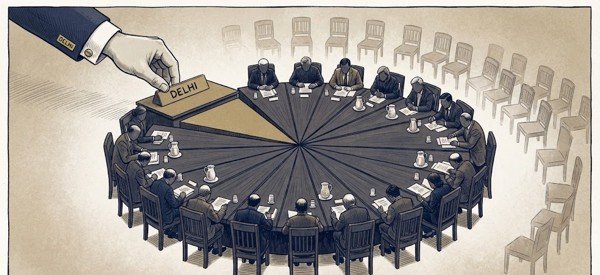













INTERNECINE conflict, turf battles, naked influence peddling by lobbyists and lawyers, overlapping jurisdictions, lack of clarity on structure and mission, and inter-ministerial warfare have virtually paralysed the governmental regulatory machine.
Regulations – as distinct from economic control – are an essential watchdog mechanism in a free market system designed to ensure level playing fields in different sectors, prevention of monopolistic controls, distribution of national resources among competing users, consumer protection, encouragement of fair trade practices and pricing policies.
The hallmark of economic liberalization is simplicity of regulations and delegation of powers to regulate to autonomous entities labelled “commission”, “regulator”, “regulatory authority”, and so on. (See box)
Sadly, the Union Government has been unable to distinguish between its functions of policy formulation, regulation and service provider. Even as macro, sector-specific and segment-specific regulators proliferate across the economic and social spectrum, the government has failed to conceptualize and define the role of the independent regulator.
In many cases, independent regulators have been created after implementation of liberalization policies. There have also been instances of sector-specific policies and regulations being framed after grant of approvals to the early birds among corporates! A case in point of the cart being placed ahead of the horse is the exploration and extraction of coal bed methane from coal mines.
The absence of policy and regulatory clarity has created territorial battles that ultimately land at the altar of the High Courts and the Supreme Court. In this scenario, regulators often engage in internecine warfare waged in the media or in the courts. It is not uncommon to see regulators seeking the parent Ministry’s intervention when they clash. Routinely, aggrieved companies drag regulators before the concerned appellate authority. In addition, regulators also seem to take a sadistic delight in challenging the appellate authority before the High Court.
The government appears unprepared to deal with the rapidly spreading rot in the regulators’ arena, notwithstanding the recommendations from the Second Administrative Reforms Commission.
In its 13th report submitted in April 2009, the ARC recommended: “Setting up of a Regulator should be preceded by a detailed review to decide whether the policy regime in the concerned sector is such that a Regulator would be better placed to deliver the policy objectives of the department concerned.”
The ARC observed: “There is also an increasing perception that a number of regulators are being set up on an ad-hoc basis by different ministries, sometimes with overlapping jurisdictions leading to lack of coordination and issues of turf. The fact that different regulators have been set up with varying terms of appointment, tenure etc. is also a reflection of this.”
The regulatory chaos has as a consequence benefited lawyers, consultants and non-government organizations (NGOs). The super-beneficiaries are, of course, the companies that smoothly manage and manipulate the rules of the games through these three intermediaries as well as through the time-tested lobbying with the Ministries.
Politician-Bureaucrat Nexus
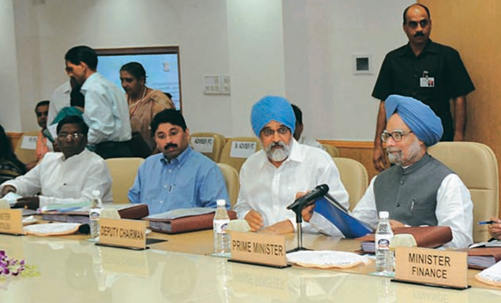
This unholy alliance has ensured that the lion’s share of the posts of chairman and members of regulatory authorities go to retiring bureaucrats. The nexus pre-disposes the bureaucracy to engineer proliferation of as many regulators as possible. This helps ensure cushy post-retirement jobs for its chieftains.
There are several ways in which Ministers and bureaucrats are trying to clip the wings of the regulators, rendering them toothless. For example, the Ministry of Petroleum and Natural Gas (MOPNG) is hell-bent on curtailing the functions of the Petroleum & Natural Gas Regulatory Board (PNGRB) and reducing it to a toothless entity.
The Ministry of Shipping and Transport asserts its primacy by issuing diktats to independent regulator Tariff Authority for Major Ports (TAMP). Other ministries such as the Ministry of Communication and Information Technology simply ignore or cleverly bypass road-maps offered by regulators or drag their feet over their recommendations.
The Railways Ministry has been resisting for a decade the Government’s proposal to set up an independent railways regulator. And ministerial overlords have been interminably blowing hot or cold on proposals for establishing a regulator for the steel sector.
Several sectors such as fertilizers and chemicals, cement, and the construction industry continue to operate without independent regulators though the idea of having separate authorities for each sector has been in the works for years. Some proposals such as that for the National Biotechnology Regulatory Authority have not moved beyond the draft Bill stage.
Like the Railways, the road transport sector is bereft of an autonomous regulator as are other segments of infrastructure services such as water and sewerage systems. (The water sector will, however, witness the States forming independent water regulatory authorities to avail of their share of the Rs 5,000-crore grant for water reforms recommended by the 13th Finance Commission.)
The Aviation Mess
This sector demonstrates the urgency for radical surgery in the area of regulation. The aviation segment already has three regulators – old work horse Directorate General of Civil Aviation (DGCA), Bureau of Civil Aviation Security (BCAS) and the nascent Airport Economic Regulatory Authority of India (AERA).
At the government’s behest, DGCA has been exploring prospects of setting up another regulator – Civil Aviation Authority (CAA) to perform administrative functions. (BCAS was itself carved out of DGCA in the mid-1980s.) DGCA identifies itself as an attached office of the Ministry of Civil Aviation, whereas BCAS considers itself the regulatory authority for civil aviation security. AERA, which was incorporated in May 2009, is going through teething troubles. It does not even have a website.
In the last quarter of 2009, it was scouting for a consultancy company to facilitate its organizational structuring and functioning. The consultant’s mandate, however, is too broad and envisages hand-holding for several years. AERA would not have felt the need for hand-holding if the government had prepared a standard toolkit for setting up a regulatory authority.
The regulators’ dependence on consultancy right from birth to maturity is a common feature of India’s so-called independent regulatory mechanism. As economic reforms have gained momentum, the job of framing economic policies and regulations has been shifting from the government to consultants. They also draft the Bills.
THE regulators and ministries only modify the consultants’ prescriptions depending on the pulls and pressures from various stakeholders. Many consultants and NGOs have overt or covert financial relations with players that operate in a particular sector.
How AERA should fix tariffs had already been specified in a consultant-prepared document relating to privatization of Delhi airport much before the privatized entity was created! Take a look at the State Support Agreement (SSA) which the Government of India (GOI) signed with Delhi International Airport Private Limited (DIAL) on April 26, 2006.
This agreement states: “GOI further confirms that, subject to applicable law, it shall make reasonable endeavors to procure that the Economic Regulatory Authority shall regulate and set/ re-set Aeronautical Charges, in accordance with the broad principles set out in Schedule 1 appended hereto.”
Headlined “Principles of Tariff Fixation”, Schedule I lists 10 principles, the first being the incentive-based principle. Schedule I states: “AERA will accept the Master Plan and Major Development Plans as reviewed and commented by the GOI and will not seek to question or change the approach to development if it is consistent with these plans. However, the AERA would have the right to assess the efficiency with which capital expenditure is undertaken.”
The government further marginalized the role of AERA by allowing privatized and private airports to charge user development fees (UDF) to finance their projects!
UDF is imposed on hapless flyers in addition to passenger service fees (PSF), which is higher at private airports as compared to Airports Authority of India (AAI) airports.
The government has belatedly sought to rationalize its decision to let private players charge UDF by allowing AAI to charge UDF at Jaipur airport with effect from January 1, 2010.
Had the government shown concern for all stake
holders and the national exchequer, it would have
opted for a single regulator for the aviation sector.
Thus, AERA’s role as an independent regulator was compromised even before the hapless agency was born. It was faced not with a mission but with a fait accompli! Had the government shown concern for all stakeholders, including the public and the national exchequer, it would have opted for a single regulator for the entire aviation sector. The US has the awe-inspiring entity, the Federal Aviation Administration (FAA). Similarly, the UK has one unified regulator. Even several developing countries have only one aviation regulator.
India has the dubious distinction of neither having a unified aviation policy nor a unified regulator. The government owes an explanation to the public as to why it did not set up a single regulator, CAA, as provided for in the draft Civil Aviation Policy 2000.
“It is a matter of concern that India still awaits a comprehensive civil aviation policy and as a consequence, the Civil Aviation Act,” said the DGCA review committee in April 2006.
The Financial Sector Imbroglio
The need for an independent regulator in the financial segment of the economy is acute. The Reserve Bank of India (RBI) is a key regulator. Other major regulators in the sector are the Securities and Exchange Board of India (SEBI), Insurance Regulatory and Development Authority (IRDA), and Pension Regulatory and Development Authority (PRDA).
The under-currents of tension between these financial regulators surfaced as a major conflagration recently. It manifested itself as a media war between IRDA and SEBI over regulation of unit-linked insurance policies (ULIPs).
In order to address regulatory issues the Planning Commission constituted a committee on financial sector reforms last year and recommended setting up a statutory Financial Sector Oversight Agency (FSOA). In its report titled “A Hundred Small Steps”, the committee said FSOA “will initiate balanced supervisory action by the concerned regulators to address those risks; it will address and defuse inter-regulatory conflicts.”
The proposed agency would comprise the chiefs of all financial regulatory bodies and be chaired by the senior-most regulator. Instead of acting on this recommendation, the Finance Ministry came up with a rival proposal: establishing a Financial Stability and Development Council. (see “The FSDC tangle”, page 14)
In his recent Budget speech, Finance Minister Pranab Mukherjee said: “Without prejudice to the autonomy of regulators, this Council would monitor macro prudential supervision of the economy, including the functioning of large financial conglomerates, and address inter-regulatory coordination issues. It will also focus on financial literacy and financial inclusion.”
The financial press was abuzz with reports that the proposed council would be chaired by the Finance Minister. If that happens, it would make a mockery of the arm’s-length relationship between the government and independent regulators. It would be the ultimate conflict of interest in a system crying out for checks and balances .
The emerging situation would be like the tale of the monkey resolving a fight between two cats over a loaf of bread.
This is, however, not to belittle the urgency for coordination among regulators across all sectors that often overlap. The necessity is best illustrated by the Forward Markets Commission (FMC), which is perhaps the second oldest economic regulator after RBI.
Set up in 1953, FMC and SEBI share a common regulatory responsibility regarding derivatives trading and forward contracts due to overlapping of securities and commodities derivatives markets.
There has been talk of merger of FMC with SEBI but different committees have given varying opinions on convergence of securities and commodities markets and of regulations.
THAT FMC is keen to maintain its identity and protect its turf became evident from the fact that last year it filed a suit in Bombay High Court challenging the jurisdiction of the Central Electricity Regulatory Commission (CERC) over forward contracts in the power trading arena. And on October 27, 2009, it issued a press note, declaring power trading on Power Exchange of India Ltd (PXIL) as illegal as the latter is not registered with the former.
FMC said: “In terms of the provisions of the Forward Contracts (Regulation) Act, 1952, such contracts in electricity would be Non-Transferable Specific Delivery (NTSD) contracts. These are forward contracts and can be traded only in accordance with the provisions of the FC(R) Act.”
Under the Electricity Act, power trading and transmission across the country is regulated by the Central Electricity Regulatory Commission (CERC) and within the States by the concerned state electricity regulator.
Upset with FMC’s sabre-rattling, CERC issued two advisories to the Union Power Ministry in November 2009 and February 2010, suggesting legal reforms relating to power trading.
In addition, there is imminent risk of clash between macro regulator Competition Commission of India (CCI) and the sector-specific regulators over issues of mergers, market malpractices by dominant players or by oligopolies.
The Need For A New Vision
The government has to move beyond fire-fighting and adopt a proactive, visionary stance. For instance, it should set up a unified Energy Regulator to unleash the benefits of integration and competition in energy markets. It is currently busy spawning sector and segment-specific regulators in oil and gas, power, coal, nuclear and renewable energy.
India’s policymakers are yet to awaken to the need to overcome all such challenges to improve the competitiveness of the Indian economy and to realize its dream of breaking the 10 per cent annual economic growth barrier.
The government can perhaps take a cue from the UK. Faced with regulatory woes, it constituted a group named “The Better Regulatory Task Force” in September 1997 to help the government ensure that regulation and its enforcement are aligned with the five principles of good regulation. These are: proportionality, accountability, consistency, transparency and targeting.
Apart from the generic roadmap for proposed regulators, the government ought to discover the synergies and divergence amongst regulators, and the underlying legal conflicts, and accordingly undertake major restructuring of regulators including unification of a few regulators and appellate authorities.
India ought to set up an empowered commission to prepare a model legal framework for independent regulators, standard procedures, conflict resolution and creation of synergies. The Comptroller and Auditor General should be advised to prepare an annual performance benchmarking report on all regulators.
Such an initiative would help the government minimize regulatory clashes, improve governance, advance investor and consumer confidence and lighten the burden on the national exchequer.