

























The much-awaited revised defence procurement procedure – DPP-2008 – that was officially unveiled by Defence Minister AK Antony on August 1 is considered an improvement on the previous one (DPP-2006), but may not be an ultimate procedural (not policy) document to address the inherent problems in the world of military procurement. As the Minister admitted, this document is still in an early phase of evolution, and will be refined.
India’s defence sector has long been under an autarkic model vigorously guarded by what may be termed a “golden quadrangle” of political executives, civil bureaucracy, armed forces and the defence scientific community. Obviously, strategic decisions in this sector would follow a non-transparent manner, often justified on national security grounds.
This has led to a situation where defence issues are seldom debated, in Parliament or elsewhere, the defence budget is passed without any autopsy, transparency eludes engaged citizenry in every aspect of the military domain while middlemen become a constant in big-ticket military purchase deals. Long-nurtured vertical institutional structures within the Ministry of Defence (MoD) with little or no horizontal interaction among different departments and armed forces headquarters, have perpetuated a system that has furthered interest group politics, which would obviously resist reforms from within or without.
India’s defence sector has long been under
an autarkic model vigorously guarded by
what may be termed a ‘golden quadrangle’
For justifiable reasons, India opened up its defence sector for private sector participation while bringing in institutional-level reforms in higher defence management since 2002. Military procurement is one area where many deliberations have taken place since. Consider this: until 2002, India was following an almost unchanged procurement procedure, while in the past six years it has undergone three revisions! While this evolutionary process has certainly brought in many positive points, it still grapples with intricate issues that are not only procedural but also systemic.
On the positive side, DPP-2008 entails the following. First, it clarifies distinctions between normal and extraordinary military procurement procedures. The former requires a standard procedure in a prescribed format, the latter will be routed through what is known as “first track procedure”. Second, “request for proposal” (RFP) will now have an elaborate format which will include technical and commercial requisites in a detailed manner to enable vendors to know what exactly the end-user wants.
Third, it tries to streamline evaluation procedures – technical, field and commercial – for large military acquisitions to avoid delays. It also tries to put a realistic time-frame for each acquisition, depending on the nature and size of requirement. Fourth, it tries to avoid a single-vendor situation by injecting competition right from the “request for information” to “solicitation of offer”. Fifth, it tries to distill “required” and “desirable” military technologies from a whole basket of choices now available by stipulating that all requirements will be examined by defence production, procurement and R&D boards, and final choices will be approved by the Defence Acquisition Council. This will not only rationalize requirements but also help choose which product to buy and which to develop through indigenous or joint efforts. Last but not least, it lays emphasis on offset obligations for vendors primarily through transfer of technology (ToT) routes.
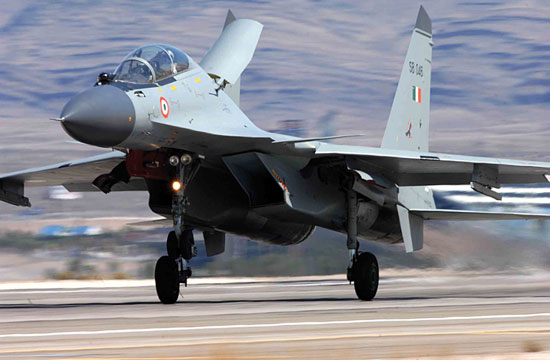
However, these same provisions contain complexities that need in-depth examination and would necessitate further refinement. First, it is not the normal acquisition but exigency-based acquisition which would invite suspicion. India has recently scrapped a couple of acquisitions (artillery guns and, more recently, 197 helicopters) on grounds of irregularities. As these are crucial components of the on-going military modernization plans, fresh acquisitions would need first track procurement. On the other hand, decisions to purchase items like Hercules and P-8 maritime reconnaissance aircraft from the US government through the Letters of Acceptance route could bring into question the wisdom of the government. Adequate scrutiny as well as explanations before crucial purchases is necessary to avoid raised eyebrows.
Second, under normal conditions vendors know what the end-user wants as all essentials are elaborated in the RFP. However, what prospective vendors need to know is the nature, size and qualitative aspects of the Indian defence market. An adequate roadmap of military acquisitions is thus necessary to attract the best of companies and also create space for them for a long-term stake in the Indian defence industry. Third, time line is still a challenge for Indian planners and the integrated defence staff office as well as civil bureaucracy must take steps to avoid delays.
Fourth, the evaluation process in India is justifiably lengthy as systems go through rigorous evaluations under different climatic conditions. However, eleven steps to military acquisition still have scope for time reductions. A re-look is advisable at steps like initial screening, technical and staff evaluations, commercial negations – a time-frame for which should be set at the outset.
Also, provisions like offsets and transfer of technology should be clearly laid down. At the moment, vendors remain clueless about offset obligation modalities. At the same time, the DPP states that ToT provisions under offset obligations will follow licence production routes. This defeats the very purpose of offsets, which is three-fold: bringing back a portion of money spent on acquisition through industrial compensation routes, helping the Indian defence industry raise its standard, and achieving self-reliance in military technology through collaborative as well as indigenous efforts.
While offsets could bring in desired results in acquisition costs as well as help build defence industrial infrastructure, one is unsure whether the domestic standard in critical military technologies would be raised. There is a need to link ToT as a mandatory component in offsets, where aspects of technology transfers should be clearly laid down. This may not please foreign vendors but is essential to enhance the level of self-reliance.