












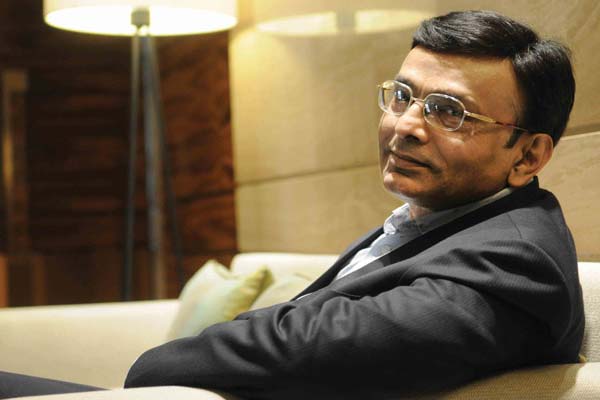

















This book, Emotional Intelligence At Work: A Professional Guide, by Dr Dalip Singh, a senior IAS officer, has earned international acclaim. It tells us that emotional intelligence is an evolving concept with profound applications and challenging possibilities. A person’s emotional make-up largely determines his or her professional or personal success. It is interesting to note that so many people with high IQ (Intelligence Quotient) fail whereas those with less intellectual endowment are extremely successful. It is increasingly recognized that IQ may account for only about 20 per cent of a person’s success in life. The remaining 80 per cent depends largely on a person’s emotional intelligence or emotional quotient (EQ), as this book says. Today’s management philosophy is that it is not possible to feel comfortable at the workplace if you are not comfortable with your own skills.
The author puts simple questions to managers. Do you assess your personal and professional life at the moment as satisfactory? Have you achieved all your expected goals? Do you generally feel at ease with the world or a little out of place? The answer will reveal that a manager who is unaware of his/her emotions on others is a walking disaster at the workplace. ‘Soft’ skills matter more for success than ‘hard’ skills.
Emphasizing the importance of emotions, he says that emotions are human beings’ warning systems that alert them to what is really going on around them. Some of the dominant emotions are anger, depression, anxiety, happiness, love, surprise, disgust, embarrassment and so on. One should learn to recognize and name one’s emotions to derive benefit.
Emotional intelligence constitutes three psychological dimensions: emotional sensitivity, emotional maturity and emotional competency, which motivate an individual to recognize truthfully, interpret honestly and handle tactfully the dynamics of human behaviour.
Dr Singh also dispels myths about emotional intelligence by admitting that it does not mean merely ‘being nice’ or ‘giving free rein’ to feeling. Your emotional intelligence is not fixed genetically, and it develops in early childhood. Emotional intelligence has its own consequences. For example, a low-EQ person will reflect feelings of unhappiness, frustration, emptiness, bitterness, depression, instability, failure, dejection, anger, dependence, loneliness and stress. Similarly, a high EQ person will reflect happiness, appreciation, satisfaction, peace, freedom, desire, motivation contentment, elation, awareness, self-esteem and balances. Emotional intelligence is the capacity to create positive outcomes in your relationships with others and with yourself.
One can learn new emotional skills any time in life. Some of the skills that can help in managing emotions in your personal life as well as in the workplace are: recognizing your emotions, empathizing with others, developing high self-esteem, managing emotional upsets, being an emotional ‘winner’, influencing people, and managing your anger.
His advice to modern-day managers is to try to be an emotional ‘winner’. Few people are 100 per cent winners or losers. It is a matter of degree. Winners or losers respond differently to situations they encounter. Some of the management areas where emotional intelligence can be applied to have gainful outcome are: corporate culture, hiring, customer service, high technology management, turnover, training, productivity, goal-setting, emotional support and leadership. Log on to the author’s website (www.eqindia.com) and attempt a free EQ test.


