






















India’s civil servants need to go beyond the call of duty but the reality is just the opposite

At a felicitation in Pune of the successful candidates at this year’s All-India and Central Services Examination of the Union Public Service Commission, I highlighted three areas in my address to them.
First, they are entering a professional career. They have to be efficient and continue to acquire qualifications for better performance. They have to show commitment to the goals of the establishment they serve.
Second, they are also entering public service. They have to be honest and responsive, as well as transparent and fully accountable. They have to observe high ethical standards and a fair code of conduct. Since we are a democracy, they have to be apolitical. Even though they will be serving under a political party or a coalition of political parties, their commitment is to the Constitution. They have to carry out the policies and decisions of the government but within the Constitutional parameters.
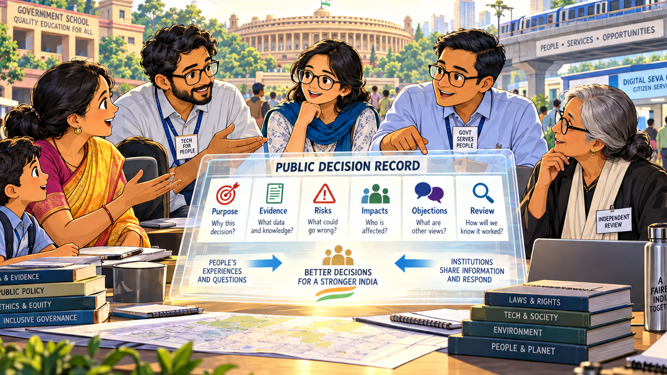
Third, because India is a developing country, there are special requirements of them. It is through public service that inclusive and sustainable economic development can be achieved. Good governance is an essential condition. For this, justice has to be delivered in the social, economic and political fields. The delivery system assumes great importance.
If all this is assumed as a sort of benchmark, I am afraid the current performance of the civil services falls woefully short. This is especially so in the case of the subordinate services, which constitute the face of the government for the general public.
Politicization exists in various degrees and is rampant in certain states, especially in the north. Unfortunately, the leftist governments have also fallen into this trap. Corruption has become a way of life and has acquired social acceptability in many cases. Political backing for graft is actively sought and willingly given. Good governance has become a casualty of political interference and bureaucratic pliability. Implementation of welfare laws and schemes is treated as a burden and performed perfunctorily. Instead of an effort at redressal of grievances, the attitude is that the petitioner is being done a favour.
Yet, both the nation and society are developing – if slowly. This is in spite of, rather than because of, the government and the public services. There is a core, though tiny, of civil servants who are role models, of the young political generation which is honest and more committed, of enlightened groups in the private sector, and of strong and vibrant civil society groups.
The scope for improvement is vast but there are certain obvious and representative steps that should be taken immediately:
• Political interference and patronage should be reduced and civil servants enjoying it or striving to acquire it should be isolated.
• Corruption in the civil services should be dealt with strictly. The legal procedure for this should be revised for fast-track treatment.
• There should be guaranteed tenure for every post. For promotion and selection, separate bodies should be set up and any rejection of their recommendations should be public knowledge.
• Civil servants should treat spreading of social justice as their personal obligation to society.
• High ethical standards and a code of conduct should be observed by all senior civil servants and they should try to spread the message.
• There should be a revised procedure to accord due recognition in the performance assessment of all. In important activities, accountability should be established by laying down physical and financial targets to be achieved during the particular period.
• An ombudsman must be appointed for the civil services.
(The author is a former Cabinet Secretary.)
Implementation of welfare laws and schemes is treated as a burden and performed perfunctorily. Instead of an effort at redressal of grievances, the attitude is that the petitioner is being done a favour
Making them citizen-friendly
Insulation from political interference is the key and should be top priority

With many honourable exceptions, civil servants, police officers and those manning the Public Sector Undertakings today are more interested in pleasing the political masters of the day than in discharging their duties with objectivity and in the interest of the people they are meant to serve. They do not have adequate accountability. They are afraid to take bold decisions or to take any great initiative. They prefer to play safe as far as possible. Their attitude is no more citizen-friendly than before.
How has this state of affairs come about? The calibre of the men and women holding positions in our civil services and Public Sector Undertakings today is in no way lower than that of their counterparts a few decades ago. In fact, with the spread of education and expansion of the role of media, Internet, and so on, they are better informed and more aware of the world around them than those of earlier generations.
The answer lies in the political system that has gradually developed since Independence. Politics has come to emphasize more and more parochial considerations, caste equations, money power and crime. In this kind of a situation, the political master looks to a pliable bureaucrat or police officer to help him in his quest. Those who do not play his game find themselves sidelined or penalized. In such an atmosphere, it is futile to expect that civil servants or police or public sector managers would all remain committed to the cause they were meant to serve with diligence, objectivity and impartiality.
The topmost priority has to be to insulate government and PSU servants from political interference. Objectivity and transparency in recruitment, postings, transfers, disciplinary action, and so on is a must. Likewise, it is important to link promotion to performance. At present nobody gets penalized for poor performance or rewarded for good performance. A system must be put in place to ensure both. The Second Administrative Reforms Commission has made a number of good suggestions in this regard and it is heartening to note that the government seems serious in implementing them.
Politics has come to emphasize more and more parochial considerations, caste equations, money power and crime. In this kind of a situation, the political master looks to a pliable bureaucrat or police officer to help him in his quest
The logic of civil services in India
Let me at the outset place on record the contribution made by the civil services to the stability and development of the nation since Independence. They can justifiably take pride in serving the people to the extent possible in the prevailing political environment.
However, at a conceptual level, the evolution of the civil services over the last 60 years has exposed their bankruptcy at philosophical, political and social levels. They have not been able to find their legitimate domain and have been oscillating between arrogant obstinacy and servile flexibility.
Their capacities as producers of social and economic goods, their identity as useful members of communities and their role as custodians of welfare of the people were all to disappear or be destroyed. Idealism gave way to cynicism and their capacity to deliver shrank steadily.
In my view, the civil services in India are unconsciously searching for the logic of their being. Casual discussions with senior bureaucrats reveal an urge to evolve a more credible existence for the civil services. They want to counter the efforts to malign their public image as mere “babus”.
Politics has the logic of power. The market has the logic of profit.
It was rhetorically expected at the time of independence that the civil service would be imbued with a sense of nation-building. For instance, it was expected that IAS officers would follow the precepts and practices of ICS officers. Obviously, it proved to be an irrational and impracticable assumption. The environment in which the ICS functioned was radically different from the emerging scenario in which the IAS was to work.
The only possible civil services logic is public service or public interest. Public interest is hard to define as there are various definitions given by different interest groups. We have to define it in the context of the civil services.
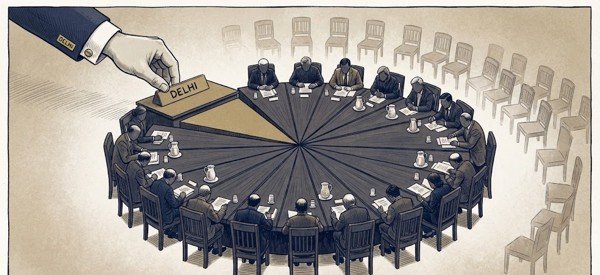
In my view, to keep civil servants immune to political pressure and interference in the type of socio-political system we are in is unthinkable. When it is expressly provided in the codes of conduct and rules of government business that the political executive is supreme, civil servants cannot remain independent of political considerations. Total political neutrality is not possible in the absence of clear separation of areas of authority and responsibility of the political executive and permanent civil service. Only then can accountability be ensured.
Therefore, if I was in charge, my first decision would be to have distinct areas of responsibility and accountability for civil servants not to be encroached upon by politicians.
Integration of all echelons of the civil services would be my second priority. Today, the civil services of the Union, and more importantly those of the states, are highly fragmented with lines of responsibility and accountability running in different directions. It is difficult to take a holistic view of administration. A comprehensive enactment is urgently needed to bring uniformity among different services. I may, however, add that the draft Civil Services Bill of 2007 was a non-starter. It is essential to consult the lower formations of administration on shared values and sense of belonging.
The third aspect I would like to highlight is the need to harmonize the civil services with civil society. With increasing relevance of civil society in the wake of progressive enactments like the Right to Information, it should be possible to bring civil society closer to governance at functional and cutting-edge levels.
Bureaucrats should not aspire to be a part of the economic and political elites but of the emerging social elite that boasts of people like Rajendra Singh, Aruna Roy, Vandana Shiva, Anna Hazare, Ramesh Ramanathan and Arvind Kejriwal. The civil services ought to join forces with civil society organizations to amplify the voice of the voiceless. Thus civil servants can become a part of the leadership structure of the community.


