























Liberalization has provided the dishonest fresh avenues to stash their cash
Bhola is a physically challenged youth who rears goats for a living. He lives in Kharora village, about 45 km from Raipur, the capital of Chhattisgarh. Amazingly, Bhola has an account with Union Bank of India which has seen transactions worth over Rs 15 crore. He is also one of the directors of a company he has never heard of. All he knows is that, a few years ago, some people took a sample of his signature on a blank paper, assuring him that it would get him a PAN card. He did not know what that was, but they said the card would help him get a small loan.
Someone somewhere used that signature to open a bank account. The same person did this with nearly 200 others in Kharora, to which he himself belonged. Obviously, this person was sure there would be no repercussions and so he did it with impunity.
Only three categories of people can do such things with impunity: bureaucrats, politicians and police officers.
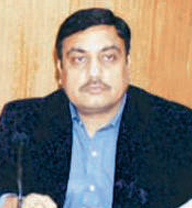
In this case, it was a bureaucrat. In the first week of February, income tax sleuths raided the residence of BL Agarwal, Agriculture Secretary, Chhattisgarh. They also raided the business establishments of his relatives and his chartered accountant, Sunil Agrawal. They found documents suggesting the IAS officer of the 1988 batch has amassed assets worth several millions of rupees. Agarwal had at least 220 bank accounts, most with fake names and addresses, totalling Rs 40 crore or more.
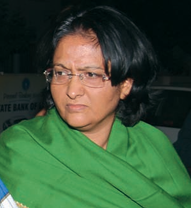
A couple of days before the discovery of Agarwal’s misdeeds, Madhya Pradesh uncovered its own scandal. The state government suspended a Bhopal-based IAS couple – Tinu Joshi, Principal Secretary, Women and Child Development, and Arvind Joshi, Principal Secretary, Jail and Parliamentary Affairs. The value of their illgotten wealth is estimated at about Rs 10 crore.
The income tax authorities have also reportedly started scanning the investments of some more senior IAS officers of Madhya Pradesh in private insurance and investment companies. Eight senior officers reportedly have investments in two private insurance companies. Some officers allegedly own houses in Bhopal, and farmland and plots. It is said that one officer owns a large hotel.
Are these instances of corruption at senior levels of the bureaucracy exceptions? Sadly, no. But the extent of corruption and the level of greed are mind-boggling. It indicates the attitude of impunity. Madhya Pradesh and Chhattisgarh do not fall in the category of those states where big money is plentiful. Many big players are never caught. Only a few, lesser, ones get trapped. Besides, these recent cases constitute only the tip of the iceberg. There are numerous small players who make a few crores and then retire and spend the rest of their lives peacefully. There are players who allow their relatives, most often their sons, to derive immense favour from private players, both national and international, in lieu of the services they, as bureaucrats, provide. Their stories are heard on the grapevine, and cannot find a place in the media, whose hands remain tied (at times, of course, this is deliberate) till substantiative evidence is procured.
India ranks 84 out of 180 countries in Transparency International’s Corruption Perceptions Index, though its score has improved consistently from 2.7 in 2002 to 3.4 in 2008. The notoriety has been earned thanks to government servants, for almost every instance of corruption involves one or more government functionaries. Those at lower levels have been emboldened by the knowledge that even the seniors are corrupt. Thus, corruption has remained rampant and unaffected by liberalization. Rather, liberalization opened up newer avenues for people to be corrupt. Income tax officials say private banks, investment firms and insurance companies offer more liberty to bigwigs to stash their money out of sight. It is becoming increasingly difficult to trace such diversification.
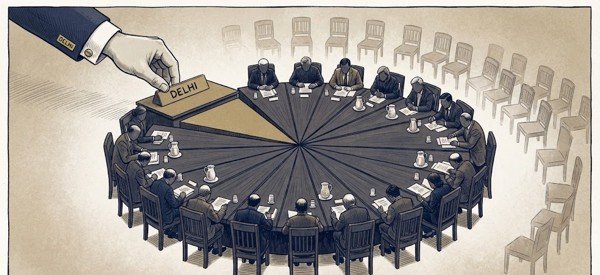
The genesis of the problem lies in the emergence of a huge political class, across all parties, that is self-oriented and has no commitment to the nation. These people enter politics to make money with impunity
The genesis of the problem lies in the emergence of a huge political class, across all parties, that is self-oriented and has no commitment to the nation. These people enter politics to make money with impunity. Earlier, most of those at the top were honest. But the rise of this new political class in the last two to three decades has eroded the basic values injected in our polity during the freedom struggle.
In the Indian mindset, being rich was praiseworthy. Being corrupt was not. But the system has failed in such a way that it is now taken for granted that all those with resources—politicians, bureaucrats, lower-level government officers, policemen, judges, journalists—are corrupt. People have learnt the hard way that the system will not crack down on the corrupt. The emergence of an elite class, which is interest-oriented in the crudest sense, has helped the art of corruption achieve the status of “widely-accepted norm”.
The few honest people in government believe corruption has to be fought at the highest level first. They suggest formation of an independent statutory body to monitor Ministers, administrative service officers and judges. This body should be directly accountable to Parliament (no other body passes muster, as evident from the conduct of the CBI) and should present its reports every six months. Its officers should enjoy complete protection and security.
But no government would agree to do this. We all know why.