

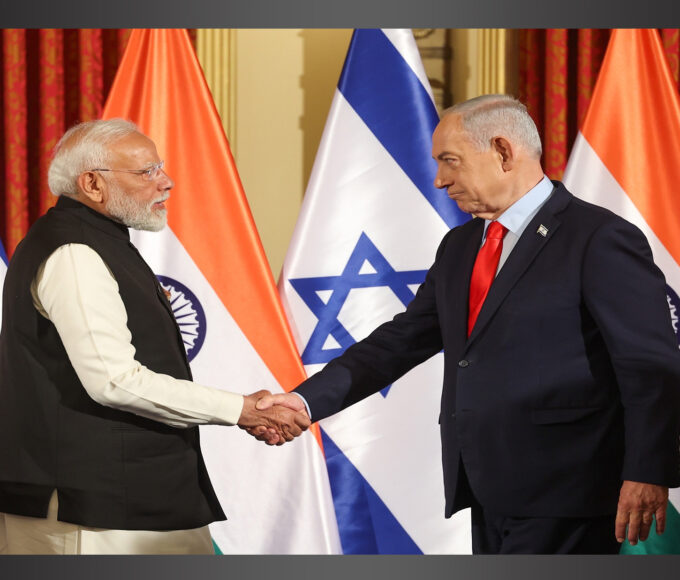























The United Kingdom (UK) and Republic of India have concluded talks on a trade deal free trade agreement (FTA). Alongside this, we have agreed to negotiate a Double Contributions Convention (DCC), which will come into force in line with the wider trade deal.
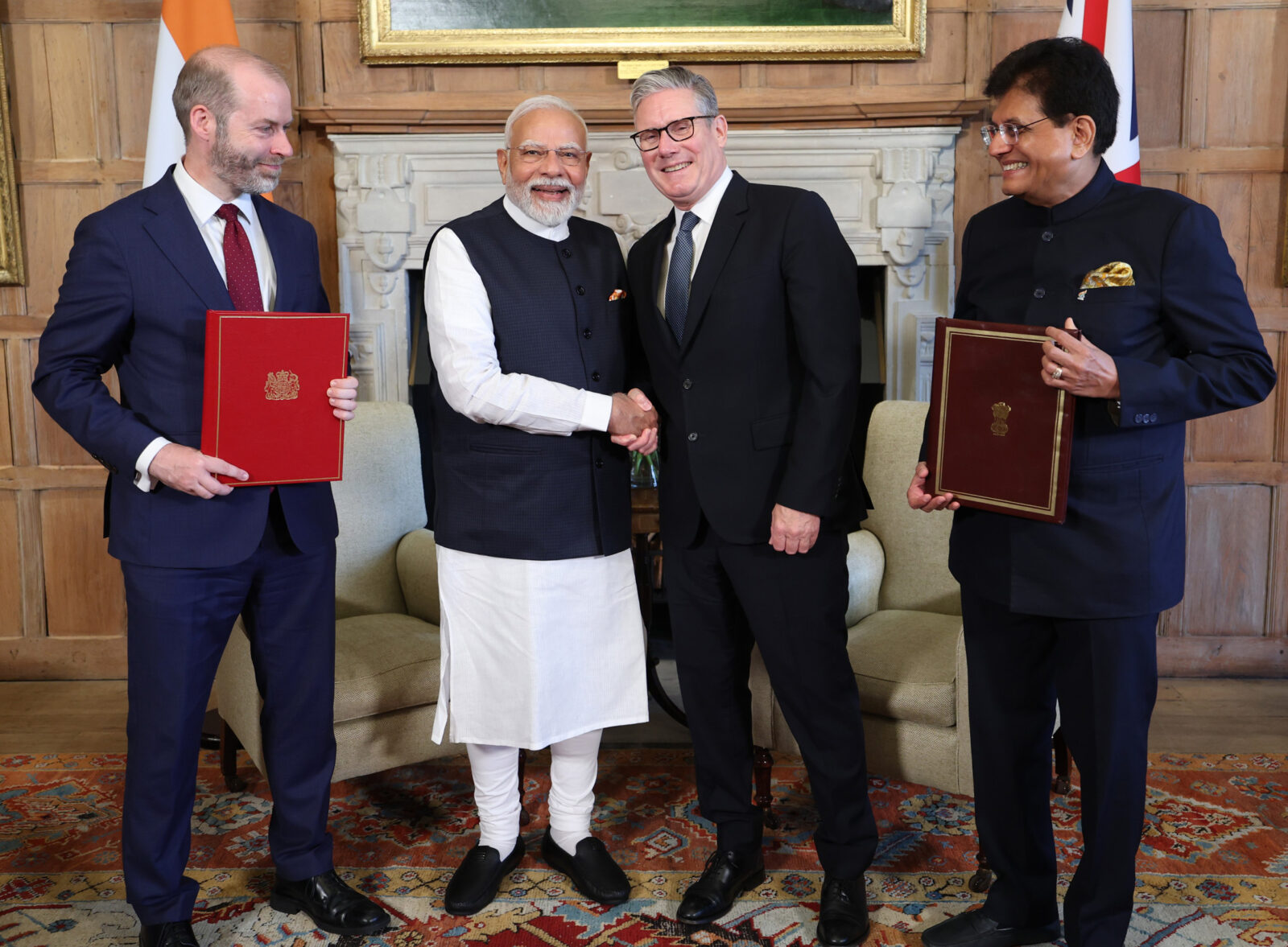
Agreement was reached on 6 May 2025 between the Prime Minister and Prime Minister Modi, following final talks in London between the Business and Trade Secretary, the Rt Hon Jonathan Reynolds MP, and the Minister of Commerce and Industry, Shri Piyush Goyal.
The UK has secured the best deal that any country has ever agreed with India. By unlocking new opportunities for businesses across the UK, this agreement helps to deliver economic growth and supports the Plan for Change.
This ambitious and comprehensive deal is expected to increase UK GDP (gross domestic product) by £4.8 billion and UK wages by £2.2 billion each and every year in the long run.[footnote 1] Bilateral trade is also expected to increase by £25.5 billion each and every year in the long run.[footnote 2]
As a result of this deal, businesses will now be able to trade with India with confidence and security – taking advantage of the huge opportunities offered by the complementary nature of our 2 economies and India’s rapid growth.
This document seeks to explain what has been agreed between the UK and India, with chapter summaries outlining its terms. Work is continuing to finalise the legal text of the deal. Once this has been completed and legally verified, arrangements will be made for the signing of the agreement. Following signature, and subject to fulfilment of both countries’ governmental requirements, including UK parliamentary procedure, the agreement will enter into force.
2. The strategic case for a deal with India
As set out by the Prime Minister, the number one mission of this government is to secure sustained economic growth. As a trade-intensive economy, the UK benefits from open export markets and access to competitive imports that support production at home. Boosting trade and securing opportunity for business is essential to delivering a strong domestic economy and supporting the security of working people.
The UK and India have a deep and broad relationship, underpinned by a strong ‘living bridge’ of at least 1.9 million people with Indian heritage living in the UK.[footnote 3] Even though the Indian market sits behind some of the world’s highest barriers to trade, it was the UK’s 12th largest trading partner, with total trade worth £43 billion, in 2024.[footnote 4]
India represents one of the most dynamic and exciting economies in the world. It has the highest growth rate in the G20, which is expected to remain above 6% over at least the next 5 years.[footnote 5] It has recently risen to become the fifth largest economy in the world and is expected to grow to the third largest by 2028.[footnote 6]
All this growth presents significant opportunity for UK businesses. As India grows, so will the number of consumers looking to purchase high-quality UK goods and services. By 2030, India’s middle class will number an estimated 60 million and rising, potentially reaching a quarter of a billion by 2050.[footnote 7] India’s overall demand for imports is projected to grow by 144% in real terms between 2021 and 2035, reaching £1.4 trillion.[footnote 8]
However, there have been significant challenges for UK businesses seeking to access this growing market. India has the highest average tariffs of any G20 economy, with some products facing duties above 100%. It is ranked as the eighth most restrictive services market by the Organisation for Economic Co-operation and Development (OECD) and has an uncertain regulatory environment.[footnote 9] Risk and cost have historically hindered UK companies looking to move or expand into India.
Despite these challenging conditions, UK businesses have high ambitions for the future of trade with India. Grant Thornton’s recent International Business Report indicated that 42% of UK businesses surveyed without an existing presence in India plan to build one in the next 2 years.[footnote 10] Of those with an existing presence, 96% plan to expand further. This deal supports those efforts – with 72% of UK businesses surveyed saying that an FTA would encourage them to explore opportunities in the Indian market.
Global events in the last few years have demonstrated the value of diverse and resilient supply chains and certainty in trading relationships. This deal will strengthen the UK partnership with India, bringing down barriers to trade and granting stability to businesses in both countries.
Benefits will stretch right across the UK and come in both the short and long term. As soon as the deal comes into force, UK products will benefit from a saving up to an estimated £400 million a year, from India cutting its tariffs on existing trade alone, which could increase to around £900 million a year after staging over 10 years.[footnote 14] This will help exports from a variety of high growth sectors, such as advanced manufacturing sectors including for automotives, electrical circuits and high-end optical products, and medical devices.
Greater ties and access to India present significant opportunities.[footnote 11] In addition, India is already the second most sought after manufacturing destination in the world due to economic growth, low costs, and a large labour market.[footnote 12] As a result, it is estimated manufacturing will account for 21% of India’s GDP by 2031.[footnote 13]
Both the UK and India have been clear in their ambitions to strengthen the relationship further. In July 2024, the UK and India launched the Technology Security Initiative, a first-of-its-kind agreement built on partnerships between government, industry, and academia.
In March 2025, the Foreign Secretary and Indian External Affairs Minister met to drive forward the UK-India Comprehensive Strategic Partnership, centring our relationship on mutual economic growth, technological innovation, and collaboration on global challenges including climate change.
This trade deal marks another critical step in realising our ambitions of a stronger and mutually beneficial relationship between our 2 countries. This deal slashes red tape and cuts tariffs, making it quicker, cheaper and easier to trade from the first day the deal comes into force. Locked-in access will give businesses the certainty they need to make long-term decisions for sustained economic growth.
Alongside this, we have sought to secure a deal that will keep pace with India as it grows. Alongside India committing to more than double their tariff reductions over the next 10 years, we have also secured numerous mechanisms that ensure that if India were to offer better terms to a different country, we could return to the table.
3. An agreement that delivers growth
The core mission of this government is to deliver economic growth that raises living standards and puts money in people’s pockets, and that is exactly what this deal will do.
Securing an agreement is expected to significantly accelerate trade between the UK and India – increasing bilateral trade by £25.5 billion, £15.7 billion of which is expected to be from rising exports from UK businesses into India.
As a result of this deal, UK GDP is expected to increase by £4.8 billion (0.1%) each and every year in the long term. Workers will benefit from wages growing by a further estimated £2.2 billion each and every year in the long term.
Benefits will stretch right across the UK and come in both the short and long term. As soon as the deal comes into force, UK products will benefit from a saving up to an estimated £400 million a year, from India cutting its tariffs on existing trade alone, which could increase to around £900 million a year after staging over 10 years.[footnote 14] This will help exports from a variety of high growth sectors, such as advanced manufacturing sectors including for automotives, electrical circuits and high-end optical products, and medical devices.
Iconic UK products that are sold around the world will benefit from cut tariffs into India. This includes tariff reductions on products such as cosmetics, whiskies, as well as on other agri-food products such as gin, soft drinks, and lamb.
Many of the UK’s services sectors, such as telecoms and construction services, will now benefit as we guarantee access to the growing Indian market. This will provide UK services companies, who export over £500 billion worldwide[footnote 15], with the certainty they need to expand into India and take advantage of its rapidly growing economy. For financial and professional business services, measures such as binding in India’s foreign investment cap for the insurance sector, ensuring that UK financial services companies are treated on an equal footing with domestic suppliers, and measures to encourage the recognition of professional qualifications will all support growth.
Alongside these benefits, this deal will also give UK businesses unique and unprecedented access to India’s public procurement market, comprising approximately 40,000 tenders with a value of at least £38 billion a year.[footnote 16]
Beyond securing new market access for goods and services exports, this deal will also make it easier for UK businesses to trade with and in the Indian market. Faster processing at customs, reductions in technical barriers to trade, agreements to recognise and facilitate digital systems and paperless trade, and reaffirmations of standards in areas like sanitary and phytosanitary (SPS) will all contribute to increased trade openness and facilitation while protecting UK standards and providing greater certainty for exporters. This is particularly important for small and medium-sized enterprises (SMEs) which may otherwise be unable to justify the high fixed costs and complexities of operating in the Indian market. Alongside this, bespoke support for SMEs, such as dedicated contact points, will help them as they enter the market and trade with India.
This agreement will also help to support collaboration – including on new technologies in areas like agriculture, health, advanced manufacturing, and clean energy.
Enhanced copyright protections will support sectors such as the creative sector, enabling our exporters to feel confident exporting to India with a commitment that works will continue to be protected for at least 60 years.
Increased trade with India will also unlock opportunities across every region and nation in the UK. Scotland’s current largest export to India is beverages, worth £188 million in 2024[footnote 17], which will benefit from the significant tariff reductions we have secured to key iconic products, such as whisky. Northern Ireland, who exported £176 million of services in 2022[footnote 18], will benefit from secured guaranteed access through the agreement and closer ties on innovation. Securing access for key exports such as lamb, where there is currently a 33% tariff on sheep meat, will also benefit Welsh businesses. And new opportunities to access India’s procurement market will support innovative clean energy companies in all 3 nations.
This agreement will also support businesses of all sizes across England from automotive producers in the North West, to electrical producers in the West Midlands, to logistics companies in Yorkshire. For services companies, such as those in London and the South East who collectively exported over £3.6 billion billion of services in 2022[footnote 19], new locked-in access to India’s services economy will help access the fastest growing economy in the G20.
This deal will benefit consumers, offering them greater choice and access to the best Indian exports as our trading relationship grows, including in clothing, footwear, and food. New commitments will help protect consumers from spam texts from India, which could include requiring opt-out or prior consent.
This deal also supports our net zero ambitions – securing the highest levels of environmental commitments India has ever agreed to in a deal. Together we are promoting green trade and facilitating clean growth, making it easier for us to trade in products such as renewable energy equipment. UK businesses will also have new access to government procurements in the green infrastructure and energy sectors – using their expertise to support India’s own transition. Alongside these, we have committed to promote action on issues including tackling air pollution, defending the marine environment, reducing deforestation, protecting biodiversity, and reducing waste.
We have championed our values – securing India’s first ever chapters in a free trade agreement on Anti-corruption, Labour rights, Gender, and Development. We have protected the NHS, ensured the points-based immigration system is not affected, upheld our high food standards, and maintained our animal welfare commitments.
This agreement does not limit the UK’s ability to protect its key domestic interests or respond appropriately to international developments in future. It will not prevent the UK from taking justifiable measures to protect its security interests. We have ensured that our agreement respects our existing obligations to the EU under the Trade and Cooperation Agreement (TCA) and Windsor Framework.
4. Chapter summary
These chapter summaries outline what has been agreed in the UK-India trade deal. Work is continuing to finalise the legal text and resolve the last issues. Once the text has been finalised and legally verified, and domestic approvals obtained, arrangements will be made for the signing of the FTA. Following signature, and subject to fulfilment of both countries’ governmental requirements, including UK parliamentary procedure, the agreement will enter into force.