















The Pay Commission proffers a solution to the twin problems of shortage of officers and resettlement of ex servicemen
No other pay commission has come under so much attack from the armed forces as the Sixth Central Pay Commission (CPC). Its recommendations are invariably discussed at any and every social gathering. And one and all appear convinced that the members of the CPC were handpicked for their anti-services bias! “Not one member had any relation or progeny in the services. Their knowledge of the military is limited to what is displayed during the Republic Day Parade,” is a common refrain. According to a veteran, “The services should have anticipated such a deal. In a country where the Finance Minister (an ex-bureaucrat) expresses his inability to spend a few crores on soldiers while writing off thousands of crores of farmers’ loans, the military should learn to be thankful for whatever crumbs are thrown at it.”
Many military personnel feel that the members of every pay commission should be made to stay on the Siachen glacier for a week to get a true feel of the Army’s hardships prior to finalizing their recommendations. An email making the rounds is indicative of the despondency prevailing among soldiers who are unable to understand the reasons for government apathy. It reads, “ISI and all other entities inimical to India have passed a resolution thanking Indian Pay Commission for achieving in one stroke what they have been unsuccessfully trying to achieve for decades – demoralization of the Indian armed forces.”
Notwithstanding the general disenchantment with its apparent anti-military bias, the CPC deserves credit for proposing an extremely viable scheme to help the services overcome the twin problems of shortage of officers and resettlement of ex-servicemen. Both problems are acute and have been defying solution. Currently, the Indian Army faces a shortage of over 11,000 officers, close to 24 per cent of its authorization of 46,615 officers. The other two services face a similar problem. The only solution lies in making Short Service Commission (SSC) attractive. At present, an adequate number of suitable candidates do not apply for SSC due to their sense of insecurity about future prospects. They fear that failure to get Permanent Commission will make them jobless in the prime of their lives with full family responsibilities to boot. As regards resettlement of ex-servicemen, over 40,000 young, trained and disciplined soldiers are released from the defence forces every year. The government has to bear a huge pension bill while this large pool of highly skilled manpower is lost to the country without being put to any productive use.
The CPC rightly recognized that only an assured second career can make SSC attractive as financial packages can never compensate for short tenure of service and uncertainty about future employment. Similarly, the CPC felt that provision of alternative government service to ex-servicemen can ensure utilization of their full potential whilst reducing the pension bill. It therefore suggested a scheme of assured lateral induction of retired service personnel into suitable government organizations. The scheme is easy to implement and cannot be faulted on any count.
Proposed Scheme
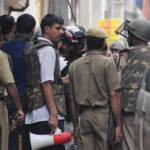
Due to similarity of functions, Central police organizations and paramilitary forces (collectively referred to as CPO) provide an ideal opportunity for optimum utilization of the training and experience of service personnel. Additionally, various defence civilian organizations (DCO) under the Ministry of Defence (MoD) can also absorb suitable ex-servicemen. The total average intake of all CPO and DCO is around 35,000 annually. Thus, almost all retiring SSC officers and soldiers can be conveniently absorbed.
The CPC recommended that recruitment of soldiers should continue as hitherto under the services. Depending on the requirement of the services and the vacancy position in CPO/DCO, the service period in the defence forces could vary between 7 and 17 years. Thereafter, depending on the availability of posts, choice and medical fitness, retiring personnel should be laterally shifted to analogous posts in different CPO/DCO with protection of salary and seniority. Such lateral shift would be optional – soldiers can opt to retire with their normal pension as at present.
According to the CPC, the following major benefits would accrue from the proposed scheme:
- CPO/DCO would save over Rs 100 crore per annum currently spent on recruitment and training of personnel as they would get trained manpower.
- Servicemen would come with rich experience in anti-terrorist and counterinsurgency duties.
- The pension bill of the government would get significantly curtailed as pension would be due to the retiring servicemen only after 30/33 years of service as against 17 years of service at present. Growing cumulatively, the annual savings on this account would be to the tune of Rs 7,800 crore after 13 years.
- SSC would become more attractive with assured second career option, thereby ensuring adequate intake of officers.
- It would also help keep the age profile of the defence forces young.
The CPC sought the views of the Ministry of Home Affairs (MHA) before finalizing its recommendations. The MHA opposed the scheme, citing frivolous reasons like the likely adverse effect on the age profile of CPO, problems regarding fixation of parity and career progression. The most ridiculous argument offered against the scheme was that soldiers are trained to kill whereas police personnel are trained to control. The CPC dismissed all these arguments as untenable. Soldiers are highly disciplined personnel and have acquitted themselves admirably in counterinsurgency operations and aided civil authority in maintenance of law and order. They have never been accused of excessive or indiscriminate use of force. The CPC considered the scheme “extremely viable, beneficial and with no real drawbacks existing in its effective implementation”. It recommended its implementation in entirety without any delay.
The government rejected the scheme without making public its reasons for doing so. Even the Committee of Secretaries did not bother to examine it.
Opposition to Induction of SSC Officers
Induction of SSC officers was bound to be opposed both by the political leadership and CPO. The political leadership has already politicized CPO to the extent that the officers do the bidding of their political masters without a whimper of protest. Politicians fear that SSC officers may not toe their line. Having served in an apolitical environment, they may resist political pressures.
On the other hand, the officer cadre in CPO resents induction of ex-service officers as, due to their better training and experience, they make police officers feel inferior and ill-equipped. This sense of inadequacy results in petty groupism and jealousies. Also, SSC officers are liked by the rank and file due to their better man-management skills and empathy for subordinates. And SSC officers pose a threat to police officers’ advancement in career because of better professional proficiency, physical fitness and operational acumen.
The MHA’s opposition was along expected lines. However, what came as a big shock was the total indifference displayed by the MoD as well. Its inability to force the MHA to accept induction into CPO is understandable. However, DCO are directly under MoD. It could have made a beginning and set an example by admitting ex-servicemen in DCO. But then, MoD has always been more interested in “keeping the armed forces in their place” rather than looking after their welfare. It is incongruous that the MoD wants other organizations (including in the private sector) to provide employment to ex-servicemen but refuses to accept them in organizations under its direct control.
In view of the new threats emerging, there is an emergent need to improve the quality of CPO. Induction of ex servicemen, both at officer and subordinate levels, with long experience of fighting terrorism and insurgency will prove to be of immense value to CPO. It will also bring in much-needed professionalism.
As is obvious, the scheme has been rejected to protect fiefdoms. As lateral induction is construed as a threat, the decisionmakers are not ready to consider it seriously. No reasons have been made public for its rejection. Selfishness has been the bane of Indian governance. Every proposal is evaluated on the basis of personal benefits accruing to the decisionmakers. National interests mean little. Subordination of personal interests to national interests requires rare vision and altruism. It is not a trait prevalent among India’s governing authorities. It is time political leaders and bureaucrats rise above a narrow partisan outlook to prove their concern for national security. The CPC proposal must be implemented without dilution and delay.
Side-stepping of Ex-servicemen
As regards side-stepping of ex-servicemen into CPO, resistance appears to be on the following grounds:
- CPO are considered personal fiefdoms of political leaders and bureaucrats of MHA. Any policy that appears to be diluting their absolute control is perceived as an unacceptable threat.
- Recruitment to CPO is a highly lucrative activity with political patronage playing an important role. Lateral induction would halt it totally.
- Military training makes ex-servicemen averse to carrying out chores which are routine in CPO. Additionally, military culture imbibed by soldiers inhibits their use for partisan purposes.
‘ISI and all other entities inimical to India have passed a resolution thanking Indian Pay Commission for achieving in one stroke what they have been unsuccessfully trying to achieve for decades – demoralization of the Indian armed forces’ – email joke
Over 40,000 young, trained and disciplined soldiers are released from the defence forces every year. The government has to bear a huge pension bill while this large pool of highly skilled manpower is lost to the country
The political leadership has already politicized CPO to the extent that the officers do the bidding of their political masters without a whimper of protest. Politicians fear that SSC officers may not toe their line