























My mother is 88 years old, perfectly alert and, having been born and brought up in Lahore, always reminisces about “the good old days”. Recently, after watching a TV news round-up on a particularly bad and depressing day, she made an extraordinary suggestion: “Our leaders have failed miserably. We should outsource governance to competent foreign or Indian entities on contractual basis. I am not suggesting foreign rule. We should simply outsource governance.” The proposition, even if made in jest, reflects the degree of disgust and disenchantment among the people of India. There is no doubt that the political leadership has let the nation down.
Politics has come to be identified with everything immoral and decadent. Sadly, political leaders cannot be expected to change as they believe in the end and not the means. The only way out is to curtail their role and thereby reduce their all-pervading bad influence on citizens’ lives. That can only be done by outsourcing certain well identified functions to expert agencies.
Outsourcing in its broadest sense refers to contracting out to external agencies certain services and tasks which were earlier performed with internal resources. It implies transfer of considerable management control and routine decision-making to the designated agency. It certainly does not mean abrogating overall command and authority. The providers of outsourced support are generally called “service providers”.
Many people tend to confuse outsourcing and privatization. Privatization entails transfer of property, facilities, services and responsibility from government to a private sector entity. Outsourcing does not involve any such transfer. The functioning of service providers is governed by the provisions of a contract that contains a defined and calibrated system of incentives and penalties.
India has a four-tier governance apparatus – Central government, State government, local self-governing body (commonly referred to as municipality), and village panchayat. Undoubtedly, governance at the Central and State levels cannot be outsourced due to the complexities of legislative and executive functions. Panchayats are meant exclusively for the general welfare of their respective villages. They have a limited charter and are based on the principles of local empowerment. Therefore their functioning can also not be outsourced.
We are left with municipalities. Their sole mandate is to provide essential civic and infrastructural services to their respective towns. Municipal functions lend themselves ideally for outsourcing.
The Jamshedpur model
We have a highly successful and functional model of outsourcing of municipal functions in Jamshedpur, where the civic services are provided by a company and not a democratically elected municipal body.
Since the establishment of Jamshedpur town in 1907, all municipal services were handled by the Town Services Division of Tata Steel. In 2004, Jamshedpur Utilities and Services Company (Jusco) was carved out of the Town Services Division and has since provided a complete range of services to the town. In addition to normal municipal services, it oversees planning, engineering and construction-related issues.
The success of the Jusco model can be gauged from the fact that when the Jharkhand government sought public opinion, the people overwhelmingly voted against having a municipal corporation. Apparently, locals are highly satisfied with the performance of Jusco and abhor the idea of local politicians calling the shots. Jamshedpur is one of the cleanest and greenest cities in India, with efficient solid waste management and continuous supply of power and water.
The Jusco model can be easily replicated in other towns. Once demand picks up, numerous other entrepreneurs would enter the field as comprehensive urban service providers, generating competition and improving modalities. As experience is gained, the complete spectrum of community services like water management (including water supply and rainwater harvesting), power distribution, municipal solid waste management, infrastructure, public health, horticulture services and town planning can be easily outsourced to carefully selected service providers with credible track records.
Advantages of outsourcing municipal functions
Reduction in corruption will be the single most important advantage. It is a well documented fact that only a fraction of development funds reach the public and a substantial part is siphoned off at the local municipal level. During outsourcing, funds would be handled by the district administration and disbursed to service providers as per their performance under the contractual provisions. Exclusion of corporators would save huge funds which otherwise get misappropriated by them. Further, the sizeable expenditure currently incurred on their allowances and perks would be saved.
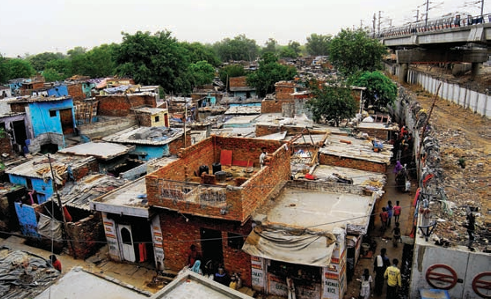
Encroachment on public land to create slums for captive vote-bank purposes would become very difficult as the clout of local politicians would get considerably reduced. Consequently, the existing nexus between political goons, the patrons and land mafia would lose its stranglehold on local community affairs.
Is outsourcing governance the panacea for all ills that afflict India’s body politic and is it a feasible proposal? It is a moot dilemma. Sceptics have reason to be wary. However, outsourcing merits a fair chance to prove itself on account of two persuasive facts.
First, in the World Bank report on the Worldwide Governance Indicators of June 2009, out of 212 countries studied, 50 to 75 per cent have better governance grading than India. It implies that we are already so badly off that chances of further decline are remote. Thus, it is a safe bet to experiment with outsourcing.
Second, a wholly functional and decidedly successful Jusco model provides adequate testimony to the viability of outsourcing of municipal functions. However, as no two towns are similar, it is essential to evolve town-specific outsourcing models to cater for local conditions. Further, as a matter of caution, it will be prudent to proceed in a phased and graduated manner, expanding the scope of outsourced services as experience is gained.
According to my mother, there are only two worthwhile professions in India today. Gone are the days of doctors and engineers. One, become a politician (even at the grassroot level) and mint enough money to cater for the next three generations as well. Blissfully, no qualifications are required. Two, become a religious preacher with half-closed eyes and have hordes of mindless followers. Those lacking the ability to speak masterfully in public can opt to be a mauni baba (mute godman) with equally profitable effect. That is modern India for you.