























It may just help the Bajrang Dal spread its tentacles
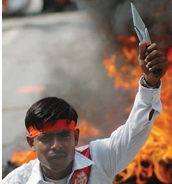
Is banning an organization the best solution or is it just another political gimmick indulged in by governments aimed at satisfying certain sections of the populace? With the demand for banning the Bajrang Dal and VHP preoccupying the media and the minds of certain sections of the political class and people, this has become a key question.
The issue of the Bajrang Dal ban has become all the more controversial because of internal differences in the UPA government. National Security Adviser MK Narayanan has queered the pitch by advising against a ban. Some Cabinet Ministers are also not too keen. But there is equally strong sentiment in favour of it among Congress ministers, and especially among government allies like Lalu Prasad Yadav and Ram Vilas Paswan.
If Cabinet sources are to be believed, the ban is not yet in place only because of the need to create a watertight case, so that the move does not blow up in the government’s face during the forthcoming election.
The government has apparently veered round to the idea of imposing the ban because of its supporters’ argument that it would send the right message to minorities. It is also felt that the liberal Hindu or even a section of pro-BJP Hindus too would welcome the ban, as the Bajrangis are seen by them as the “embarrassment” former Prime Minister Atal Behari Vajpayee once dubbed them.
As in all previous cases of bans on such organizations, the primary motivation of the government is political and aimed at bolstering its electoral prospects. When SIMI was banned during the NDA regime, the motivation was no different, though it was meant to appeal to a different set of vote banks.
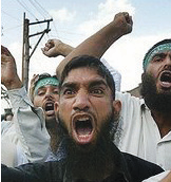
There is no doubt that these organizations, be it SIMI or the Bajrang Dal, have flagrantly violated all Constitutional provisions and indulged in dangerous activities, sowing seeds of discord and promoting communal strife. Yet, in the past, bans have not stopped such organizations from pursuing their activities. The RSS was banned three times – after Mahatma Gandhi’s assassination, during the Emergency, and after the Babri Masjid demolition. But it has only grown in size and spread every time it has been banned. Despite the ban on SIMI, we are regularly told by the police of various states as well as the Intelligence Bureau that it is very much active. Many recent terrorist strikes have been attributed to its members. It is believed that they have metamorphosed and now operate from outfits with different nomenclatures.
The Bajrang Dal, which is part of the Sangh Parivar and a youth wing of the VHP, claims it has a membership of 13 lakh out of which 8.5 lakh are active workers operating 2,500 akhadas (its equivalent of the RSS shakhas) across the country. But ask them if they have a record of membership. It has none. Its only website seems to have disappeared from cyber space. What can be achieved by imposing a ban on such an organization, which specializes in obfuscation and outright denial, except satisfying political expediency?
The recent fiasco concerning the ban on SIMI, when a Delhi High Court tribunal struck it down for want of adequate evidence to justify it, should serve as a warning signal to the government. Though the case is still pending in the apex court, doubts had been raised against its sustainability when the ban was imposed.
Though it is commonly known that the Bajrang Dal has been indulging in heinous anti-minority violence, the hydra-headed and obfuscating nature of the organization might just make it difficult to pin allegations. On the other hand, a ban might help it to gather momentum in a new avatar.
So does this mean that there is no deliverance from such dangerous outfits out to destroy the unity and integrity of this country? Certainly not. The primary reasons they have managed to survive and even thrive are political patronage and a consequent lack of political will in dealing with their criminal and communal activities with an iron hand; and, second, the support they receive from the misguided public.
It is therefore imperative not only for the government but also for political parties to deal with these primary reasons, instead of indulging in what essentially is a political gimmick. A ban is essentially a reactive measure, which all governments indulge in. A better governance tool would be proactive measures to tackle the menace of such organizations.