





















A retired IAS officer reminisces about Hercules, Bofors and educating MPs
Throughout my life, I have been inspired by Mahatma Gandhi and his autobiography, The Story of My Experiments with Truth. A portrait of Mahatma Gandhi has always hung in my room.
I was born in a semi-agricultural family of Kilpattu village, old North Arcot district in Tamil Nadu and began academic life in a small school run by a single teacher. After post-graduation in economics from Madras University in 1958, I taught economics in Madras Christian College in 1959-60 and was selected for the Indian Police Service. In 1962, I cleared the IAS examination.
During the interview, where I was the last to be interviewed, Dr AN Jha, Director of the academy in Mussoorie, asked whether I had read Greek mythology and knew the story of Hercules, the last person to meet Cyclops, the giant who gobbled everyone. He asked whether I was aware that Cyclops told Hercules that he would gobble him up too! I recalled having seen a film in which Hercules killed Cyclops. So, before leaving the interview, I told them that, as the last person and as Hercules, I would perhaps survive after killing Cyclops. Apparently, this impressed them.
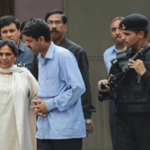
On another occasion, Dr Jha was attending a meeting of all Chief Ministers and state Ministers of Agriculture in his capacity as Lt-Governor of Delhi. After the inaugural session, Gandhi left and so did Dr Jha. I was there and followed Dr Jha out, talking to him. For some reason, Gandhi came back and enquired of Jha when passing him as to why he was leaving. He told her it was because he had been listening to the same things that were being said at the meeting for the past 20 years!
After my training, I started off as a Collector straightaway – which was perhaps unique in the country. In 1967, I joined as Collector of Pondicherry when MOH Farook was the Chief Minister. Once, when I entered his chamber, I saw a man sitting outside his room whom I did not recognize. Farook told me that he was a former Minister, Nagarajan, who was seeking a peon’s job because he had nothing to live on. But Farook felt it was not proper to give a peon’s post to an ex-Minister and gave him the post of a librarian. (What a contrast to the present-day MLAs or MPs, let alone Ministers!)
In 1970 I obtained an MPhil (License Special) in economics of integration from the University of Brussels. On return, I joined the Leather Export Promotion Council in Madras as Secretary under the Ministry of Commerce. TSR Subramanian from the Uttar Pradesh cadre, who later became Cabinet Secretary, was my predecessor. During my stint, a new leather policy was evolved that benefited a large number of people. In 2004, I was surprised to see Subramanian claiming the entire credit for the leather policy in his autobiography. When I was asked to introduce the book in the Madras Book Club in his presence, I told him on his face that he had been back in UP when the policy was initiated by me and AC George and I faced the wrath of the semi-processed lobby. He had nothing to say. He had not imagined that I would be there to speak on the occasion. As Kennedy said, success has many claimants but failure is an orphan.
I also obtained a PhD from the Delhi School of Economics in 1977. My thesis was titled ‘Commercial Policy of the EEC and the Association Agreements’. I was posted Counsellor in the Embassy of India and Mission to the EEC, Brussels, and accredited to the EEC, Belgium and Luxembourg for nearly three years (1979-81).
On 1.1.1982, I joined the Ministry of Defence. Many people may not know that the spadework for the Bofors negotiations was done by me. In fact, I held the first meeting of the negotiating committee after getting government approval under the chairmanship of the then Defence Secretary, SM Ghosh.
It was recorded in the JPC that Lt-Gen Sundarji gave a recommendation in favour of the Bofors gun on the basis of some “shoot and scoot” theory. Perhaps the politicians and the Secretariat played a trick on him or he did it himself with an eye on a favour from Rajiv Gandhi. There was a rumour that Lt-Gen H Kaul might supersede him with the help of the Kashmiri lobby although this lobby became less powerful during Rajiv Gandhi’s time. As a professional, he should have stated that both the French and Bofors guns would be equally acceptable to the Army depending upon the commercial advantage instead of giving an opinion in favour of one but placing the second one above as inter se seniority and inviting criticism upon himself.
Rajiv Gandhi became unnecessarily nervous when the controversy broke out. He was also not guided properly even by the civil service luminaries in his office like Gopi Arora. It was a fact that Swedish Prime Minister Olof Palme was lobbying hard for the gun. He even flew down to Copenhagen to meet Gandhi when she was on her way to some international conference in the UK or US and spoke to her about the gun. This was indicated in a letter from C Garekhan, then in the PMO and later our Permanent Representative to the UN.
‘We could have explained that we bought the Mirage from France, the Jaguar from the UK, the HDW from Germany and this gun from Sweden to please all of Europe’
We could have explained that we bought the Mirage from France, the Jaguar from the UK, the HDW from Germany and this gun from Sweden to please all of Europe. The other gun, the trilaterally produced 155-mm one, was just not good enough. This crucial explanation was missing from Rajiv Gandhi’s government. He was not guided properly.
In 1960, when I joined, and for long after that, corruption, particularly in the IAS, was unheard-of. But things have changed totally today. Corruption starts at the very top coupled with casteism, nepotism and favouritism. The political-bureaucrat-businessman nexus has become very close. While South Korea has imprisoned and indicted two former presidents for having built up private slush funds, in this country the tolerance for corruption is limitless and unashamed. Indeed, the suspects and the guilty are often coddled, to say nothing of being shielded. For instance, when a diligent Customs officer levied a penalty on the Minister for Textiles, Kamal Nath, for trying to bring in luxury goods without paying duty, it was the official who was summarily transferred. Nothing happened to the errant Minister. And so it goes on down the line.
My senior colleague and good friend from the Gujarat cadre, N Vittal, as CVC made a lot of noise about corruption but did little to eradicate or even lessen it. During his tenure, Transparency International’s corruption index for India became worse.
After a successful stint in the Ministry of Defence, I took over as Chairman of the Gujarat Pollution Control Board. When the Chief Minister wanted to move me to sales tax for obvious reasons, Anil Agarwal brought this to the notice of the then Prime Minister, Rajiv Gandhi, when he was asked to educate the MPs on pollution control and environmental problems. In fact, the idea of educating MPs was borrowed from me because, for the first time in the country, I had held an educative seminar for MLAs in Gujarat. I took over as Commissioner of Sales Tax on January 1, 1986. I was Secretary to the Government of India during 1993-96. I was the first to suggest introduction of VAT on the EEC pattern in 1986.
Looking back, I was in many departments at the wrong time. I had to popularize the institution of Collector in Pondicherry. I was in pollution control, environment, consumer affairs and tourism during the formative years of struggle. When these departments became popular, others jumped in and enjoyed the fruits. This also happened in Brussels.
‘The public does not know about the civil service politicians (the second rung of politicians!) who are more dangerous than the professional politicians and who, of late, have sacrificed merit for other considerations’
The public is not conversant with the happenings, methods and machinations in government. They blame the politicians all the time which is all very well. But they do not know about the civil service politicians (the second rung of politicians!) who are more dangerous than the professional politicians and who, of late, have sacrificed merit for other considerations. Only brute political force or backing works now, not an honest and straightforward appeal.
But I have come a long way from Kilpattu so I have no regrets. I feel that I have served the public reasonably well. I will continue to do so in some form or the other. There is no retirement for me.