




















The immediacy of TV has woken us up to the reality that we are living in a soft state
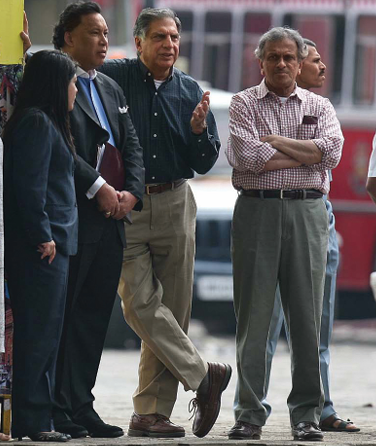
December 16. Not many among the present 60-crore young Indians may know that on this day the nation showed to the world its tough countenance for the first time in its independent history. The Indian Army accepted the surrender of a lakh of men from the Pakistani Army in Dhaka on this day in 1971.The impression this created within and outside India was one of military and political resoluteness. The outward message was: ‘don’t mess around with me’. It was identified with the government and governance. People proudly rallied around this firm and purposive leadership. But this did not change the long-term image of the nation.
The image of India since 1991, on the other hand, with sustained surge in economic growth, was more wholesome and enduring, infecting vast sections of the population with a ‘we can do it’ spirit. The government advertising hoarding mounted soon after the abolition of the Industrial Regulation Act of 1956 that had constrained entrepreneurship in every sense aptly showed an elephant unshackled. Its message resonated within and outside, marking the emergence of a new India brand. The government had less to do with it.
Initially the new image was mostly created by the rising information technology industry, exhibiting both confidence and innovation. Suddenly global leadership in this field tilted in favour of India. Infosys, TCS, Wipro set new benchmarks in corporate governance and became islands of capitalism with a human face. A new breed of young Indians was getting very well rewarded for their educational attainments and this made education and merit highly valued commodities. IITs, IIMs and their products became icons of excellence and messengers of India’s growing affluent society. India discovered that its population thus far looked upon as a burden was its untapped resource. Young Indian talent, educated and skilled, was another brand in demand.
The old economy industries grew out of their protected environment and took to innovation in a big way. Mahindra’s Scorpio SUV, the indigenously developed Tata Indica and the announcement of the $2500 Nano, the scorching market for low-cost mobile phones wowed the world. Indian products and services and corporates with seemingly insatiable appetites for buying firms in the international market announced the arrival of Indian enterprise. Indian and global media serenaded the new India brand. They also showcased India’s increasing soft power and its managerial talent. That a chaotic diverse democracy with marked ill-governance could accelerate growth, causing democratization of wealth and reducing poverty, added further lustre to the multi-faceted India Brand.
It was this Indian Brand that was under attack in Mumbai. The bonus the attackers got was that they succeeded in catching the internal security system and political governance in total disarray and discredited it in the process
It was this Indian Brand that was under attack in Mumbai. The bonus the attackers got was that they succeeded in catching the internal security system and political governance in total disarray and discredited it in the process. Overnight, not only the India Brand revolving around business and industry was shown to be not just vulnerable but somewhat fragile. Even the sweeping financial meltdown and global recession had not been able to do this. The India Brand and its image is a composite of political leadership and dispersed, flourishing entrepreneurial prowess. The 1971 image of powerful political leadership was shortlived because this was unaccompanied by economic clout. Similarly, the India Inc image turned illusory because it has to live with a soft state.
The instant flow of television images across the world from the night of 26/11 have woken us up to the reality that we are living in a soft state. The political leadership, instead of thanking and introspecting, has tended to blame the inconvenient messenger of this bad news. While it is true that the media, particularly the TV, magnifies the image in focus, it cannot be accused of changing the law of physics that says image is a reflection of an object or reality. A soft state is defined as one that prefers expediency and continuously and routinely compromises its position in dealing with internal and external affairs.
Until recently the people’s perception of weak governments was not reinforced by images. Now TV and Internet bring them closer home and multiply the exchange of such perception. Such images acquire more power when it is repeatedly seen that both the states and the Centre blunder in protecting one’s limb and life.What were the TV images of a soft state we saw? In the first few minutes of the Mumbai siege, a very senior police officer getting killed because he entered the battle without battle gear, weapons, intelligence inputs and a plan; ill-clad and outgunned Railway Protection Force bravely taking on the terrorists at the CST; the inordinate delay in response from the Centre; the state government and its police, to whom the people entrust their daily security, displaying their ineptness and failing to perform the assigned sole function of crowd control when the commando operation was taking place; the blame game spectacle regarding the intelligence failure; the political leaders’ search for scapegoats and making political capital.
The current media campaign against the political class is a reflection of this gut feeling. While this campaign is legitimate, if it is carried too far and the political class remains insensitive, this could damage the core of the India Brand
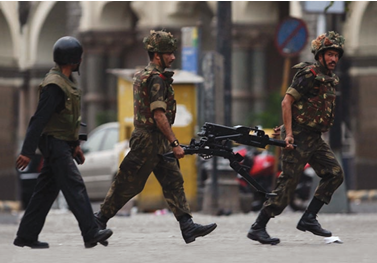
This list is lengthening in the post-mortem period. The official diagnosis and solutions now presented have been heard long before. Even When and If the new anti-terror arrangements are put in place, will they be allowed to work? The past experience of the people reinforced the feeling that once the heat after the Mumbai tragedy dissipates, the system will lapse into its habitual lethargy. The current media campaign against the political class is a reflection of this gut feeling.
While this campaign is legitimate and required, if it is carried too far and the political class remains as insensitive as before, this could damage the core of the India Brand that is its federal democratic, political party-based polity.
Terrorism came to India through the Left wing and separatist movements and peaked during the Punjab problem in the 1980s and 1990s. The polity responded with one voice. Now, when faced with intensified foreign exported terrorism, the political system is proving wobbly and uncertain. This could shake the citizen’s faith in the political arrangement. And the perpetrators of terrorist acts want nothing else. This is a warning to not just the political cliques but to the intelligentsia and the silent majority. The images of the Taj and Oberoi siege and the courage of ill-equipped RPF policemen taking on the terrorists at the CST need to be screened often to remind all of us of the consequences of our individual and collective apathy, that is the hallmark of a soft state.