





















The Dawood Ibrahim-led underworld’s role in the Mumbai attack
In the aftermath of the Mumbai terrorist attack, two crucial issues have not been given due consideration by the national strategists and South Block mandarins. They relate to, first, State participation in non-State actors executing a daredevil attack on the financial capital of India with clinical precision and, second, the role of the Pakistan-India underworld led by Dawood Ibrahim. In this analysis, the focus is on the latter.
Incidents around the world during the last two decades have established that the clout of organized crime has grown in direct proportion to the decline of the established order. Look at the decline of Communism and compare this with the geometric rise of the organized underworld in the erstwhile Eastern Bloc. Misha Glenny, in his path-breaking study on the mafia, said: “The deepening links in a globalizing world magnify the impact of immense disruptions to the international order, like the collapse of the Soviet Union. And, for the few years after the event, nobody had the slightest notion what the sudden injection of huge sums of mineral wealth and criminal profits (emphasis added) into the legitimate and shadow economics implied.”
From the backwaters of the US to the streets of Mumbai, to the dustbowl of the coal world to the dense forests (both for timber and wild animals) of the Balkans, the growth of organized crime has been disturbingly dangerous for the survival of civil society. But civil society itself is largely responsible for its growth. Unfortunately, when one traces the history of the “astonishing growth” in organized crime and “the shadow economy” over the last several decades, it is seen that it has been sustained by men and women of great intelligence, law enforcement agencies and political parties by manipulating political processes across the world.
The trade union contribution
A very interesting phenomenon has been the hand-in-glove cooperation between trade unionists (through their office bearers on the line of Jimmy Hoffa, who had “worked hand-in-hand with the mafia), and criminals in the guise of “cartel”, “corporation”, “family” or “triad”. The trade union’s tactics of armtwisting authorities provided a buffer to criminal groups from the criminal justice system.
The example of mafia groups in the coal belt of India is particularly relevant. In the mid-1960s, Nehruvian socialism was sought to be practised in the coal mines. Trade unionists put on the robes of saviors of Soon enough, the undisputed local trade union chief, with his fondness for elite Scotch, acquired the face of a mobster. The business was so good that he was eventually gunned down by some of his own party members (read Lathaits, gunman, bodyguard or errand boy). One such person became synonymous with the coal mafia. He cornered all tenders, including right of transportation of slurry which enabled him to steal coal. Nobody in the coal management companies dared cross swords with him. He enjoyed political support by being an MLA and a former Prime Minister. However, his monopoly did not last long and was challenged, leading to gang wars on the streets of Dhanbad and other coal producing areas of present Jharkhand and also in the bylanes of Calcutta.
According to a former Chief of Vigilance of Coal India, the estimated annual income of these mobsters is in the vicinity of Rs 5000 crore. In his judgment, WP No. 5018 (M/S) of 2005, Justice Devi Prasad Singh of Allahabad High Court referred to the Patnaik Committee Report which said that “…mafias or persons involved in organised crime move in motorcades surrounded by private and police security and sometimes involving sensational gang warfare. They wield sufficient clout in corridors of power and ordinarily police shy (sic) to take action against them. They have got direct or indirect link with political figures, administrators, judicial officers and so on”.
India’s crime map
The coal mafia is not the only mafia operating in India. Justice Singh further observed that “[T]he effect of caste, creed and religion as well as corruption and the multi-dimensional facet of Indian society provide a platform for increasing ‘Mafia’ activities in the absence of any preventive law”. The water sharks, in various parts of the country, impose water tax for plying boats on rivers with the alibi that part of the rivers fall in their state. The right to mine and sell is similarly assigned to themselves. Finance and land, religious and recreational mafia also operate with nonchalance.
India has emerged as a major transit route for international drug peddling and, to an alarming extent, of human trafficking – particularly women and children. Being the largest legitimate producer of opium, it is estimated that up to 20 per cent of production is underreported and channelized into the illegal trade by all who handle opium as a raw material. Illegally diverted stock, as also illegally produced opium, has a ready market. So does heroin, a product that “has the highest level of dependency and physical harm”. Heroin is produced, sold and smuggled for, among others, socialites and celebrities across the world through the Golden Crescent (Pakistan/Afghanistan) or the Golden Triangle (Laos, Vietnam, Myanmar and Thailand). The Golden Crescent produces nearly 92 per cent of the world production of heroin. Since the marketing is done in sync with the drug lords of Colombia, and the Taliban-controlled area of Afghanistan and Pakistan, it is difficult to quantify the market in Europe and North America.
‘Non-State actors’ and organized crime
The “non-State actors”, belonging to terrorist groups of self-proclaimed religious ideology, and organized crime are intertwined as far as funds are concerned. If the base figure of an annual $1 trillion turnover of mobsters is presumed correct, recurring expenditure over terrorist operations cannot be in excess of a mere $10-15 billion annually. This complicated relationship blossoms in a failed state like Pakistan. The Pakistan Army, the so-called democratic government and feudal society are looking for a new power centre with the help of mobsters and underground operatives. There have been no land reforms in Pakistan and the feudal structure being in place, it is no wonder that the armed forces are remotely controlled by the Waderas and Chowdharys with the help of the Army. None in Pakistan wants the status quo to be disturbed. Nasim Zehra, a fellow of Harvard University’s Asia Centre, observes that armed Mujahideen groups were repeatedly encouraged to threaten civilian governments to manipulate public space.
Dawood Ibrahim is too precious a tool to be handed over to India…he deals not only in the death of innocent people but also in all illegal trade and activity from Pakistan to strengthen the vested interests and groups
Dawood Ibrahim, in such a scenario, is too precious a tool to be handed over to India. In cahoots with the Taliban, he deals not only in the death of innocent people but also in all illegal trade and activity from Pakistan to strengthen the vested interests and groups. With his reported association with the CIA, the Pakistanis are not likely to turn over this fugitive from Indian law to India. The Russians have publicly indicated his involvement in providing logistics for the Mumbai attack plan. The Russians ought to know: in transnational organized crime the Russian mafia is viciously self-protecting but networking with Ibrahim cannot be ruled out. The Russian mafia is reportedly present in Goa and buying prime property there.
The globalization of crime is haunting civil society, ever hungry for laptops, computers, mobiles, ipods et al. Congo is two-thirds India’s size and has one-twentieth India’s population but it has been in the thick of internecine warfare for control of natural resources. Among the production of copper, diamonds, timber, bushmeat and so on, there is what Glenny calls “a little known compound called coltan”. The conflict zone of Congo contributes 80 per cent of global production of coltan. As Glenny says, “Coltan’s desirability resides in its properties as an efficient conductor that can resist high temperatures and is an essential component in laptops, mobile phones and Play Stations.” The highly developed economy states know where the coltan comes from but have acquiesced in its production and distribution. Let us not forget that Patrice Lumumba came from the same country and was done away with for such precious resources at the behest of imperial powers controlled by the mafias.
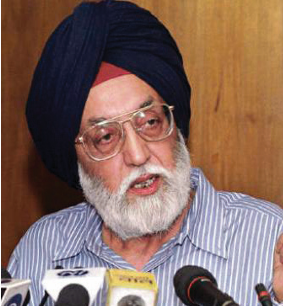
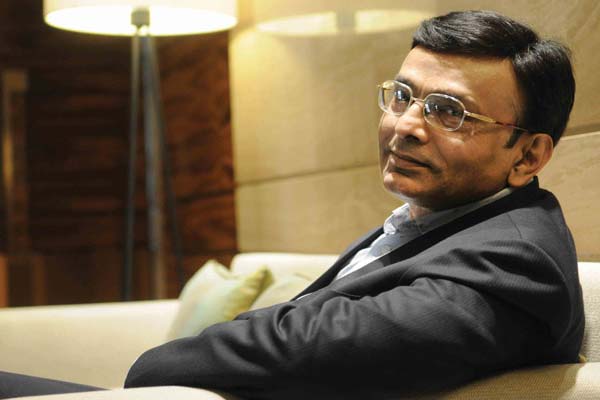
Dr MP Narayanan, currently president of CSDMS, is a former Chairman of Coal India. Durgadas Gupta was Member-Secretary of the Malimath Committee on Reforms of Criminal Justice System
Definition of organized crime
The definition of organized crime has broadened over the years as it diversified into all spheres of economic life and its tentacles started penetrating society in totality. The definitions include any criminal activity to syndicated crime, to “self-perpetuating, structured and disciplined associations of individuals and groups, combined together for the purpose of training monetary or commercial games or profits, wholly or in part, by illegal means, while protecting their activities through a pattern of graft and corruption”. The Maharashtra Control of Organised Crime Act, 1999 definition encompasses “unlawful activity” by “use of violence or threat of violence” with “the objective of gaining pecuniary benefits” for “gaining undue economic or other advantage”. The Malimath Committee of Reforms of Criminal Justice System has also comprehensively defined organized crime. The definitions provide an insight into the aims and objectives of organized criminal groups with undue, illegal and disproportionate gains which ultimately threaten civil society.
History sheet
The thugee of the 19th Century on the Grand Trunk Road in India is the first documented instance of organized crime in history. The thugees lived up to the Sanskrit expression “sthaga” by remaining covered or concealed.
The smalltime gangsters and pimps around the red light areas in then Bombay got a windfall when Prohibition was introduced. Illicit liquor operators together with these red light gangsters, under the tutelage of Karim Lala, joined hands with the port smugglers of imported goods, particularly gold and diamond. The era of crime syndicates dawned when slum lords also pooled in resources by illegal possession of public and/or private land, constructing structures with impunity, selling or leasing them at exorbitant prices, rents with compensation and other charges. These were also convenient and reliable hideouts for fugitives from law. The slums were a safe haven for storing smuggled goods, distilling units for illicit liquor and a centre for contraband goods and activities.
The guiding stars in all these activities were the political parties and law enforcement agencies. They spread far and wide from the mining areas in Bihar and West Bengal to Porbandar port in Gujarat, the Golden Triangle routes in the Northeast and the Indo-Pakistan border in Punjab. The nexus between crime groups, at micro level as also at macro level, permeated so far that the government was compelled to set up the NN Vohra Committee “to take stock of all available information about the activities of crime syndicates and stock mafia organizations which have developed links with and were being protected by government functionaries and political parties”.

Durgadas Gupta