


























Our handling of security and foreign policy will change only if our perception of them does
Though the people have voted a Congress-led coalition to power once again, the Manmohan Singh government did not quite cover itself with glory in its handling of national security issues in its first term. The performance of the previous Atal Bihari Vajpayee government was equally inept. However, both Prime Ministers responded to security issues when forced to do so. Manmohan Singh ensured the safe passage of the Indo-US Nuclear Agreement despite the Left threat to pull the rug from under the feet of his government. Vajpayee’s response to the dangerous Pakistani military adventure in Kargil was equally strong.
The reason for India’s “traditional” knee-jerk response is simple – lack of systems thinking in handling of national security issues, abetted by the absence of a national vision. The political and policy dispensations have not been able to evolve a mutually reinforcing approach to security and foreign policy issues. India has shown a singular lack of will to face issues squarely and dispassionately to ensure a stable security environment in its neighbourhood. As a result, it has been losing strategic ground even in South Asia, despite its unique geo-strategic advantages.
The national security agenda is perceived as limited to ensuring territorial integrity and safeguarding the nation from external and internal threat. Political parties appear to forget that they have a responsibility to foster a feeling of security and trust in the government
The national security agenda is generally perceived as limited to ensuring territorial integrity and safeguarding the nation from external and internal threat. Political parties appear to forget that they have a responsibility to foster a feeling of security and trust in the government among the citizens. In other words, the national security has to be people-oriented and not merely restricted to military or political diplomacy. This was amply demonstrated in the general feeling of insecurity and lack of trust in the government after the Mumbai terror attacks. Some informed citizens cynically expressed doubt that the Indian style of democracy would ever respond to calls of national security!
Now that the Congress-led alliance has got a strong mandate from the people, it should redraw the national security agenda. Ideally, the agenda should address issues relating to policy, structural and operational aspects.
The first task would be to restore public confidence in the government. That can come about only when the government is clear about what it should do. As there are external determinants of national security dynamics, a long-term vision is required to be drawn up. The other policy components would be the accountability of advisory, policy-making and executive authorities, and working in a time-bound manner with clear benchmarks. Only then would the operational structure respond effectively to real-time needs.
There is a need to draw up a fresh threat assessment as the global strategic environment is set to undergo some changes in the near term. And these are likely to affect the power equation in South Asia
There is a need to draw up a fresh threat assessment as the global strategic environment is set to undergo some changes in the near term. And these are likely to affect the power equation in South Asia, particularly in respect of Pakistan, China, other neighbours and the Indian Ocean. The environment is going to be increasingly complex, involving economic, fiscal, technological, diplomatic, and political issues. Each has the potential to affect internal security threats as well. So, policy-making on national security will have to be integrated, inclusive and proactive.

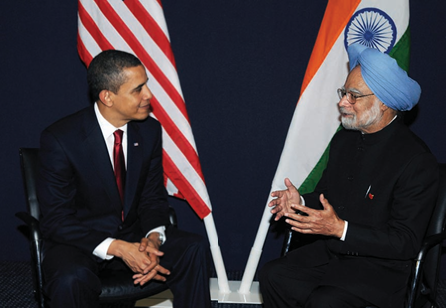
US President Barack Obama, in keeping with his electoral promise, has introduced a few changes in the US approach to the war on terror in Afghanistan and the US involvement in Iraq. A more nuanced approach is likely to come into play in the US handling of Iran, North Korea, and even Myanmar – countries dubbed earlier as the axis of evil.
The much heralded US war on terror in Afghanistan is in disarray with increasing spread of Taliban control over Pakistani territory contiguous to the Afghan border. In fact, the democratically elected government of Pakistan is locked in a battle of survival to stop the Taliban forces threatening to take over the country. President Obama’s prescription for Afghanistan has identified Pakistan as a key player in the war against the Taliban. This has resulted in Pakistan gaining a position of primacy following the extension of the Afghan operational theatre to include Pakistani territory also.
The US is set to expand its footprint inside Pakistan with the extension of financial and military assistance to strengthen the Pakistani armed forces to fight the Taliban. The Pentagon has asked the US Congress to allocate $400 million this year as the first instalment for a new “Pakistan Counterinsurgency Capability Fund” to meet specific Pakistani military training and equipment needs as part of a five-year programme. In the past, the Pakistani Army had always used such US largesse to build its conventional military capability against India, because it views India as its primary threat. Thus, whatever the US intention, the Pakistani armed forces are likely to emerge stronger in coming years; and that would change the dynamics of India’s threat perception relating to Pakistan.
The increasing risk of Taliban forces gaining access to Pakistan’s nuclear weapons has added yet another dangerous dimension to the security scene in Pakistan. The repeated assurances by the Pakistani government discounting such a possibility have found few takers as many suspect the limbs of the government, including the armed forces and intelligence, to be embedded with pro-Taliban elements. It is imperative that Indian policy-makers handle this issue with circumspection as the US could use it to get India militarily involved in the strategic mess against the Taliban in the Afghan-Pakistan region.
On the operational front, our biggest weakness is in timely procurement of defence needs. Unless we invest in strategic military assets well in time, we would lose ground in our own neighbourhood. And stodgy defence procurement has been the biggest road block faced by the security forces in building strategic capability. There is an urgent need to unclog the channels of procurement that are incapacitating our strategic capability. Otherwise, we will be inviting increasing Chinese presence in our neighbourhood. China is rapidly building its naval and missile capabilities. Coupled with its increasing economic clout, the Indian Ocean and its peripheral countries are likely to become the scene of China’s heightened power assertion.
By rejecting politicians who traded their caste, communal and criminal proclivities instead of meeting the needs of the people, voters have shown that they are not going to be swayed by rhetoric and politicking. They want results on the ground. So it would be politically prudent for the new government in New Delhi to seriously address long-pending national security issues. National interest should be the sole criterion in handling India’s security and foreign policy dispensations. And implementing a new time-bound security agenda integrated with foreign policy objectives would be the first step in making it a reality.
(Col R Hariharan, a retired MI officer, is associated with the Chennai Centre for China Studies)
‘Amreekan-Chini bhai bhai’ – and what it means for India
The compulsions of the US economic meltdown have adversely impacted the largely export-oriented manufacturing economy of China. This has set both these countries on a path of convergence of economic interests. The close win-win economic relations being built could colour, if not distort, the traditional American stand on some of the contentious issues between the two countries. Thus we can expect their fallout in India’s neighbourhood, offering better opportunities for growth of Chinese influence in this region.
As a result, some China-related issues could come increasingly under the Indian security scanner in the next few years. These include: increase in the Chinese profile in Nepal under the Maoist regime, increasing global acceptance of Myanmar as a domain of China’s strategic interest sidelining India’s security interests, and the increasing strategic presence of China in Sri Lanka and the Indian Ocean. Under adverse conditions, the future of Tibetan refugees in India and their struggle for autonomy could also become a contentious issue between India and China.
Nuclear alarm bells
The previous US President, George W. Bush, had laid the foundation for building a strategic alliance with India. Dr Manmohan Singh’s government had claimed the signing of the Indo-US Civil Nuclear Agreement as an important achievement of this new-found relationship. However, as the new dispensation in Washington is a strong votary of the NPT regime, the nuclear agreement runs the risk of being sidelined. The statement of US Assistant Secretary of State Rose Gottemoeller at the Non-Proliferation Treaty (NPT) review conference in New York recently, affirming “universal adherence of the NPT itself, including by India, Israel, Pakistan and North Korea, remains a fundamental objective of the United States”, has serious connotations for India.
At the same time, there are disturbing reports from Pakistan about the rapid progress in building two large plutonium production reactors that could lead to qualitative and quantitative increase in Pakistan’s nuclear arsenal. The Americans have apparently chosen to ignore this development in public, probably due to political, diplomatic and military pressures. India needs to be on watch to handle such realpolitik situations when the non-proliferation card comes into play.