
























The Lokpal Bill’s repeated failure to become law is one of many instances of the clout of corrupt public servants
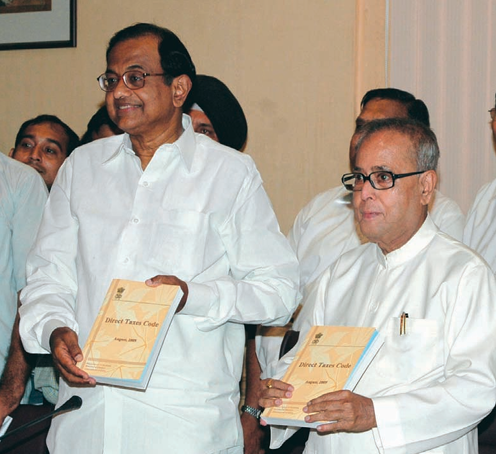
In recent weeks, big guns have been booming against “corruption in high places”, creating an impression that at long last the debilitating cancer afflicting India’s governance and society is meeting its nemesis and the aam aadmi can look forward to good and honest governance in the near future.
The Prime Minister himself led the charge while addressing a conference attended by CBI and state anti-corruption officials: “High-level corruption should be pursued aggressively. There is a pervasive feeling that while petty cases get tackled quickly, the big fish escape punishment. This has to change.” Newspaper headlines promptly screamed: “PM on corruption: ‘Big fish’ must not escape punishment”.
But it appears the Prime Minister was more concerned about image makeover for attracting foreign investment than genuine effort towards good governance for the common man. This was evident from what he said next: “Pervasive corruption in our country tarnishes our image. It also discourages investors, who expect fair treatment and transparent dealings.”
Then came the Chief Justice of India, firing all cylinders. He sought confiscation of assets of persons convicted of offences under the Prevention of Corruption Act. Speaking at the national seminar on “Fighting Crimes Related to Corruption,” organized by the CBI and the National Institute of Criminology and Forensic Science, he said: “The rationale behind the same is that if a public official amasses wealth at the cost of the public, then the state is justified in seizing such assets.”
The irony of it is that the higher judiciary, of which the CJI is the head, is itself enmeshed in endless controversies over corruption and wealth amassed by judges, its declaration under the Right to Information Act and elevation of people accused of mass accumulation of assets to the apex court. Pathologically corrupt public officials could well retort, “Physician, heal thyself.”
The Union Minister for Law and Justice went a step further and called for amending Articles 309, 310 and 311 of the Constitution, thus removing protection and safeguards in prosecuting corrupt public servants: “There is a feeling that the protection given to the public servants under Article 311 of the Constitution is being used to create obstacles for expeditious punitive action.” True, but who will bell the cat!
‘Big fish’ includes Ministers, MPs and other Constitutional functionaries who wield enormous power and influence without corresponding accountability….The institutions of Lokpal and Lokayukt were aimed precisely at reining in such big fish
“Big fish” includes Ministers, Members of Parliament and other Constitutional functionaries who wield enormous power and influence without corresponding accountability or rules to regulate their conduct. The institutions of Lokpal and Lokayukt were aimed precisely at reining in such big fish.
The basic idea of the Lokpal is borrowed from the office of Ombudsman, which has played an effective role in checking corruption and wrong-doing in Scandinavian and other countries. In the early 1960s, mounting corruption in public administration set the winds blowing in favour of an Ombudsman in India too. The Administrative Reforms Commission set up in 1966 recommended the constitution of two-tier machinery – a Lokpal at the Centre, and Lokayuktas in the States. These institutions were meant to remove the sense of injustice from the minds of adversely affected citizens and instil public confidence in the efficacy and honesty of the governance machinery.
The Lokpal was visualized as the watchdog institution on probity of Members of Parliament and Ministers (including the Prime Minister) by investigating corruption cases against political persons at the Central level. The Lokpal is to be a three-member body with a chairperson who is or has been a Chief Justice or Judge of the Supreme Court; its two other members are or have been Judges or Chief Justices of High Courts around the country. The chairperson and members shall be appointed on the recommendation of a high-level committee chaired by the Vice-President and including the Prime Minister and Leader of the Opposition.
The original Lokpal Bill was introduced and passed in the fourth Lok Sabha in 1968-69. However, while it was pending in the Rajya Sabha, the Lok Sabha was dissolved, resulting in the first death of the Bill. It was revived in 1971, 1977, 1985, 1989, 1996, 1998, 2001, 2005 and 2008. Each time, after introduction, the Bill was referred to some committee or other for “improvements” and before the government could take a final call on the issue the House was dissolved. It remans in limbo.
Though Lokayuktas have been constituted in 17 states, their power, function and jurisdiction are not uniform. Deliberate lacunae have been left in legislation creating the office, apparently to keep the elected representatives outside meaningful jurisdiction of the Lokayukta even when the laws appear to include them. Lokayuktas have no independent investigative machinery and are dependent on the government agencies, thereby making these Ombudsman-type bodies virtually non-functional.
Even after 40 years, such eminent “watchdog institutions” conceived as public bulwark against corruption in high places are either a non-starter or non-functional. There are only seminars and speeches. In the event, while the venal and the corrupt stride this land like colossi, dominating its political, administrative, judicial and business spectrum, the conscientious and the honest shrink and fade away. This is India’s true tragedy.
Shambhu Dutta has lost count of the times he has written to the PM in the past five years. His appeals have evoked no response and, in utter frustration, he has decided to offer the “supreme sacrifice” by going on a fast unto death from October 2
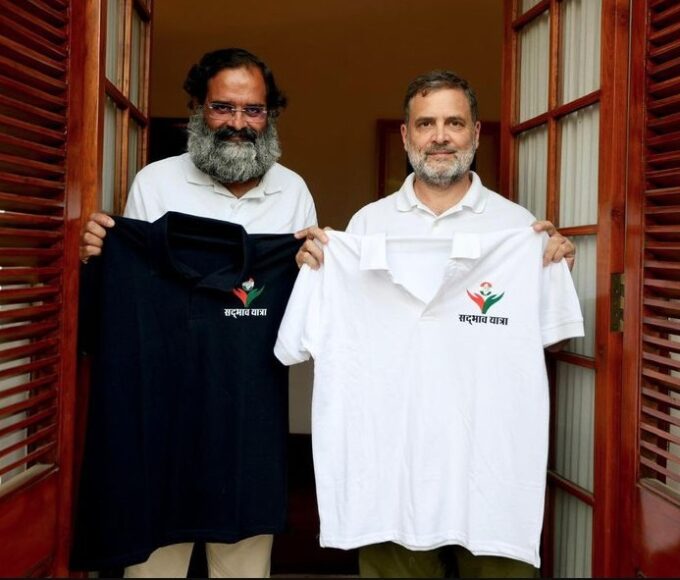
The Gandhian Satyagraha Brigade, the rejuvenated version of the Lok Sevak Sangh of Servants of the People Society led by the 92-year-old Shambhu Dutta – a freedom fighter of Quit India Movement vintage – has been spearheading a crusade for immediate appointment of the Lokpal. Dutta has lost count of the times he has written to the Prime Minister in the past five years. His appeals have evoked no response and, in utter frustration, he has decided to offer the “supreme sacrifice” by going on a fast unto death from October 2 or Gandhi Jayanti.
Manmohan Singh did bring up the Lokpal Bill in the Cabinet twice but some UPA ministers, undergoing trials in courts, did not allow the matter to proceed. Such is the enormity of India’s political chicanery
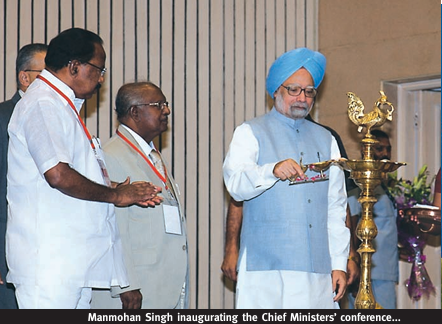
When I met him recently, the Gandhian was anguished over the Prime Minister’s inaction (or inability) on this national issue of grave importance. He recalled the Common Minimum Programme of the first UPA government that had promised enactment of the Lokpal Bill into law and the categorical declaration of Manmohan Singh at the All-India Lokayukta Conference in September 2004 that “the UPA Government will lose no time to enact the Lokpal Bill, shoved aside after being tabled in Parliament at least eight times in the past three decades”. Manmohan Singh did bring up the Bill in the Cabinet twice but some UPA ministers, undergoing trials in courts, did not allow the matter to proceed. Such is the enormity of India’s political chicanery.
In 1928, Mahatma Gandhi made a scintillating forecast: “Corruption will be out one day, however much one may try to conceal it: and the public can as its right and duty, in every case of justifiable suspicion, call its servants to strict account, dismiss them, sue them in a law court, or appoint an arbitrator or inspector to scrutinize their conduct, as it likes.”
Eight decades on, the utopia the Mahatma predicted is nowhere in sight. Instead, like a malignant cancer, corruption is eating into the vitals of our nation. The question is, are we condemned to be a country of hypocrites with the voice of the “naked fakir” remaining a cry in the wilderness?

IAS (retd) with a distinguished career of 40 years - worked in Army, Govt, Private, Politics & NGOs.