












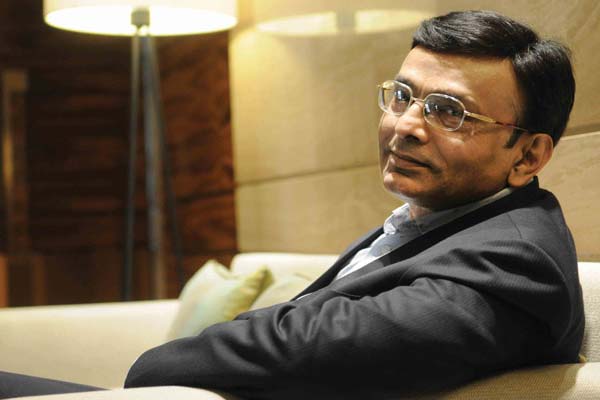











Before Gopi Arora, there were powerful bureaucrats aplenty but he was the first to be called powerful emphatically and openly, and so often and by so many that, towards the end of his career in the PMO, the word began to sound trite and even banal. And, when some people, especially journalists, found the word not powerful enough to convey Gopi’s “enormous clout” in the PMO, they raised the pitch and called him “all-powerful” or “most powerful.”
Whether Gopi relished or resented this label is difficult to say. He was not the sort to let his face betray thoughts or feelings.
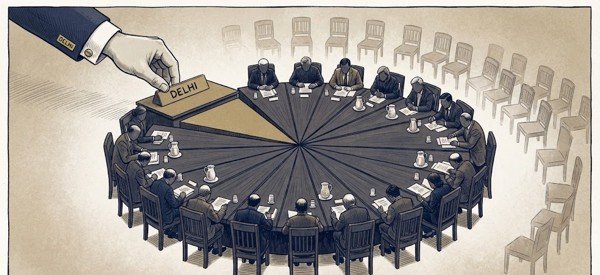
He did exercise ample and marked influence on Prime Minister Rajiv Gandhi and, because of that, on his team of ministers as well as on the lesser bureaucrats around him at the Centre and in the states, the bosses of key public institutions and, of course, the country’s corporate captains. He decided not only the issues that required his approval but also those that merely called for his opinion. He often took decisions in the name of the Prime Minister, communicated the Prime Minister’s pleasure or displeasure and conveyed his wishes to the concerned persons and parties.
But did this justify the hurling of the word “powerful” at him as if being powerful or exercising power was the worst thing a bureaucrat could do?
Every bureaucrat in the crucial post of Special Secretry to the PM has done all that Gopi did. PN Haksar did the same during Indira Gandhi’s time, though he may have been more subtle in manner. So did VC Pande during VP Singh’s Prime Ministership after Gopi was ousted from the PMO. Well, a Principal or Special Secretary to a Prime Minister is hardly expected to act as a post office, merely routing orders.
He had all the qualities of a sincere, sober and successful bureaucrat. He was hard-working, subtle, adroit and utterly unassuming, kept in the background as much as possible
Why, then, did Gopi arouse such intense dislike and disapproval from so many? He had all the qualities of a sincere, sober and successful bureaucrat. He was hard-working, subtle, adroit and utterly unassuming, kept in the background as much as possible, and rarely, if ever, opened his mouth in public. He never exhibited swagger or hauteur, or engaged in banal bureaucratic small talk, bitching or back-biting. He tried to be nice with everybody who came in contact with him though, understandably, he had to act and look tough when hard decisions were taken or conveyed.
At the start, Gopi was the easiest target. When the two Aruns deserted Rajiv Gandhi, he was left alone to serve as the fall guy
One answer to the riddle is that every regime needs a fall guy or a whipping boy. Gopi became one for the Rajiv Gandhi regime. In the beginning, everyone was so charmed by Rajiv Gandhi’s sincerity and simplicity, his guileless smile and innocent utterances that they couldn’t believe he could have taken or initiated unpalatable decisions and deeds. It was assumed that such decisions must be the work of someone else, someone adept in the wily ways of government. Who could that be? Arun Nehru, Arun Singh, Gopi Arora – or all three! So, in the early years one or the other of the trio would be blamed, depending on one’s information, preference or prejudice. At the start, Gopi was the easiest target. When the two Aruns deserted Rajiv Gandhi, he was left alone to serve as the fall guy.
Another reason is that Rajiv Gandhi exposed him too much to the public view by entrusting to him errands which should have been handled by a political person.
Once, when told people were commenting on his enormous power, Gopi replied typically, “A civil servant in my position draws his power from his boss. It is he who decides how long a rope to give to his civil servant. Power is his. We are merely his creatures. So, praise belongs to him and blame to us.” This is not very far from the truth, at least in Gopi’s case. He was not the sort of bureaucrat who would exceed his brief or twist it to serve his own ends. Also, when it came to giving advice or expressing opinion he was as frank as anybody in his position could be.
Occasionally, he might have used dissimulation to carry a point through or planted a story through some media friends. Such acts by bureaucrats invoke reproach not only from the media but often also from politicians, though no politician ever hesitates to resort to such practices himself. The problem in such cases lies not so much in the conduct of the bureaucrat concerned but in the very practice of engaging bureaucrats for political purposes that eventually arouses not only peer disapproval but also public wrath.
But Gopi was a political creature himself. Not that he had any political ambitions. He was political in the sense that he had ideas about which way the politics of the country required steering. In his opinion, that way lay towards the Left, though not the formal Left as represented by the communists. He was a progressive in the 1970s sense of the term.
His progressive outlook brought him to the notice of DP Dhar who took him as his Special Secretary when he became Planning Minister in the early 1970s. Gopi enjoyed that position. He could give full expression to his political views through his boss with whom he enjoyed a great rapport. He met and became friends with many stars of the political Left in the Congress and also in the Left media. During his time with Dhar, first in the Planning Commission and then as his Economic Minister at the Indian embassy in Moscow, he first attracted the attention of Indira Gandhi. The training under Dhar must have been tremendously useful to him when he was taken to the PMO by Rajiv Gandhi a decade-and-a-half later.
Of all his qualities as a bureaucrat, the most striking were his quick grasp, his facility for writing, and his capacity to work for long hours without a break. He never took Sundays off and was usually the last to leave office.