




























Or, the institutionalizing of corruption in the bureaucracy

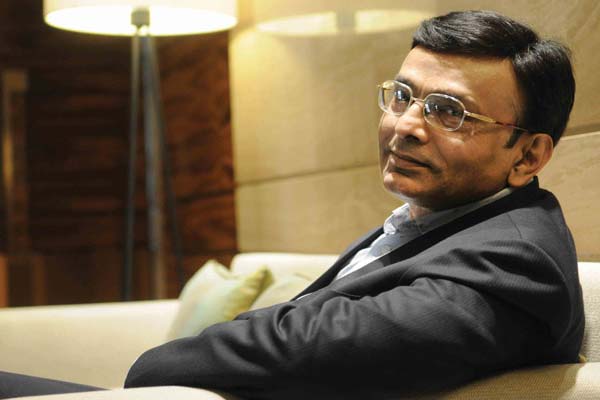
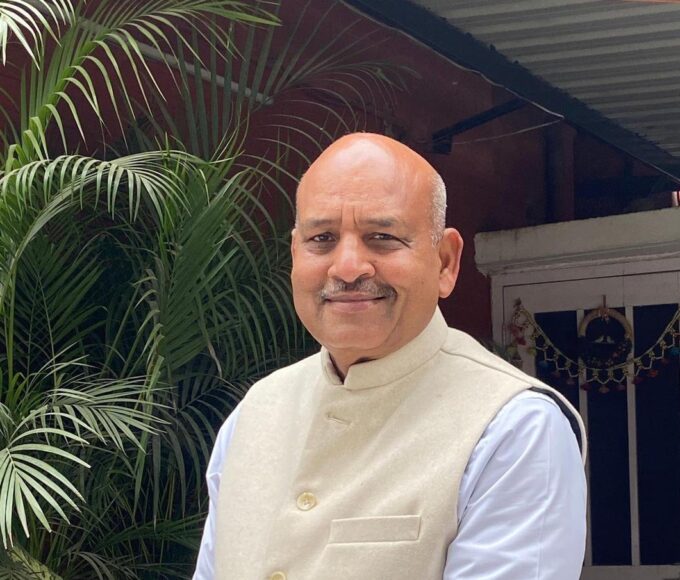
The Joshi couple – Tinu and Arvind – both senior IPS officers, are headed to jail for making only one big mistake. They did not stash away the huge amount they managed to amass in 32 years of service in foreign accounts! This is what a senior civil servant said. Though put jocularly, the point was simple: had the Joshis done that, they could have avoided all harassment simply by paying income tax. “The Finance Minister,” the officer pointed out, “made it clear that the inviolable agreements the Indian government is signing with those countries make no room for hunting the source of the income.”
According to the 7,000-page Income Tax report submitted to Madhya Pradesh Chief Secretary Avni Vaish and Lokayukt PV Naolekar, the Joshi couple owns 400 acres of land and 25 flats. The total worth exceeds Rs 360 crore. Very interesting, 18 of the flats are in Guwahati. Till now, the Lokayukt has not initiated action as the relevant documents are still awaited from the State government.
What punishment is finally awarded will provide a clue to whether the nation will be able to fight corruption in the future. In India, bureaucratic corruption is as institutionalized as the bureaucracy itself. The state civil servants go down to the block level – the BDO, BFO and so on – and corruption stalks them from that level. This institutionalized corruption has a well-defined structure and an officer not inclined to bow before it gets transferred all through his career. Everyone loathes an honest civil servant, except for the hapless common man.
An individual success story (!) like that of the Joshis is rare. Corruption feeds basically on institutional arrangement. And no State is an exception. Benoy Chowdhury. a very senior minister in Jyoti Basu’s Left Front government, once publicly stated that the government was being run by the contractors. Basu shot back the next day: “Then why is he still continuing in the government?” Thereafter, no one ever heard Chowdhury speak of the contractor raj. In reality, corrupting of civil servants starts with this contractor raj. There is always huge money to be spent on various public works and a lot of people eagerly waiting to bribe officers. So, every government project is a money spinner for the corrupt bureaucrats. They first take their commission to award projects to firms of their choice, irrespective of the bidding process. Then the firms pay another 10-12% on every payment they get against these projects. And at each step, each layer of babudom has to be satisfied to reach the next step. In certain cases, this money goes upward to those officers who are not involved at all.
Thus, out of every Rs 100 the government spends for routine development, 15-25% goes into the pockets of State-level civil servants and often to the lower IAS officers as well. That is why we get roads that become pot-holed so easily. That, in fact, serves the bureaucracy further and drains the exchequer more, for the potholed roads have to be repaired over and again. For bigger projects, the higher bureaucracy’s share goes up. Often, the criteria for awarding contracts are set in a way so as to favour one or a few while excluding the others. Apart from the civil servants, a large section of the forest officers has earned notoriety for corrupt practices and atrocities against the vanvasis. To a large extent, they are responsible for the Adivasis’ seeking succour from the Naxalites.
Three decades ago, a large section of the higher civil service was to some extent immune from this institutionalized corruption. There were still values, and also the fear of being disgraced. Now, there is no disgrace factor any more. A handful of honest men still cling to their values and give the system a feeble challenge and face the consequences. Those who try to clean up the system earn the wrath of fellow officers and politicians. Arun Bhatia knows it well. He was transferred 26 times in a career of 30 years. After one such transfer from the Pune Municipal Corporation in 1999, the Chief Justice of Bombay High Court described the transfer as “outrageous” and said, “We wish to emphasize that during the present days when, unfortunately, corruption and dishonesty are at their peak, honesty and action as per law deserve a pat, rather than punishment.”
The extremely greedy bureaucrats are not satisfied even with this institutionalized corruption and go for a bigger kill. Tinu Joshi was one such person. She worked in the Women and Child Development department that allocates crores of rupees for free distribution of panjiri (a sweet made of a high-protein mixture of powdered lentils, flour, dry fruit and ghee). This is meant for malnourished children and mothers. According to newspaper reports, Tinu fought with another senior woman bureaucrat because she was withholding funds for panjiri. A senior bureaucrat told a mediaperson that the contract was given to suppliers of Tinu’s choice, who would provide her with the necessary paperwork without actually catering to the targeted population.
This is how the poor are robbed of their dues and the Prime Minister laments the faulty delivery system. But we are still to see bold initiatives from him to weed out these nefarious elements. A Group of Ministers has finalized recommendations on making the bureaucracy more transparent, but they have based all their recommendations on the premise that a bureaucrat gets caught for his wrong actions. In reality, he is seldom caught. Everyone knows how the system functions and feigns ignorance. So, what can really stop this is very vigorous vigilance and regular checking of the assets of civil servants. Somehow, we know no government will take the initiative though we do not know the reason. Alarmed by the increasing menace of corruption and lack of deterrence, the office of former Prime Minister Atal Bihari Vajpayee had also established a committee to explore the idea of revamping the civil service. It recommended performance, competence and specialization to replace seniority, automatic promotion and job security. It too made its suggestions about improvement of performance and not about curbing corruption. But even those were never implemented.
It is immaterial whether a very honest Prime Minister is in the saddle, or a less honest one. The nexus is too strong and all sections of the elite have joined it. The bureaucrats, politicians, Army, police and private industry have come together. Liberalization and the economic reforms have introduced a culture of greed. That has killed the fear of disgrace. An honest Prime Minister can enjoy his stint in power, but cannot act without endangering his stay in power.
There may be few officers who can compete with the Joshis but smaller instances of corruption abound. AK Srivastava, 56, was arrested recently along with his wife for amassing wealth. He had worked for two decades with the National Thermal Power Corporation Ltd, then moved on to the Cement Corporation of India and NALCO. This mechanical engineer, a product of the Delhi IIT, rose to being Chairman-cum-Managing Director before the CBI caught him. His wife was nabbed by the agency when she was trying to salvage some of the family’s ill-gotten assets from a locker of a Bank of Maharashtra branch. Astonishingly, the locker was not in the name of the Srivastavas. What has been recovered from them is peanuts in comparison to the stash of the Joshis – only 10 kg gold (worth Rs 2 crore) and Rs 30 lakh in cash. The officer amassed this wealth (the investigation to unearth more is on) by taking bribes.
In the Adarsh Housing Society and 2G spectrum scams, there was involvement of other players along with the bureaucrats. In 2G, politicians and bureaucrats came together to carry on a game for years of favouring some and bending the rules to act against others. Despite charges from the BJP and the Left, Prime Minister Manmohan Singh did not act. In fact, judging from what he has said, he did not find any reason to act against people like Siddharth Behura, who is now in CBI custody, or A Raja. Strangely, the CAG found many irregularities. The Adarsh scandal involved Army top brass apart from the bureaucrats and politicians. While hearing a petition, the court asked why no action was being taken against the bureaucrats who cleared the key files in the revenue and urban development departments in return for being gifted flats.
This obvious nexus and shielding repeats itself, and often follows the same model. Take the Commonwealth Games. Was it not apparent that, given the humongous amount of money involved, there would be huge corruption which would later be condoned? Otherwise, why would Manmohan and Sonia Gandhi say that everything would be investigated after the Games when the charges started tumbling out more than a month before they commenced? That was long enough to cover up the misdeeds.
This was not the first time that officials and others were making lots of money out of purchases. This was not the first time that the highest authorities of the country were condoning it. In October 2009, five government departments were asked to submit their reports on action taken against corrupt officials after India’s ambassador to the US, Meera Shankar, complained of millions of dollars being paid in bribes to government officials. The Department of Personnel and Training (DoPT) was ordered to look into the matter and to coordinate with the CBI. Shankar wrote a letter on May 12 that year to TKA Nair, the Principal Secretary to the Prime Minister, and mentioned bribe amounts paid by US companies to officials of the Indian Navy, Maharashtra State Electricity Board, Indian Railways, Indian Central Insecticides Board and other unnamed senior officials to secure government contracts. It denoted involvement of five departments: the Maharashtra State Electricity Board, Agriculture Ministry, Railways, Defence Ministry and the Department of Revenue. Along with them, even Customs and Excise was said to be involved. In one instance, Shankar cited a bribe of $132,500 given to Indian Navy officials by an agent of York International Corporation, a global provider of heating, air conditioning and refrigeration products. The money was transferred over a period of six years (2000- 2006) for placing 215 orders. What is interesting is that a majority of the pay-offs happened when the BJP-led NDA was in power, but continued even after the Congress-led UPA came to power.
No one knows whether a single person has been punished for these deals. The basis for Shankar’s letter was a US government report on the prosecutions carried out under the Foreign Corrupt Practices Act (FPCA), a federal law prohibiting US companies from paying foreign government officials to gain a business advantage.
One example to show how big the net of corruption can grow when influential bureaucrats get involved. In March 2009, the Kashmir government’s top anti-corruption body, the State Vigilance Organization (SVO), registered a case against seven top bureaucrats for “misuse of official position for illegal transfer of state land” at Gulmarg to influential private parties. The officers allegedly violated the provisions of the Roshni Act which was introduced to give ownership rights of government land to farmers occupying it across the state. In this instance, the land that was transferred was earmarked for development of tourist infrastructure under the Gulmarg Development Authority (GDA). According to the SVO, a case under the Prevention of Corruption Act was slapped against Mehboob Iqbal, Divisional Commissioner, Kashmir, Baseer Khan, District Collector, Garib Singh, Tehsildar, Tangmarg, Farooq Ahmed Lone, CEO of the Gulmarg Development Authority, Farooq Ahmed Shah, Additional Deputy Commissioner, Sarmad Hafiz, Joint Director, Tourism Department, Rafi Ahmad, Assistant Commissioner, Revenue, Baramullah, and Ghulam Mohi-u-Din Shah, Naib Tehsildar, Kunzar, for misuse of official position for illegal transfer of State land.
If that was an example of a fell swoop at ground level, the Antrix-Devas agreement was one of wrong-doing (otherwise why would the government cancel it) at a very high level. We do not know why ISRO went for an agreement with Devas and why five years later the Space Commission recommended scrapping of the deal. We do not know why, even after the recommendations, the government took eight months to take the final call. What we do understand is that a lot of interests – maybe of scientists, bureaucrats, economists or businessmen – merged. And we know there will be no real punishment awarded to anyone for playing with the national interest.
This impunity factor has emboldened a whole lot of people such as bureaucrats and those who deal with them. Otherwise, there was no reason to appoint PJ Thomas the Chief Vigilance Commissioner despite a plea for his prosecution hanging fire. Whether the charge is serious or frivolous, whether there is an iota of evidence against Thomas or not is irrelevant. Someone cannot be given charge of looking after all vigilance matters if there exists even one faint question mark against his name. Ignoring even that faint question mark is unethical. Yet, Manmohan and P Chidambaram selected him for reasons unknown. Was it because of an acute dearth of untainted officers?