




















When common sense eludes lawmakers
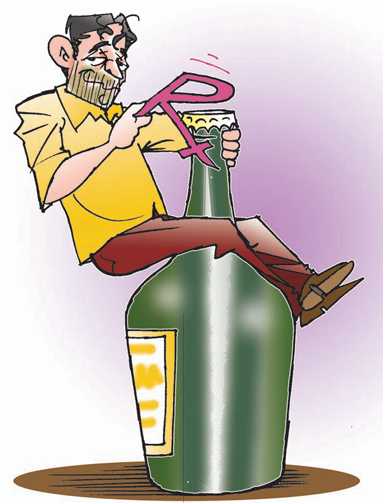
I came to Bombay – as the city was then called, and what I still call it – in 1964 to take up my first job, as an Assistant Editor of The Times of India. I was full of idealism and respect for the law, as most educated people in their early 20s were. That respect was tested straightaway: Prohibition was in force in Maharashtra, a hangover from when the self-righteous and urine-imbibing Morarji Desai had been Chief Minister.
You could drink alcohol in the privacy of your home, but only if you had a “permit”. And how did you get a “permit”? I made enquiries and found that, in my case, since I had recently returned from the UK, all I needed was a letter from a doctor to say that during my stint abroad I had been corrupted by the West and got addicted to alcohol, with the sad result that I could not do without it! In other words, I needed it on health grounds. A letter to this effect was signed by some nondescript doctor whom I had not met and sent to the relevant authorities.
Soon, the magical “permit” materialized, allowing me to purchase four “units” of alcohol a month from an authorized liquor shop (one unit was a regular bottle of spirits, or four bottles of beer). I think I paid Rs 150 for that “permit”, a fairly high amount in those days, considering my salary, even as an assistant editor, was Rs 450 and the charge for staying as a paying guest Rs 200 a month.
The tout who organized all this told me that the actual charge for the “permit” was nominal (Rs 10, I seem to recall) and that the rest was shared by the doctor and a rung of officials and politicians – with a cut going to himself, needless to say. Those were the days of illegal bars or “auntys”, as they were popularly called, where all kinds of alcoholic concoctions were available.
I went to quite a few “auntys” with my friends. As the saying goes, forbidden fruits taste sweeter. Often, you did not know what you were drinking since the stuff came from stills where a variety of vile ingredients were used. Many imbibers would fall sick regularly and quite a few died. Some of the illegal hooch was transported by lepers, as the police was reluctant to search them. There would be the occasional police raid on the stills and the “auntys”, but everybody knew this was only for show and that the police were on the take. In fact, all those involved were on the take – doctors, officials and politicians.
One particular section of society benefited most from Prohibition: the underworld. Crime became big-time in Bombay during Prohibition. A powerful nexus developed then between the underworld, the police and politicians. It is still there.
We should have learnt from the US. There, too, a strong moralistic streak in the American psyche led the government to impose Prohibition. It was an unmitigated disaster. Crime and corruption flourished. Those were the days of gangsters like Al Capone. The patriarch of the famed Kennedy family made his riches through Prohibition. Fortunately, better sense eventually prevailed in the US and India (with the exception of Gujarat, of course) and Prohibition was lifted.
This piece means no disrespect to the memory of Mahatma Gandhi, under whose main influence the policy was implemented in India. He had his reasons, the primary one being concern for the poor. He argued – and it was doubtless true – that on payday, many wage-earners tended to blow up their salaries on booze, leaving the family destitute. The answer to that, however, I would argue, is not an outright ban – which never works – but education and driving home the importance of temperance.
Prohibitionists tend to lump drinking with drunkenness. Desai felt that anybody who drank must be an alcoholic. In his killjoy, tunnel vision, there was no appreciation of anybody enjoying the occasional glass of wine or a peg of whisky in convivial company, in a restaurant or at a party at home. I hold nothing against teetotallers but at the same time they should hold nothing against my drinking, as long as it is in moderation and I do not make a nuisance of myself.
In my view, apart from the crime and corruption Prohibition brought with it in the US and India, something else that was almost as insidious came as well: disrespect for the law.
We were confronted by a law that was both stupid and unenforceable. We broke it by drinking illegally in illegal bars…. You break one law, however senseless it may be, and you begin to lose respect for other laws as well. That was the tragedy of Prohibition.
We were normally law-abiding youngsters in Bombay in the 1960s, yet we were confronted by a law that was both stupid and unenforceable. We broke it by drinking illegally in illegal bars. Thereby, even if in a small way, we became law-breakers. You break one law, however senseless it may be, and you begin to lose respect for other laws as well. That was the tragedy of Prohibition. And it still is.
Let me explain. Believe it or not, in Maharashtra you still require a “permit” to drink, buy, or even possess alcohol. The “permit” costs less than Rs 200 a year I believe and is easily available (no doctor’s letter required now). But relatively few people bother to get it. Yet, shops sell them liquor (except they don’t give a receipt) and most bars and hotels serve them drinks.
Why not get rid of these stupid “permits”? Only one reason I can fathom: the State does not want to lose the revenue it earns from them! Meanwhile, it was once pointed out in the Assembly that anybody flying in from abroad and buying duty-free alcohol at Bombay airport and taking the alcohol outside the airport is actually breaking the law if he does not have a “permit”. There was no suitable answer to that from the authorities. Do I have to use the word “stupid” yet again for the Maharashtra government?
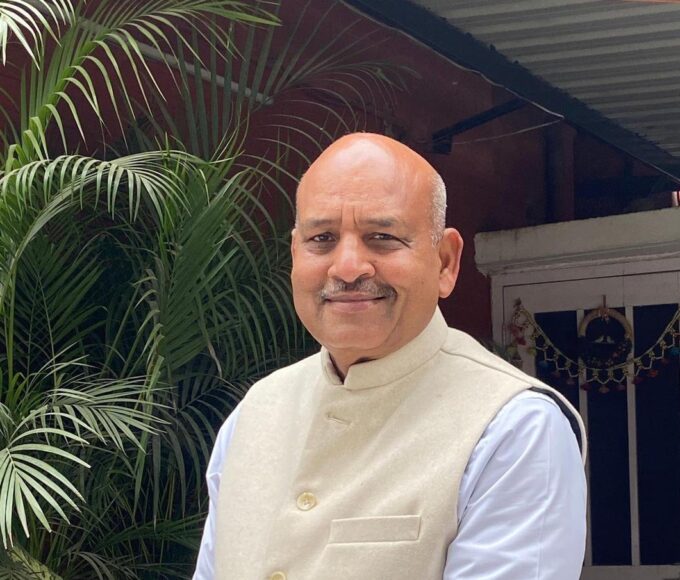
The writer, a former Editor of The Reader’s Digest and The Indian Express, can be reached at singh.84@hotmail.com