










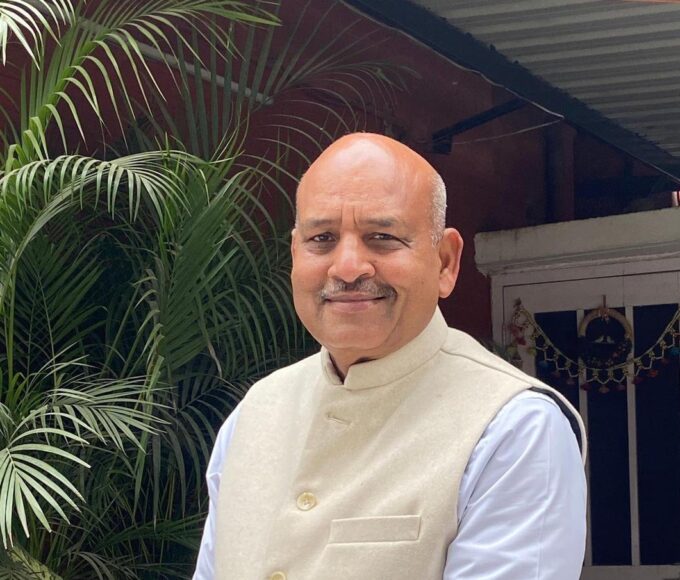








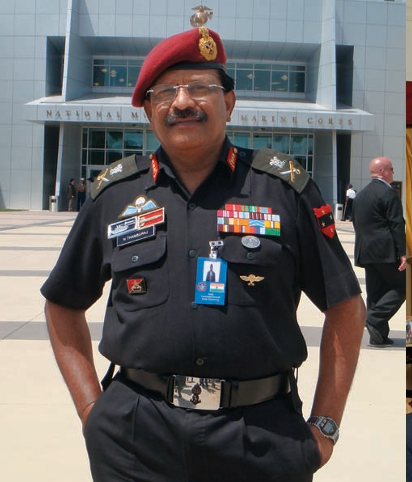
I am a second generation soldier. In those days, sons used to step into their fathers’ shoes. As a kid, I was very impressed by the glamour of military uniform. I studied at King George’s School and Sainik Schools. My last Sainik School, from where I completed Class XI, was in Jamnagar.
Like me, a majority of those joining the Army were second generation. There was a large number of candidates from north India. I cleared the written exam for the National Defence Academy. I appeared before the Service Selection Board for five days of interviews. The interviews were meant to check the psychology, innovativeness and team spirit of the recruit who had to be moulded into a leader.
There were 20 candidates. We were shown pictures and then asked to write a story in 60 seconds. We had to speak on a given topic for two minutes. Teams of five candidates were formed to clear the obstacles. Last was an IQ test.
I cleared everything and joined the National Defence Academy in 1965. I was commissioned as an officer in the Bombay Sappers from the Indian Military Academy in June 1969. I chose the engineering corps. It plays a vital role in military operations. We have a unit of 800 jawans and 30 officers.We can make bridges quickly and operational tracks. It was a very challenging posting. In 1971, I joined the Military Engineering College. Then I did MTech from IIT, Delhi.
In 1969 my first posting as 2nd Lieutenant was in Arunachal Pradesh. In 1971, when the Indo-Pakistan war took place, I was transferred to Fazilka as Lieutenant.
When I joined the Army, my dream was to be a paratrooper. When I was 26 years old, I joined the parabrigade. In the Army, to be a part of Para was considered prestigious. I underwent rigorous training and I was there for five years. I was posted near Harsil in Uttarkashi. The training was at 9,000 feet and above. I really enjoyed the posting.
Then I spent three years in Sikkim, commanding the engineering regiment. We managed our troops there at 14,000 feet. It was very beautiful but it is an operational area. We have eyeball-to-eyeball contact at the border in Sikkim. We had to be constantly on the alert. We used to have regular flag meetings. Local commandant meetings were routine. We have a BPTA (Border Personnel Treaty Agreement) there with China. It is to control escalation of tension.
‘I had the unique honour of commanding the only Parachute Field Company of the Corps of Engineers as well as an engineer regiment. I am the only engineer officer to have commanded a Rashtriya Rifles sector in the Kashmir Valley’
After that I went to the higher command course in Mhow and transferred to the general cadre. I had the unique honour of commanding the only Parachute Field Company of the Corps of Engineers as well as an engineer regiment. I am the only engineer officer to have commanded a Rashtriya Rifles sector in the Kashmir Valley. Under my command, the sector achieved stupendous results including neutralizing a substantial number of hardcore terrorists while simultaneously making friends with the local populace.
I served in Operation Vijay during the Kargil war. Kupwara is one district where most of the activities by Pakistan-trained terrorists take place. The Kupwara posting was one of my most challenging postings and I was awarded the Sena Medal for it.
As G-o-C, Ahmedabad, I looked after two important borders – the Rann of Kutch and Barmer in Rajasthan. It was another fascinating posting. We had to coordinate with the Coast Guard and BSF to control infiltration in the guise of fishermen. I was transferred as Lt Gen, Corps at Jalandhar to look after all of Punjab. I am happy I commanded an infantry division in the desert during Operation Parakram and a Corps in Punjab.
‘The Indian military has to be ready for terrorism and fourth generation war games. We have challenges to face – cyber wars, media wars, psycho wars and the war against non-state players’
After this, I was promoted as Army Commander, Jalandhar. Thereafter, I was posted as the commander of India’s most important command, Southern Command. It is the largest command. It starts from Jaisalmer and covers the entire peninsula. The command has its own plane and helicopters. I used to travel 15 days in a month. We conceptualized and realized a large number of projects to enhance operational contingencies and administrative efficiency. During this period, the Southern Army undertook some major military manoeuvres and conducted the 4th CISM World Military Games. I was made Honorary Aide-de-Camp to the President of India during this period. For my contribution as commander of the Southern Army field force, I was decorated with the Param Vishisht Seva Medal.
I assumed charge as Vice-Chief of Army Staff on January 1, 2009. This posting is a window to the Ministry of Defence.
From 1969 to 2009, I constantly worked hard. I never left work pending on my table.
After serving 40 years, I feel the need for greater transparency, greater accountability. We have to shed old traditions. We have to make the military more relevant. Performance should be given priority over seniority to make the military vibrant for the future.
We should not prepare for the last war but for the future war. The dimensions of war are changing. The Indian military has to be ready for terrorism and fourth generation war games. We have challenges to face – cyber wars, media wars, psycho wars and the war against non-state players.
I want to say to the youth of India that the Army will always present a noble and fascinating career to serve the country purposefully. My first innings was very good and now, in my second, after retirement, I will serve the nation in whichever way it wants me to serve.